日本語

Superalloy

High-performance superalloys for 3D printing.

Material Introduction

Superalloys are high-performance metals engineered to maintain exceptional strength, oxidation resistance, and structural stability at extreme temperatures. In metal additive manufacturing, superalloys have become essential for producing high-value aerospace, energy, and industrial components that must withstand severe thermal fatigue, creep, and corrosive environments. With superalloy 3D printing, complex geometries such as cooling channels, turbine structures, and lightweight reinforcement architectures can be manufactured with outstanding dimensional precision. Nickel-based superalloys, such as Inconel alloy, and cobalt-based alloys, like Stellite, as well as advanced single-crystal compositions, are widely utilized for components exposed to operating conditions of 900–1100 °C. Their exceptional creep resistance and high-temperature strength make them indispensable for jet engines, gas turbines, chemical reactors, and nuclear systems.

International Naming Table

Alloy Category

Common Designations

Nickel-based Superalloys

Inconel, Rene, Hastelloy, Nimonic

Cobalt-based Superalloys

Stellite series

Single-Crystal Superalloys

CMSX series, PWA series, TMS series

Powder Superalloys

FGH series

Equiaxed Casting Grades

Nickel-chromium alloys, cobalt-based alloys

Alternative Material Options

Depending on application requirements, alternative 3D printing materials may include titanium alloys such as Ti-6Al-4V (TC4) for lightweight aerospace structures, stainless steels like 316L for corrosion-resistant components, or aluminum alloys such as AlSi10Mg for highly optimized lightweight geometries. For ultra-high-temperature conditions that exceed the capabilities of typical superalloys, ceramic-matrix composites or refractory alloys may be preferable. However, when the combination of high strength, oxidation resistance, and fatigue performance is mandatory at temperatures exceeding 700 °C, superalloys remain the most reliable solution.

Design Intent of Superalloys

Superalloys were developed to address the increasing thermal loads and mechanical demands in gas turbines, jet engines, and high-temperature industrial systems. Their design intent focuses on delivering maximum strength near their melting point through precipitation hardening, solid-solution strengthening, and controlled microstructural stability. Alloying elements such as Ni, Co, Cr, Al, Mo, W, Ti, and Nb contribute to γ′ strengthening, oxidation resistance, and long-term creep stability. In additive manufacturing, superalloys are optimized to achieve fine, directionally solidified microstructures with enhanced fatigue resistance. Their design supports thin-wall geometries, internal cooling channels, lattice reinforcement, and highly integrated thermal-mechanical structures impossible through traditional manufacturing. The ability to tailor heat treatment and printing parameters further enhances phase distribution and mechanical performance.

Chemical Composition (example: Nickel-based Superalloys)

Element

Typical Range (wt%)

Ni

Balance

Cr

10–22

Co

5–20

Mo

1–10

W

2–12

Al

3–6

Ti

0.5–5

Nb

0–6

C

≤0.10

(Composition varies with specific alloys such as Inconel 718, Rene 80, Hastelloy X, CMSX-4.)

Physical Properties

Property

Value

Density

7.9–8.9 g/cm³

Melting Range

1300–1400+ °C

Thermal Conductivity

5–14 W/m·K

Elastic Modulus

190–220 GPa

Thermal Expansion

11–16×10⁻⁶ /K

Mechanical Properties (AM + Heat Treated)

Property

Value

Tensile Strength

1100–1500 MPa

Yield Strength

800–1250 MPa

Elongation

8–25%

Creep Resistance

Excellent up to 900–1050 °C

Fatigue Strength

High

Oxidation Resistance

Exceptional

Material Characteristics

Superalloys offer extraordinary high-temperature capability, maintaining strength, stiffness, and oxidation resistance at temperatures where most metals lose structural reliability. Their microstructures are engineered to resist creep deformation and thermal fatigue cycles. When processed through additive manufacturing, superalloys benefit from rapid solidification, which produces fine dendritic structures and improved γ′ precipitation. This results in enhanced fatigue performance, increased rupture life, and improved isotropy compared with cast or forged versions. Nickel-based superalloys exhibit strong chemical resistance in corrosive and oxidizing environments, including high-pressure steam, combustion gases, chemicals, and hydrocarbons. Cobalt-based superalloys excel in terms of wear resistance and hot corrosion environments. Single-crystal superalloys eliminate grain boundaries, maximizing creep strength for turbine blades and hot-section components. Additive manufacturing unlocks new possibilities: conformal cooling channels, lightweight lattice cores, bionic structures, and integrated assemblies reduce part weight and improve thermal behavior. Superalloys also support hybrid manufacturing and high-temperature coatings, making them ideal for next-generation aerospace and power-generation systems.

Manufacturing Process Performance

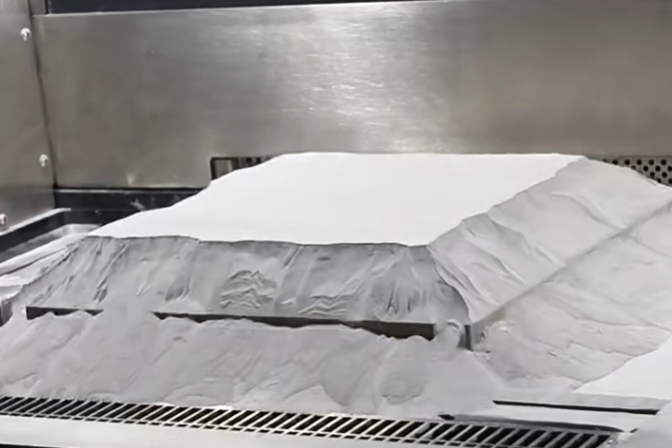
Superalloys perform well in powder bed fusion due to their high melting temperatures and ability to form controlled microstructures. Laser and electron-beam additive manufacturing systems create dense, high-strength superalloy components with excellent fatigue resistance. In conventional production methods, such as vacuum investment casting, superalloys can be cast into directional, equiaxed, or single-crystal structures. For post-AM machining, superalloy CNC machining and EDM are commonly employed to achieve tight tolerances. For deep, thermally loaded components, superalloy deep-hole drilling ensures internal cooling channels meet design specifications. Additive manufacturing enables precise thermal control, optimized build parameters, and repeatable microstructure formation, allowing superalloys to achieve or exceed the performance levels of wrought and cast materials.

Applicable Post-processing

Superalloy parts typically undergo advanced thermal and densification treatments, including Hot Isostatic Pressing (HIP), which eliminates porosity and stabilizes grain structure. Heat treatment tailors γ′ precipitation and mechanical properties. Surface protection using Thermal Barrier Coatings (TBC) enhances oxidation resistance for turbine environments. Quality verification through material testing and analysis ensures compliance with aerospace and power-generation standards.

Common Applications

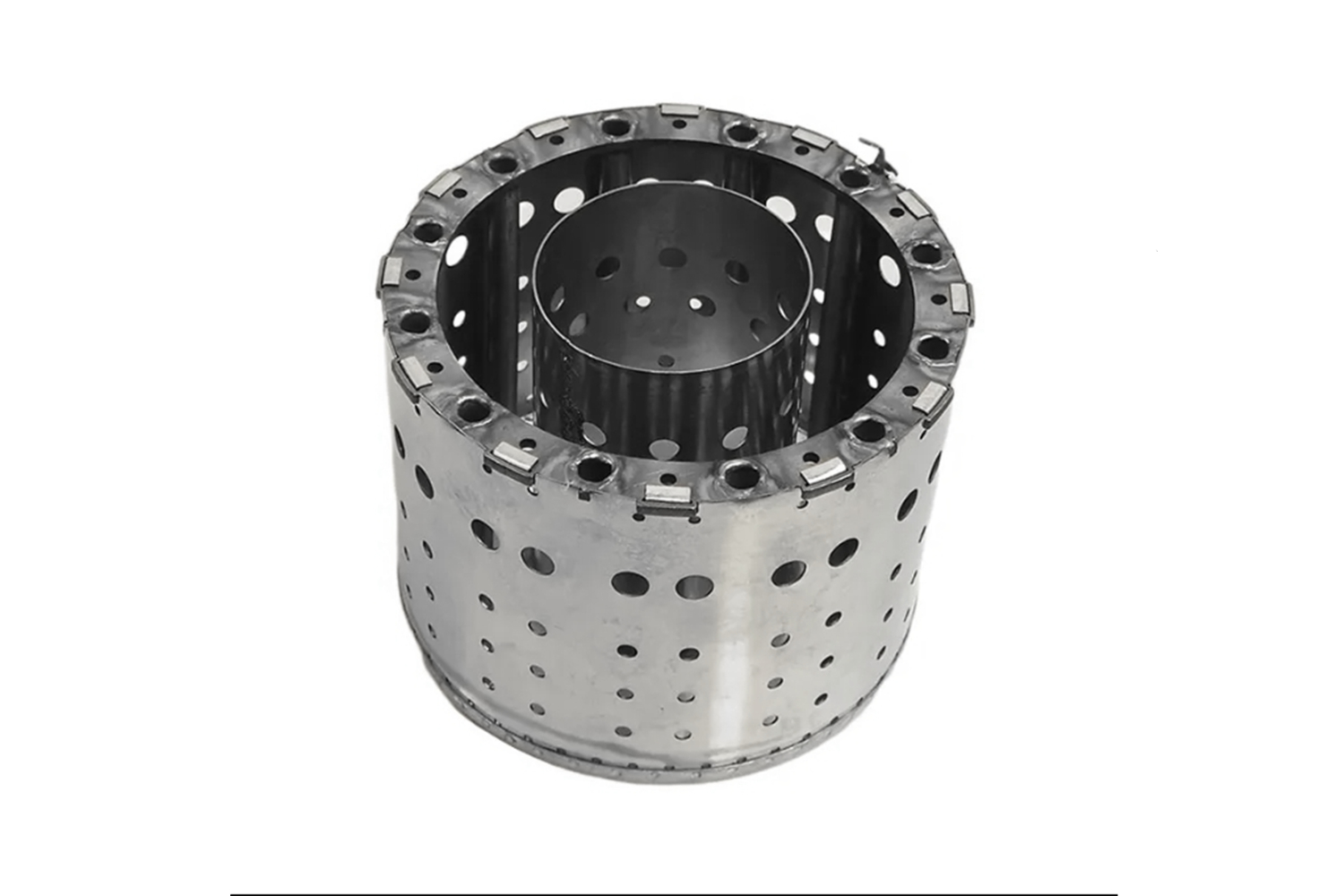
Superalloys are crucial for aerospace and aviation engines, as well as hot-section turbine blades, combustion chambers, and exhaust assemblies. In power generation, they are used for turbine blades, combustors, and high-temperature structural components. In the oil and gas, as well as the chemical processing industries, superalloys offer corrosion resistance, pressure tolerance, and long-term reliability. Additive manufacturing expands its applications to include rocket engines, nuclear systems, marine power units, and advanced, heat-resistant mechanical assemblies that require precision and stability.

When to Choose Superalloys

Select superalloys when operating temperatures exceed 700 °C or when components require resistance to oxidation, creep, and thermal fatigue. They are ideal for turbine blades, combustion components, exhaust systems, high-pressure reactors, and structural components that face extreme thermal gradients. Superalloys are also the right choice when long-term dimensional stability and chemical resistance are essential. Choose them for additively manufactured parts requiring complex channels, dense thin walls, or topologically optimized load paths. However, when lightweight performance or cost efficiency is prioritized over extreme temperature capability, titanium, aluminum, or stainless steel alloys may be more suitable. Superalloys excel specifically in high-temperature, high-stress, chemically aggressive environments.

関連ブログを探索