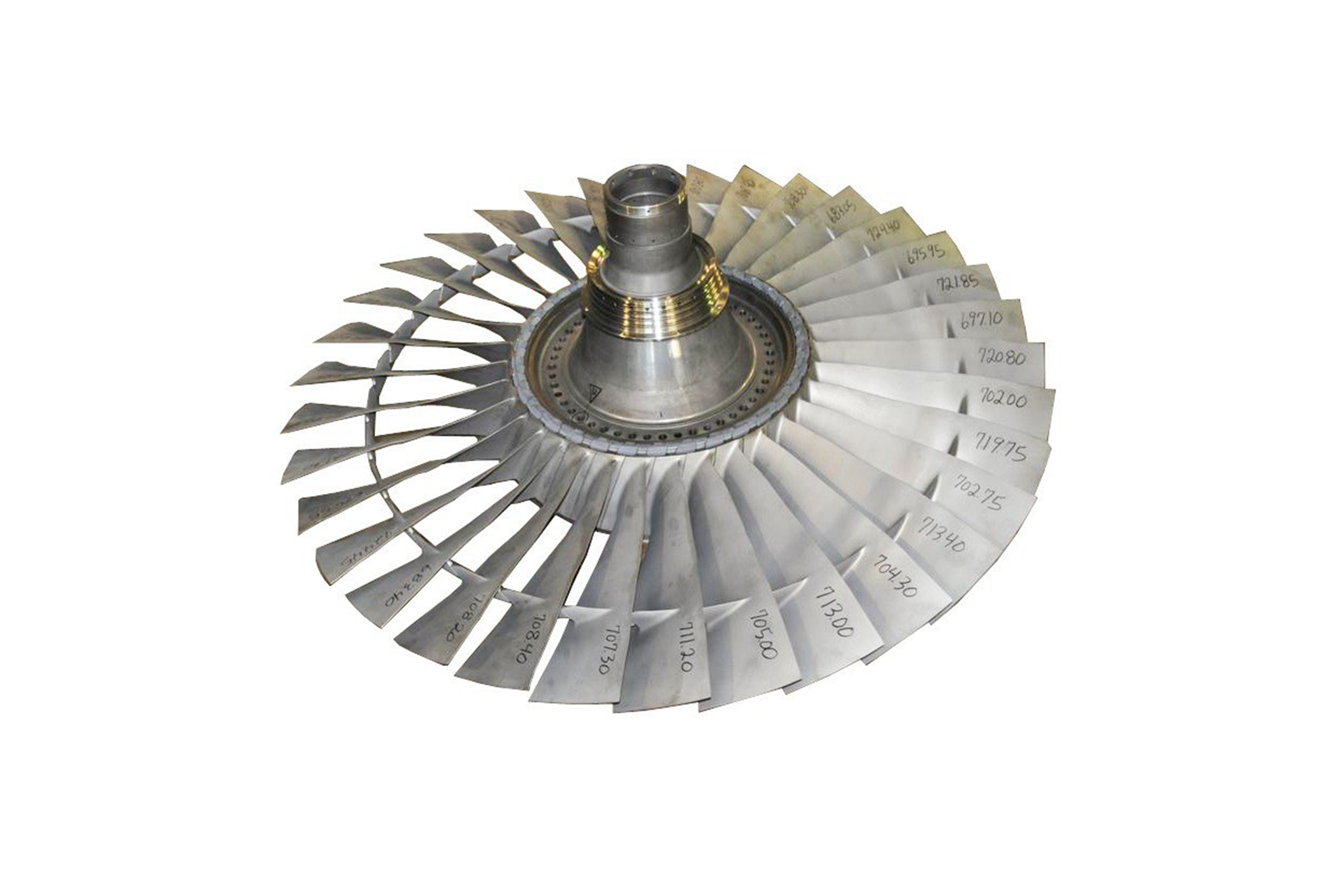
Hot section components of gas turbines—including combustor liners, transition ducts, nozzle guide vanes, and flame holders—are exposed to high-temperature combustion gases, cyclic thermal stress, and aggressive oxidation. These components demand superior thermal fatigue strength, oxidation resistance, and long-term dimensional stability. Hastelloy X, a nickel-iron-chromium-molybdenum superalloy, is engineered for exceptional high-temperature performance, weldability, and oxidation resistance in oxidizing and reducing atmospheres.
Neway AeroTech offers directional casting of Hastelloy X for complex hot section turbine components using advanced vacuum investment casting. With controlled grain orientation, we enhance creep resistance, thermal fatigue durability, and component longevity in aerospace, power generation, and energy turbine systems.
Wax Pattern Design Wax patterns are molded to replicate hot-section geometries such as nozzle vanes and combustor liners with ±0.05 mm tolerance.
Shell Mold Construction Refractory ceramic shells (6–8 mm thick) are built to handle thermal shock and allow controlled solidification during withdrawal.
Grain Selector Integration Helical or starter selectors are incorporated to guide columnar grain growth in the [001] direction for creep resistance.
Vacuum Induction Melting Hastelloy X is melted under vacuum (≤10⁻³ Pa) at ~1400°C, minimizing oxidation and ensuring homogeneous composition.
Directional Solidification The mold is withdrawn at 2–4 mm/min through a controlled thermal gradient, forming columnar [001]-aligned grains from base to tip.
Shell Removal and Cleaning After cooling, shells are removed via high-pressure blasting and chemical leaching to preserve geometry and wall thickness.
Post-Casting Heat Treatment Solution annealing refines grain boundaries and stabilizes microstructure.
Final Machining and Inspection Features such as bolt holes, sealing faces, and cooling holes are finished via CNC machining and EDM, followed by X-ray and CMM inspection.
Max Operating Temperature: ~1175°C
Tensile Strength: ≥750 MPa at 20°C
Creep Strength: >150 MPa at 870°C for 1000 hrs
Oxidation Resistance: Excellent in combustion environments
Thermal Fatigue Resistance: Superior under cyclic heating/cooling
Grain Structure: [001] columnar, directionally solidified (deviation <2°)
Neway AeroTech manufactured flame stabilizers, nozzle rings, and transition ducts from Hastelloy X for a 40 MW aero-derivative industrial gas turbine operating at >1100°C. The customer required excellent thermal fatigue resistance, oxidation protection, and directionally aligned grain structure to improve component life and reduce maintenance intervals.
Combustor Liners and Domes Require dimensional stability under cyclic combustion heating and high thermal flux.
Nozzle Guide Vanes Operate in hot gas path under high aerodynamic loads; demand low creep deformation and oxidation resistance.
Transition Ducts Exposed to pressure oscillations and thermal cycling; require fatigue and distortion resistance.
Flame Holders and Sealing Rings Function in turbulent, high-temperature combustion zones with vibration and cyclic wear.
Casting Simulation and Selector Design CFD and thermal modeling ensure smooth metal flow and solidification to prevent porosity and stray grains.
Vacuum Directional Casting Execution Directional withdrawal under vacuum produces [001]-oriented grains aligned with operating stress direction.
Post-Casting Heat Treatment Annealing and aging refine grain structure and relieve stress without degrading oxidation resistance.
Precision Machining CNC and EDM machining are used to finalize tight-tolerance interfaces, flanges, and flow channels.
Inspection and Verification EBSD, X-ray, CMM and ultrasonic inspection validate grain orientation, porosity elimination, and geometric accuracy.
Preventing stray grains in thin-wall vanes and ducts
Maintaining dimensional accuracy during heat treatment
Managing thermal stresses during directional withdrawal
Ensuring weldability for field repairs and assembly integration
[001] grain orientation confirmed with <2° deviation via EBSD
Zero porosity post-HIP verified by ultrasonic and X-ray testing
Dimensional tolerances within ±0.03 mm across mating faces
Material performance exceeded 150 MPa creep strength at 870°C
100% inspection compliance with aerospace-grade quality standards
Why use directional casting for Hastelloy X hot section components?
What are the benefits of [001] grain alignment in turbine parts?
How is dimensional accuracy maintained during casting and finishing?
Can Hastelloy X castings be welded or repaired in service?
What quality standards does Neway follow for turbine-grade castings?