
Fournisseur de Composants de Moteurs Haute Température en Coulée Directionnelle CMSX-2
Introduction
Le CMSX-2 est un superalliage à base de nickel de première génération à solidification directionnelle (DS), spécifiquement conçu pour les applications de moteurs aérospatiaux à haute température. Il offre une résistance au fluage exceptionnelle, une stabilité à l'oxydation et une résistance à la fatigue thermique jusqu'à 1100°C. En tant que fournisseur spécialisé en coulée directionnelle, nous fabriquons des composants de moteur en CMSX-2 avec une orientation granulaire [001] précise, une porosité inférieure à 1 % et une précision dimensionnelle de ±0,05 mm.
Nos pièces coulées en CMSX-2 sont idéales pour les systèmes de propulsion aérospatiale, y compris les aubes de turbine, les aubes directrices et les tuyères qui exigent une durabilité et une intégrité structurelle prolongées à haute température.
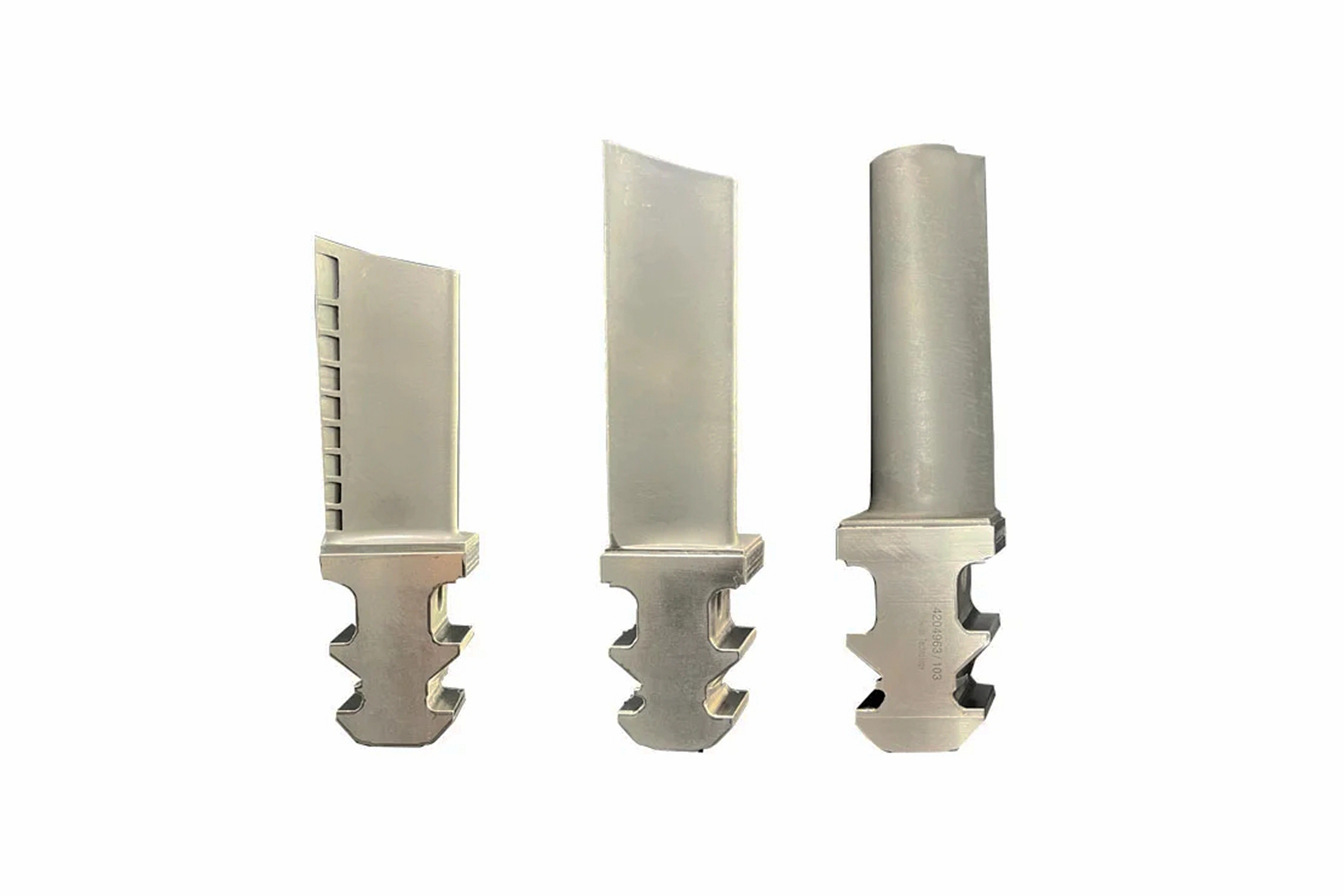
Technologie de base : Coulée directionnelle du CMSX-2
Nous utilisons la solidification directionnelle sous vide dans un four Bridgman pour produire des composants CMSX-2 avec une structure de grains colonnaires contrôlée. L'alliage est fondu sous vide à ~1450°C et coulé dans des moules en céramique préchauffés à ~1100°C. Le retrait du moule est effectué à une vitesse de 1–3 mm/min pour obtenir une solidification directionnelle le long de l'axe [001], éliminant les joints de grains transversaux et améliorant la durée de vie en fluage sous contrainte.
Caractéristiques du matériau de l'alliage CMSX-2
Le CMSX-2 est un superalliage DS à base de nickel renforcé par une forte fraction volumique de phase γ′ et des éléments de durcissement en solution solide. Il offre une excellente stabilité microstructurale et une résistance au fluage sous de forts gradients thermiques. Les propriétés clés incluent :
Propriété | Valeur |
|---|---|
Densité | 8,7 g/cm³ |
Résistance à la traction (à 980°C) | ≥1100 MPa |
Résistance à la rupture par fluage (1000h @ 982°C) | ≥180 MPa |
Limite de température de fonctionnement | Jusqu'à 1100°C |
Résistance à la fatigue (R=0,1, 10⁷ cycles) | ≥550 MPa |
Résistance à l'oxydation | Excellente |
Structure granulaire | Solidification directionnelle [001] |
La structure granulaire directionnelle du CMSX-2 confère une résistance anisotrope aux composants de la section chaude soumis à des charges mécaniques et thermiques.
Étude de cas : Projet de section chaude de moteur aérospatial
Contexte du projet
Un fabricant de moteurs commerciaux avait besoin d'aubes directrices de première étage de turbine et d'aubes directrices de tuyère pour un gros turbofan fonctionnant au-dessus de 1050°C. Le CMSX-2 a été sélectionné pour sa microstructure DS, offrant une résistance au fluage et une réduction de l'amorçage de la fatigue. Nous avons livré des pièces traitées par HIP, revêtues et usinées par CNC conformément aux normes AMS 5400 avec un contrôle qualité certifié NADCAP.
Applications typiques de moteurs haute température
Aubes de turbine DS de première étage : Les aubes en CMSX-2 résistent au fluage et à la fatigue thermique à des températures d'entrée de turbine dépassant 1050°C.
Aubes directrices de tuyère (ex. CF6, PW4000) : Les aubes coulées directionnellement assurent une stabilité dimensionnelle et minimisent la fissuration aux joints de grains sous charge soutenue.
Aubes de support de cadre : Profils porteurs structurels fonctionnant sous haute contrainte cyclique, nécessitant une longue durée de vie en fatigue et une résistance aux chocs thermiques.
Conduits de transition thermique : Pièces coulées DS statiques exposées à des transitions de flux chaud avec un risque réduit de corrosion aux joints de grains ou de microfissuration.
Ces pièces soutiennent les performances et la sécurité à long terme des moteurs à réaction modernes et des plateformes de propulsion militaires.
Solutions de fabrication pour les composants CMSX-2
Procédé de coulée Des modèles en cire sont assemblés pour la coulée directionnelle et investis dans des coquilles céramiques. La fusion sous vide et la solidification directionnelle Bridgman à ~1450°C permettent un alignement des grains colonnaires [001]. Le retrait du moule est strictement contrôlé pour éliminer les joints de grains à faible angle et empêcher la formation de grains parasites.
Post-traitement Le compactage isostatique à chaud (HIP) à 1190°C et 100 MPa élimine les microcavités et améliore la résistance à la fatigue. Des traitements thermiques de mise en solution et de vieillissement sont appliqués pour développer l'uniformité de la phase γ′ et la résistance au fluage.
Usinage final L'usinage CNC est réalisé pour finir les faces d'appui, les pieds d'aube et les pattes de centrage. L'EDM est utilisé pour affiner les bords de fuite et les contours d'écoulement. Le perçage profond forme des canaux de refroidissement de précision.
Traitement de surface Des revêtements barrière thermique (TBC) sont appliqués par des méthodes EB-PVD ou APS pour isoler des gaz de combustion. Des revêtements de diffusion d'aluminiure sont appliqués pour améliorer la résistance à l'oxydation et à la corrosion.
Contrôle et inspection Chaque composant subit une inspection par rayons X, un balayage dimensionnel par MMT, des essais de traction et de fluage et une évaluation métallographique pour vérifier l'orientation cristalline, l'uniformité des phases et la conformité dimensionnelle.
Principaux défis de fabrication
Contrôler la solidification directionnelle pour éliminer les grains parasites dans les géométries complexes d'aubes.
Maintenir l'alignement [001] et l'orientation des grains pendant le retrait du moule.
Assurer la répétabilité dimensionnelle et métallurgique d'un lot de production à l'autre.
Résultats et vérification
Orientation granulaire vérifiée par diffraction de rayons X Laue et métallographie.
Précision dimensionnelle dans une tolérance de ±0,05 mm confirmée par inspection 3D MMT.
Résistance à la rupture par fluage ≥180 MPa à 982°C confirmée par un essai de 1000 heures.
Aucune instabilité de phase ou dégradation des joints de grains après 1000 cycles thermiques à 1100°C.
FAQ
Qu'est-ce qui rend le CMSX-2 adapté aux pièces de moteur haute température coulées directionnellement ?
Comment empêchez-vous la formation de grains parasites pendant la solidification directionnelle ?
Les composants CMSX-2 peuvent-ils être produits avec des canaux de refroidissement internes ?
Quels types de traitements de surface sont compatibles avec le CMSX-2 ?
Quelles méthodes d'inspection sont utilisées pour garantir l'orientation granulaire mono-axiale et l'intégrité de la coulée ?
