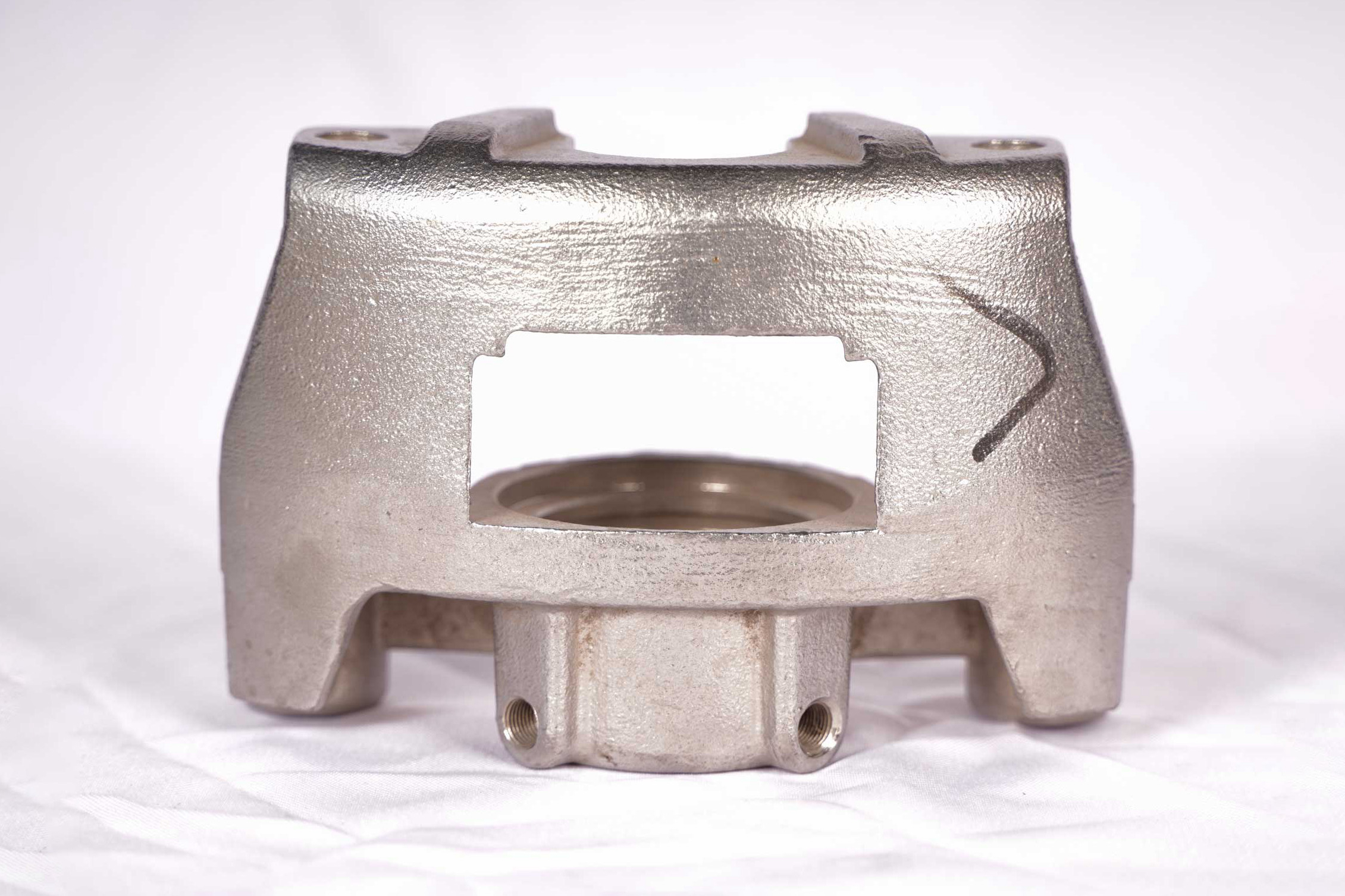
Titanium alloy isothermal forging is a critical process for manufacturing reactor components that require excellent mechanical strength, corrosion resistance, and dimensional stability. At Neway AeroTech, we specialize in forging titanium alloys such as Ti-6Al-4V, Ti-6Al-4V ELI, and Ti-3Al-2.5Sn for high-performance nuclear and chemical processing applications. These parts operate in corrosive, high-radiation, and high-temperature reactor environments, where failure is not an option.
Isothermal forging offers superior microstructure uniformity and tight dimensional control (±0.02 mm), enabling long service life, low residual stress, and high reliability in critical components such as cladding supports, bolted joints, reactor seals, and shielding elements.
Alloy Billet Preparation: Titanium billets (e.g., Ti-6Al-4V) are vacuum melted and preheated to 900–950°C in an inert or vacuum environment to avoid alpha-case formation.
Isothermal Forging Process: Dies and billets are held at matched temperatures (typically ~920°C) during slow, controlled deformation to prevent cold shuts and ensure fine grain flow.
Grain Structure Control: Final forged grain size is refined to ASTM 9–11, producing uniform microstructure and improved fatigue, toughness, and stress corrosion resistance.
Annealing or Aging Treatment: Post-forging heat treatment restores mechanical balance, eliminates residual stress, and optimizes phase distribution for reactor service.
Precision Machining: CNC machining enables bore tolerances, grooves, and sealing surfaces within ±0.02 mm, ensuring tight reactor assembly interfaces.
Optional Surface Passivation: Surface enhancement may be applied to increase corrosion resistance in nitric, hydrochloric, or borated water environments.
Property | Ti-6Al-4V | Ti-6Al-4V ELI | Ti-3Al-2.5Sn |
|---|---|---|---|
Max Operating Temp | ~400°C | ~400°C | ~350°C |
Yield Strength | ≥880 MPa | ≥825 MPa | ≥620 MPa |
Creep Resistance | Moderate | Moderate | Good |
Fracture Toughness | High | Very High | Moderate–High |
Radiation Resistance | Excellent | Excellent | Excellent |
Corrosion Resistance | Outstanding (HNO₃, H₂SO₄, HCl, seawater) | ||
Grain Size (as forged) | ASTM 9–11 | ASTM 10–12 | ASTM 9–10 |
Weldability | Excellent | Excellent | Good |
A nuclear engineering company required a set of forged titanium support flanges, liner rings, and seal housings for use in a primary coolant loop. The reactor operated with borated water under 300°C and >15 MPa pressure, necessitating exceptional corrosion resistance and structural integrity. Ti-6Al-4V ELI was selected due to its improved ductility and superior toughness in irradiated environments.
Reactor Flanges and Couplings: Forged Ti-6Al-4V flanges offer excellent sealing and reduced weight for pipe and vessel junctions in pressurized reactor circuits.
Shielding Housings and Cladding Supports: Forged and machined Ti-6Al-4V ELI components used in neutron shielding and component stabilization.
Pump Impellers and Bushings: Forged Ti-3Al-2.5Sn parts used in coolant circulation pumps, balancing strength and corrosion performance.
Fasteners and Internal Connectors: Precision-forged titanium bolts and interlocks with superior stress corrosion cracking resistance and dimensional repeatability.
Billet Cutting and Preheating: Vacuum-melted titanium alloy cut into preforms, then uniformly heated to 920°C in an inert atmosphere.
Isothermal Forging Execution: Performed in matched-temperature dies, enabling near-net shape with minimal spring-back or internal cracking.
Post-Forging Annealing: Heat treated at ~700–750°C to optimize ductility, relieve stress, and stabilize alpha-beta microstructure.
CNC Machining: Final machining of threads, sealing grooves, and flanges performed to ±0.02 mm accuracy using multi-axis CNC platforms.
Surface Finishing and Passivation: Polishing and optional passivation enhance resistance to pitting and crevice corrosion in high-purity water systems.
Quality Assurance: Geometry verified using CMM. Internal soundness validated via X-ray or ultrasonic testing.
Mechanical Performance: Forged Ti-6Al-4V ELI components achieved UTS of 930 MPa and elongation >14%, maintaining performance after neutron exposure simulation.
Dimensional Accuracy: Tolerances of ±0.02 mm consistently achieved, confirmed by CMM inspection.
Corrosion Testing: ASTM G31 and G36 immersion tests confirmed minimal weight loss in nitric acid and simulated borated water.
Fatigue and Toughness: Fracture toughness K_IC > 75 MPa√m, with high fatigue strength under fluctuating pressure loads.
Radiation Stability: No phase instability or embrittlement observed after neutron fluence simulation, confirming suitability for reactor cores and shielding.
Why is isothermal forging preferred for titanium reactor components?
What titanium alloys are commonly used in nuclear and chemical reactors?
How does Neway AeroTech ensure microstructure and dimensional control?
What corrosion environments can titanium reactor parts withstand?
What testing verifies performance of forged titanium nuclear components?