
PWA 1484 Einkristallguss-Hersteller für Marineantriebssysteme
Einführung
PWA 1484 ist eine Nickelbasis-Einkristall (SX)-Superlegierung der zweiten Generation, die für außergewöhnliche Kriechbeständigkeit, Oxidationsbeständigkeit und strukturelle Integrität in Hochtemperaturumgebungen entwickelt wurde. Ursprünglich für Luftfahrturbinen entwickelt, macht ihre überlegene Leistung sie auch ideal für Marineantriebssysteme, die unter extremen thermischen und mechanischen Belastungen arbeiten. Als spezialisierter Einkristallguss-Hersteller produzieren wir PWA 1484 Antriebskomponenten mit [001]-Orientierung, engen Maßtoleranzen (±0,05 mm) und einer Porosität unter 1 %.
Unsere Gussteile sind maßgeschneidert für Marinegasturbinen, Turbolader und Abgaskomponenten, bei denen langfristige Haltbarkeit und Kriechbeständigkeit entscheidend sind.
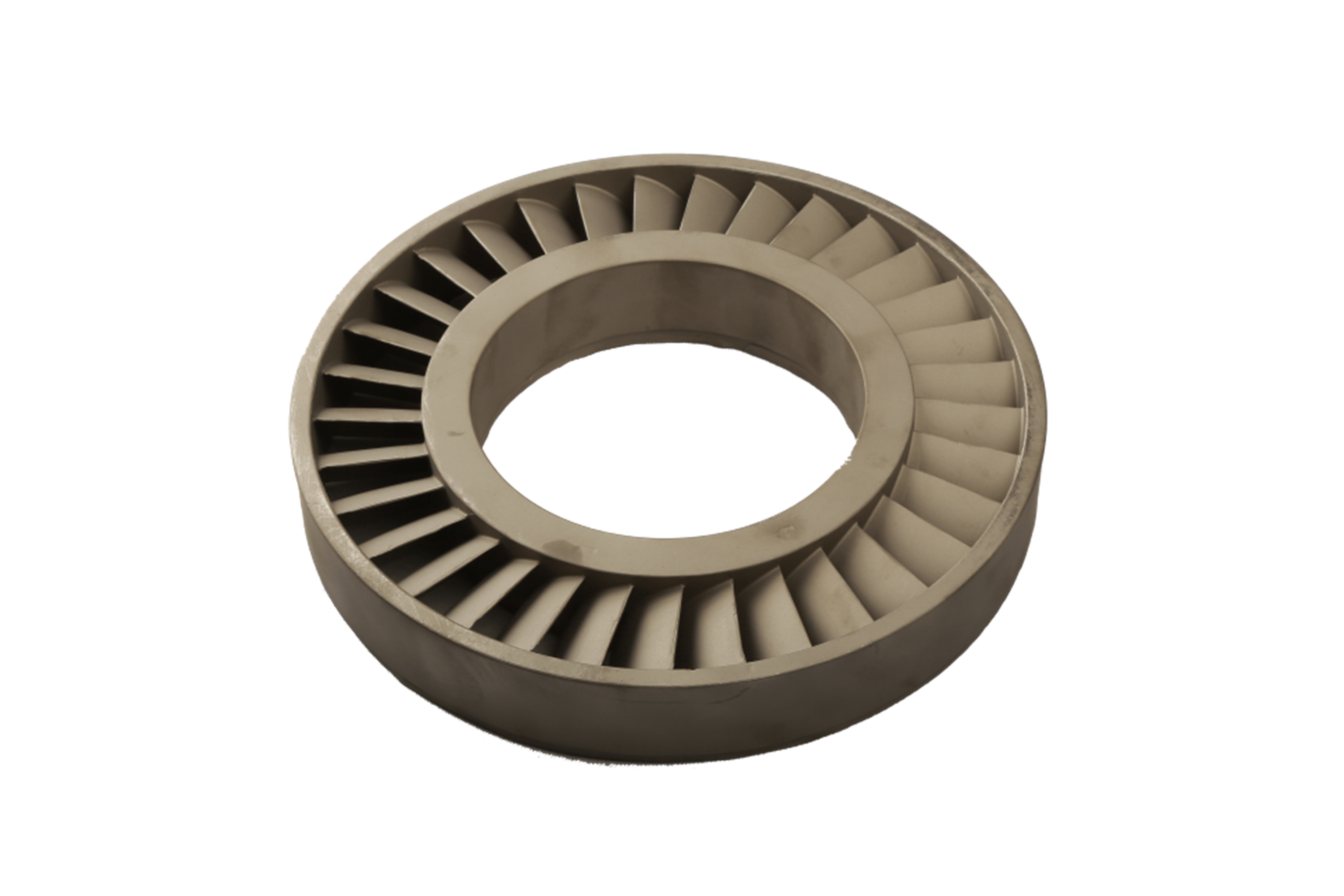
Kerntechnologie: Einkristallguss von PWA 1484
Wir verwenden Vakuum-Richtungserstarrung, um PWA 1484 Marinekomponenten mit Einkristall-[001]-Orientierung herzustellen. Die Legierung wird im Vakuum geschmolzen und bei ~1460°C in keramische Schalengussformen gegossen, die auf ~1100°C vorgeheizt sind. Die Formen werden in einem Bridgman-Ofen mit 1–3 mm/min zurückgezogen, um Einkristallstrukturen zu erzeugen, die Korngrenzen eliminieren und die Kriechfestigkeit, die thermische Ermüdungslebensdauer und die Oxidationsbeständigkeit verbessern.
Materialeigenschaften der PWA 1484-Legierung
PWA 1484 ist eine γ′-verfestigte SX-Nickelbasis-Superlegierung mit ausgezeichneten mechanischen und chemischen Stabilitätseigenschaften bei hohen Temperaturen. Sie wird häufig in Turbinenschaufeln der ersten Stufe und strukturellen Heißbereichsteilen verwendet. Zu den Haupteigenschaften gehören:
Eigenschaft | Wert |
|---|---|
Dichte | 8,9 g/cm³ |
Zugfestigkeit (bei 1093°C) | ≥1140 MPa |
Kriechbruchfestigkeit (1000h @ 1093°C) | ≥200 MPa |
Betriebstemperaturgrenze | Bis zu 1200°C |
Oxidationsbeständigkeit | Ausgezeichnet |
Kornstruktur | Einkristall [001] |
Diese Eigenschaften ermöglichen es PWA 1484-Komponenten, die Maß- und mechanische Integrität in Marineturbinen aufrechtzuerhalten, die hohen thermischen Gradienten und korrosiven Gasströmen ausgesetzt sind.
Fallstudie: Herstellung von Marinegasturbinenschaufeln
Projekthintergrund
Ein Auftragnehmer für Marineantriebssysteme benötigte Schaufeln der ersten Stufe und Düsenkomponenten für eine Hochleistungs-Marinegasturbine, die in einem Fregattenklassenschiff verwendet wird. Die Schaufeln mussten 1150°C Abgasbedingungen und salzhaltige Verbrennungsgase aushalten. PWA 1484 wurde aufgrund seiner Langzeitbeständigkeit und hohen Kriechbruchfestigkeit ausgewählt. Wir lieferten einkristalline, vakuumgegossene Komponenten mit HIP-Behandlung, CNC-Endbearbeitung und EB-PVD-Wärmedämmschichten.
Typische Marineantriebsanwendungen
Marinegasturbinenschaufeln (z.B. LM2500 Marine, WR-21): PWA 1484 SX-Schaufeln widerstehen extremem Druck und Temperatur in Bordgasturbinen mit langen Einsatzprofilen.
Abgasdüsenleitbleche: Einkristall-Leitbleche, die in Marineturbinendüsen verwendet werden, die geringe thermische Ausdehnung, Oxidationsbeständigkeit und Maßgenauigkeit erfordern.
Hochtemperatur-Übergangsleitungen: Feste SX-Gussteile, die der Abgaswärme und dem Hochgeschwindigkeitsstrom zwischen der Brennkammer und den Turbineneinlassstufen ausgesetzt sind.
Turbolader-Rotorschaufeln (Marine-Diesel-Hybridsysteme): PWA 1484-Schaufeln in fortschrittlichen Marinehilfsmotoren mit extremem thermischen Zyklus und Oxidationsbelastung.
Diese Teile arbeiten in salzreichen Umgebungen mit hohen Zyklen und erfordern die hohe Zuverlässigkeit und thermische Stabilität, die PWA 1484 bietet.
Fertigungslösungen für PWA 1484 Marinekomponenten
Gussprozess Wachsbaugruppen werden in keramische Formen eingebettet und bei ~1460°C vakuumgegossen. Der Formrückzug wird präzise gesteuert, um die Einkristall-[001]-Orientierung zu erzeugen. Kühlprofile sind optimiert, um die Bildung von Streukörnern und interne Defekte zu verhindern.
Nachbearbeitung Heißisostatisches Pressen (HIP) bei ~1190°C und 100 MPa verbessert die Dichte und eliminiert Porosität. Wärmebehandlungssequenzen optimieren die γ′-Ausscheidung für maximale Kriech- und Ermüdungsbeständigkeit.
Nachbearbeitung CNC-Bearbeitung finalisiert Präzisionsmerkmale wie Fußpassungen, Montageflächen und Hinterkanten. EDM wird für enge Profiltoleranzen verwendet. Tiefbohren ermöglicht die Integration von Kühlkanälen.
Oberflächenbehandlung Wärmedämmschichten (TBC) werden mittels EB-PVD oder APS aufgetragen, um die Oberflächen vor thermischer Oxidation zu schützen. Aluminidbeschichtungen können für zusätzlichen Salz-Korrosionsschutz in maritimen Umgebungen verwendet werden.
Prüfung und Inspektion Alle Komponenten werden Röntgen-NDT, CMM-Maßvalidierung, Hochtemperatur-Zug- und Kriechprüfungen sowie metallographische Analyse unterzogen, um die SX-Struktur, γ′-Verteilung und Haftung der Beschichtung zu bestätigen.
Kernfertigungsherausforderungen
Beibehaltung der Einkristall-[001]-Orientierung über komplexe, mehrachsige Schaufelgeometrien.
Verhinderung von Streukörnern und Rekristallisation während der Erstarrung und Wärmebehandlung.
Sicherstellung der Oxidationsbeständigkeit und Ermüdungsbeständigkeit in salzreichen, hochtemperierten Abgasströmen.
Ergebnisse und Verifizierung
SX-Integrität durch Laue-Beugung und REM-Mikrostrukturabbildung verifiziert.
Maßgenauigkeit innerhalb von ±0,05 mm durch 3D-CMM-Scanning bestätigt.
Kriechbruchfestigkeit ≥200 MPa bei 1093°C durch 1000-stündige Prüfung validiert.
Oberflächenoxidationsbeständigkeit nach 1000 maritimen Salznebel-/Thermalzyklen erhalten.
FAQs
Warum ist PWA 1484 für Marinegasturbinengussanwendungen geeignet?
Wie steuern Sie die Einkristallorientierung während des Gießens?
Können PWA 1484-Teile für Marineantriebslayouts angepasst werden?
Welche Beschichtungen werden verwendet, um die Oxidations- und Salz-Korrosionsbeständigkeit zu verbessern?
Welche Inspektionsmethoden bestätigen die strukturelle Qualität von einkristallinen Marinekomponenten?
