中文

Critical Superalloy Components for Nuclear Energy Production Hub

目录
Brief Introduction of Nuclear Energy Superalloy Components
Typical Superalloys Used In Nuclear Energy Superalloy Components Manufacturing
Manufacturing Process and Equipment of Nuclear Energy Superalloy Components
Vacuum Investment Casting
Powder Metallurgy
Superalloy Forging
Superalloy CNC Machining
Superalloy Additive Manufacturing
Testing Methods and Equipment In Nuclear Energy Superalloy Components QC
Ultrasonic Testing
X-Ray Inspection
Mechanical Testing
Scanning Electron Microscope (SEM) Analysis
Creep and Fatigue Testing
Industries and Applications of Nuclear Energy Superalloy Components
Typical Post-Process of Nuclear Energy Superalloy Components
Rapid Prototyping and Verification of Nuclear Energy Superalloy Components
Rapid Prototyping Process
Importance of Verifying Samples
FAQs

Brief Introduction of Nuclear Energy Superalloy Components

Superalloy components are essential in the nuclear energy sector because they can withstand high temperatures, radiation, and corrosive environments. These components play critical roles in reactors, control rods, and heat exchangers, ensuring safety and efficiency in energy production. Manufactured from advanced superalloys, these components are built to endure extreme conditions without compromising structural integrity or performance.

Nuclear energy production demands components that can withstand the combined effects of radiation, pressure, and high temperatures over long periods. The unique requirements of nuclear reactors, such as maintaining material stability under neutron bombardment and resisting corrosion from coolants, make superalloys indispensable. Superalloy components play a crucial role in ensuring continuous operation, efficient power output, and safety in high-risk nuclear environments.

critical-superalloy-components-for-nuclear-energy-production-hub

Typical Superalloys Used In Nuclear Energy Superalloy Components Manufacturing

The materials manufacturing superalloy components for nuclear energy applications must offer excellent thermal stability, radiation resistance, and mechanical strength. Typical superalloys used include:

  • Inconel Alloys: Highly resistant to oxidation, corrosion, and high-temperature environments, making them ideal for reactor components. Inconel alloys, such as Inconel 718 and Inconel 625, are renowned for retaining their mechanical strength even at temperatures as high as 700-800°C, which is crucial for critical reactor components like pressure vessels and piping.

  • Hastelloy offers exceptional resistance to both chemical attack and radiation, making it well-suited for fuel rods and containment systems. Hastelloy alloys, such as Hastelloy C-276, are particularly useful in handling aggressive chemicals and radiation exposure, making them ideal for internal reactor systems and waste processing.

  • Nimonic: Used in high-temperature zones due to its remarkable thermal stability and creep resistance. Nimonic alloys are suitable for valves, springs, and fasteners that operate in the high-temperature sections of reactors where consistency in performance is critical.

  • Rene Alloys: Renowned for their exceptional strength and durability, they are particularly well-suited for high-stress reactor applications. Rene 41 is used where components must endure high mechanical loads while resisting environmental degradation caused by heat and radiation.

Superalloys used in nuclear applications must be robust against radiation-induced damage, which can alter their mechanical properties over time. These materials are selected for their resilience in high-temperature conditions and ability to resist neutron embrittlement and avoid swelling, which are common challenges in nuclear reactors.

Manufacturing Process and Equipment of Nuclear Energy Superalloy Components

Producing superalloy components for nuclear energy requires precision and advanced manufacturing technologies. The most typical processes include:

Vacuum Investment Casting

Vacuum investment casting ensures components with complex shapes are produced with high integrity and minimal impurities. This method is ideal for manufacturing intricate components, such as reactor core parts and containment systems, where material purity is crucial to performance and safety.

Powder Metallurgy

Powder metallurgy manufactures high-strength components, offering homogeneous material distribution and minimal defects. It is ideal for producing components like turbine discs and structural supports, where uniform material properties are essential for withstanding high mechanical loads and resisting radiation damage.

Superalloy Forging

Superalloy forging produces components with superior mechanical properties, particularly for high-stress applications. Forging creates parts with directional grain flow, enhancing mechanical strength and fatigue resistance. This process is suitable for producing control rod drive mechanisms and critical components of pressure vessels.

Superalloy CNC Machining

Superalloy CNC machining ensures tight tolerances and precise geometries, which are essential for reactor components. CNC machining is employed after initial casting or forging to achieve the required dimensions, particularly for sealing interfaces, valve seats, and critical joints.

Superalloy Additive Manufacturing

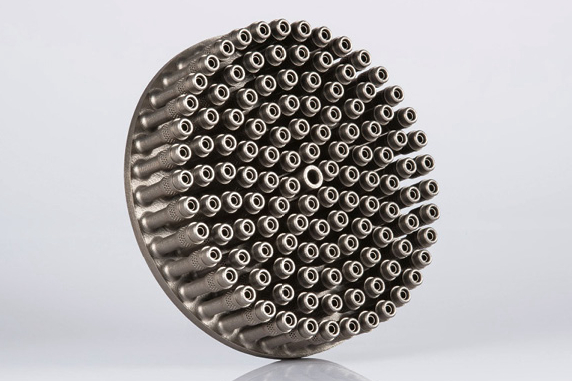
Superalloy additive manufacturing, utilizing Selective Laser Melting (SLM) technology, enables the rapid prototyping and production of parts with intricate internal cooling channels and optimized designs. Additive manufacturing is perfect for producing complex components like nozzles and fittings, which benefit from design flexibility and optimized material usage.

Testing Methods and Equipment In Nuclear Energy Superalloy Components QC

Quality control is crucial to ensure the reliability and safety of superalloy components in nuclear energy applications. Typical testing methods include:

Ultrasonic Testing

Ultrasonic testing is used to detect internal defects and ensure homogeneity. This method involves sending high-frequency sound waves through a material and analyzing the reflected waves to identify defects, such as voids, cracks, or inclusions, thereby ensuring the integrity of critical parts, including pressure vessels. The technique is essential for verifying internal structural quality in high-stress environments.

X-Ray Inspection

X-ray inspection is used to identify porosity and internal cracks. This method is particularly useful for components with complex shapes, where traditional surface inspections may not reveal hidden internal flaws that could lead to component failure under operational stresses. X-ray inspection ensures the detection of critical internal defects that might compromise reactor safety.

Mechanical Testing

Mechanical testing evaluates the tensile strength, hardness, and impact resistance of the alloy, ensuring it meets the required specifications. Components used in reactors must withstand mechanical loads, pressure, and dynamic stresses without deforming or failing. Mechanical testing confirms the material's durability and compliance with rigorous performance standards.

Scanning Electron Microscope (SEM) Analysis

SEM analysis offers an in-depth examination of microstructure and verification of material integrity. SEM allows for examining grain structure, phase distribution, and the presence of secondary phases or impurities, which could affect performance in the reactor's extreme environment. This analysis is critical for understanding microstructural integrity and identifying potential failure causes.

Creep and Fatigue Testing

Creep and fatigue testing determine the component's endurance under high-temperature and high-stress conditions. In a nuclear reactor, numerous components undergo prolonged exposure to both heat and stress. Creep testing measures a material's ability to resist deformation over time, while fatigue testing evaluates how well a component can withstand repeated stress cycles. These tests are essential for predicting component life under prolonged operational conditions.

Industries and Applications of Nuclear Energy Superalloy Components

Superalloy components are vital in multiple nuclear energy sectors:

Nuclear Reactors: Components such as control rods, reactor cores, and pressure vessels. These parts must endure high temperatures, radiation, and mechanical loads while maintaining structural integrity, as their failure could lead to severe consequences.

Heat Exchangers: High-performance alloys transfer heat efficiently under extreme conditions. Superalloys in heat exchangers must resist thermal stress and the corrosive effects of coolant fluids, ensuring efficient heat transfer away from the reactor core.

Nuclear Waste Containment: Containers and barriers built with superalloys to safely store radioactive waste. Superalloys provide the necessary corrosion resistance and mechanical strength to ensure that waste containment remains secure for decades or centuries.

Control Rod Assemblies: Key in regulating the nuclear fission reaction, requiring components that resist wear, corrosion, and radiation. Control rods must move precisely and reliably to adjust the reactor's power output, necessitating materials that can withstand radiation damage without losing their mechanical properties.

The applications of these components extend across the nuclear energy supply chain, from power generation to waste management. Their performance directly impacts the safety, efficiency, and reliability of nuclear power plants, making the quality and durability of their components of utmost importance.

Typical Post-Process of Nuclear Energy Superalloy Components

After initial manufacturing, superalloy components for nuclear energy applications undergo specific post-processing treatments to enhance performance:

Hot Isostatic Pressing (HIP): Used to remove internal voids and enhance mechanical properties. HIP applies high pressure and temperature to the component, closing internal voids and homogenizing the material, thus increasing its strength and resistance to radiation-induced damage.

Heat Treatment: To optimize microstructure, enhancing durability and resistance to radiation damage. Heat treatments, such as solution annealing and aging, are applied to ensure that the alloy retains its mechanical properties over long-term exposure to heat and radiation.

CNC Machining: Final shaping and precision finishing to achieve tight tolerances. This step ensures that the components fit precisely within the reactor system, minimizing leaks and ensuring efficient operation.

Thermal Barrier Coatings (TBC): Applied to protect components from high-temperature environments and thermal degradation. TBCs are primarily used on components such as reactor vessel liners to reduce thermal stresses and enhance longevity under harsh thermal conditions.

Post-processing is crucial for enhancing the performance of nuclear components and ensuring they can withstand operational stresses over extended periods. These processes ensure that each component meets the exacting standards for safe nuclear energy production.

Rapid Prototyping and Verification of Nuclear Energy Superalloy Components

Rapid Prototyping Process

Rapid prototyping of superalloy components is crucial in reducing development times and optimizing designs. Techniques such as superalloy 3D printing (e.g., SLM) and CNC machining enable the creation of prototypes with complex geometries, allowing for testing and improvements before full-scale production. Additive manufacturing offers a significant advantage by enabling intricate designs that were previously impossible with traditional methods, such as internal cooling channels that enhance heat dissipation.

Importance of Verifying Samples

Verification of prototypes is essential to ensure that all design specifications are met and that the components can perform reliably under operational conditions. Rigorous verification helps detect and resolve potential issues early, ensuring that components meet the stringent requirements of nuclear energy applications. Testing prototype components in conditions that simulate real-world environments provides insights into their expected performance and highlights areas for potential design improvements.

Verification also plays a vital role in qualifying new designs for safety certification, which is crucial in the nuclear industry. Components that pass these tests are more likely to perform consistently, reducing the risk of unplanned outages or catastrophic failure.

FAQs

订阅以获取设计和制造专业提示,直接发送到您的收件箱。
分享此文章: