
Fabricant de Coulée sous Vide à Modèle Perdu d'Anneaux de Tuyères de Turbine en Superalliage Rene 41
Introduction
Rene 41 est un superalliage nickel-chrome à haute résistance conçu pour une résistance exceptionnelle au fluage, à l'oxydation et une stabilité mécanique à des températures allant jusqu'à 980°C. Avec une résistance à la traction d'environ 1240 MPa et une résistance exceptionnelle à la fatigue thermique, le Rene 41 est idéal pour la fabrication d'anneaux de tuyères de turbine fonctionnant dans des environnements de turbine à gaz à haute température et haute contrainte.
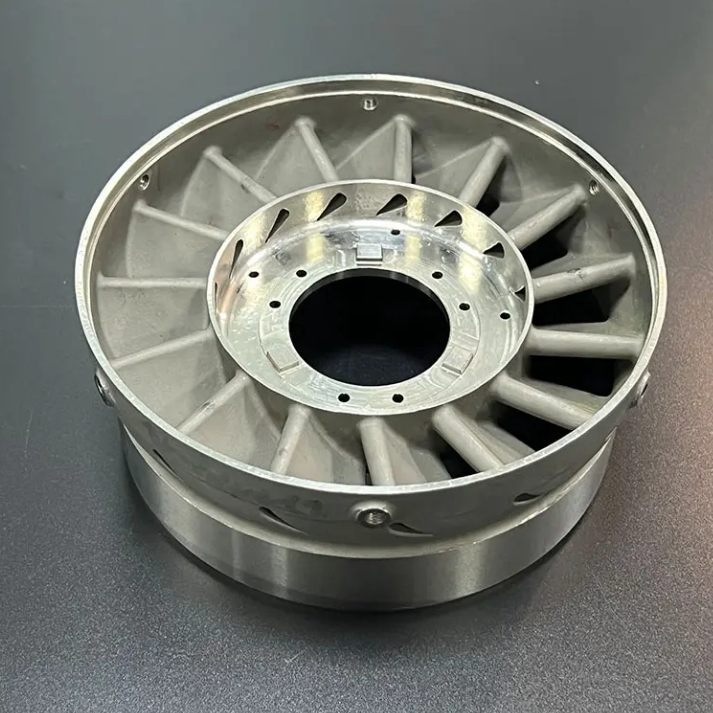
Chez Neway AeroTech, nous produisons des anneaux de tuyères de turbine en Rene 41 par coulée de précision sous vide à modèle perdu, garantissant une précision dimensionnelle supérieure, une finition de surface optimale et une intégrité métallurgique sans défaut pour les turbines à gaz aérospatiales et industrielles.
Principaux Défis de Fabrication pour les Anneaux de Tuyères en Rene 41
Maintenir la composition de l'alliage (base Ni, Cr ~19%, Co ~11%, Mo ~10%, Ti ~3,1%) pour des performances thermiques et mécaniques maximales.
Contrôler les vitesses de solidification (~3–6°C/min) pour prévenir la microségrégation et favoriser une structure à grains fins.
Atteindre des tolérances dimensionnelles dans ±0,05 mm pour répondre aux exigences strictes d'aérodynamique et d'étanchéité.
Assurer des finitions de surface supérieures (Ra ≤1,6 µm) pour un écoulement d'air optimisé et des pertes par traînée minimales.
Procédé de Coulée sous Vide à Modèle Perdu pour les Anneaux de Tuyères en Rene 41
Le processus de production comprend :
Fabrication du Modèle en Cire : Modèles en cire de haute précision créés avec une précision dimensionnelle de ±0,1 %.
Formation de la Coquille Céramique : Couches de barbotines céramiques fines et de revêtements de sable de haute pureté appliquées pour la résistance du moule.
Décire : Autoclavage à la vapeur à ~150°C pour éliminer la cire sans endommager la coquille céramique.
Fusion et Coulée sous Vide : Alliage Rene 41 fondu à ~1400°C et coulé sous vide (<10⁻³ Pa) pour éviter l'oxydation et la contamination.
Solidification Contrôlée : Refroidissement lent favorisant des grains équiaxes fins, améliorant la résistance au fluage et à la fatigue.
Élimination de la Coquille et Finition : Les coquilles sont retirées, un usinage CNC est appliqué et les surfaces sont polies selon les exigences aérodynamiques.
Analyse Comparative des Méthodes de Coulée pour les Anneaux de Tuyères
Procédé | Qualité de Finition de Surface | Précision Dimensionnelle | Résistance Mécanique | Résistance aux Hautes Températures | Niveau de Coût |
|---|---|---|---|---|---|
Coulée sous Vide à Modèle Perdu | Excellente (Ra ≤1,6 µm) | Très Élevée (±0,05 mm) | Supérieure (~1240 MPa) | Exceptionnelle (~980°C) | Modéré |
Coulée à Cristaux Équiaxes | Bonne (Ra ~3 µm) | Élevée (±0,05 mm) | Très Bonne (~1200 MPa) | Élevée (~950°C) | Modéré |
Coulée en Sable | Modérée (Ra ~12 µm) | Modérée (±0,5 mm) | Bonne (~1000 MPa) | Modérée (~850°C) | Faible |
Usinage CNC à partir de Billettes | Excellente (Ra ≤0,8 µm) | Très Élevée (±0,01 mm) | Excellente (~1240 MPa) | Exceptionnelle (~980°C) | Élevé |
Stratégie de Fabrication Optimale pour les Anneaux de Tuyères en Rene 41
La coulée sous vide à modèle perdu permet d'atteindre Ra ≤1,6 µm, une précision de ±0,05 mm et une résistance supérieure (~1240 MPa) pour des anneaux de tuyères complexes à 980°C.
La coulée à cristaux équiaxes offre une surface de Ra ~3 µm, une précision de ±0,05 mm et une haute résistance (~1200 MPa) pour les anneaux de second étage.
La coulée en sable offre un faible coût, une surface de Ra ~12 µm, une précision de ±0,5 mm et une résistance modérée (~1000 MPa) pour les pièces non critiques.
L'usinage CNC à partir de billettes permet d'atteindre Ra ≤0,8 µm, une précision de ±0,01 mm et une excellente résistance (~1240 MPa) pour des anneaux de tuyères sur mesure et de haute précision.
Aperçu des Performances de l'Alliage Rene 41
Propriété | Valeur | Pertinence pour l'Application |
|---|---|---|
Résistance à la Traction | ~1240 MPa | Supporte des charges mécaniques extrêmes dans les turbines |
Limite Élastique | ~1080 MPa | Haute stabilité sous contrainte élevée continue |
Température Maximale de Fonctionnement | ~980°C | Maintient la résistance et la résistance à l'oxydation dans les conditions d'entrée de turbine |
Résistance au Fluage | Excellente | Prolonge la durée de vie de l'anneau de tuyère sous charge à long terme |
Résistance à la Fatigue | ~620 MPa | Résiste à des cycles thermiques et mécaniques sévères |
Avantages de l'Utilisation du Rene 41 pour les Anneaux de Tuyères
Résistance supérieure aux hautes températures garantit la stabilité aux températures d'entrée de turbine (~980°C).
Résistance exceptionnelle au fluage prolonge la durée de service de l'anneau de tuyère sous charge soutenue.
Résistance exceptionnelle à l'oxydation maintient l'intégrité de surface dans les flux de gaz d'échappement agressifs.
Excellentes performances en fatigue prévient la fissuration sous chargement thermique et mécanique cyclique.
Techniques de Post-Traitement pour les Anneaux de Tuyères en Rene 41
Pressage Isostatique à Chaud (HIP) : Élimine la microporosité à ~1160°C et 100 MPa, améliorant la résistance au fluage et à la fatigue.
Traitement Thermique de Mise en Solution et de Vieillissement : Développe un renforcement uniforme par la phase γ', améliorant la résistance aux hautes températures et la ductilité.
Usinage CNC de Précision : Atteint une tolérance de ±0,01 mm et Ra ≤0,8 µm pour les profils aérodynamiques.
Finition de Surface (Polissage/Grenaillage) : Améliore la résistance à la fatigue en induisant des contraintes de surface en compression et en améliorant la douceur.
Inspection et Assurance Qualité pour les Anneaux de Tuyères
Machine à Mesurer Tridimensionnelle (MMT) : Garantit une précision de ±0,05 mm pour les surfaces critiques d'aérodynamique et d'étanchéité.
Contrôle par Ultrasons (UT) : Détecte les défauts internes et assure l'intégrité structurelle.
Contrôle par Pénétration de Liquide (PT) : Identifie les fissures de surface jusqu'à 0,002 mm.
Analyse Métallographique : Vérifie la conformité de la structure des grains et de la distribution des phases avec les normes aérospatiales.
Applications Industrielles et Étude de Cas
Les anneaux de tuyères de turbine en Rene 41 fabriqués par Neway AeroTech sont largement utilisés dans les moteurs aérospatiaux, les turbines à gaz industrielles et les systèmes de propulsion haute performance. Dans un projet aérospatial récent, les anneaux de tuyères en Rene 41 ont maintenu leur stabilité dimensionnelle et leur résistance mécanique sur plus de 10 000 cycles de vol, prolongeant les intervalles de maintenance de 35 % par rapport aux alliages de nickel conventionnels.
FAQ
Quelles tolérances dimensionnelles Neway AeroTech peut-elle atteindre pour les anneaux de tuyères de turbine en Rene 41 ?
Pourquoi la coulée sous vide à modèle perdu est-elle critique pour la fabrication des composants de tuyères en Rene 41 ?
Comment se comporte le Rene 41 par rapport aux autres alliages à base de nickel dans des conditions de haute température ?
Quelles industries utilisent le plus couramment les anneaux de tuyères de turbine en Rene 41 ?
Comment Neway AeroTech assure-t-elle la qualité métallurgique et la durabilité dans les pièces coulées en Rene 41 ?
