
Einkristallguss IN713LC Turbinenrotor
Einführung
Turbinenrotoren sind zentral für die Leistung und Haltbarkeit von Gasturbinen und arbeiten unter extremen Zentrifugal-, thermischen und mechanischen Belastungen. Herkömmliche Gussverfahren führen oft Korngrenzen ein, die die Ermüdungs- und Kriechleistung begrenzen. Um dies zu überwinden, bietet Einkristallguss eine überlegene Lösung – er eliminiert Korngrenzen und richtet die Kornorientierung entlang der optimalen [001]-Achse aus.
Bei Neway AeroTech sind wir spezialisiert auf den Einkristallguss kritischer rotierender Komponenten unter Verwendung von IN713LC, einer hochleistungsfähigen Nickelbasis-Superlegierung mit hervorragenden mechanischen Hochtemperatureigenschaften. Unsere Rotoren werden mit fortschrittlichen Vakuumpräzisionsguss- und gerichteten Erstarrungs-Technologien hergestellt und erfüllen die Anforderungen von Luft- und Raumfahrt, Stromerzeugung und Verteidigungs-Anwendungen.
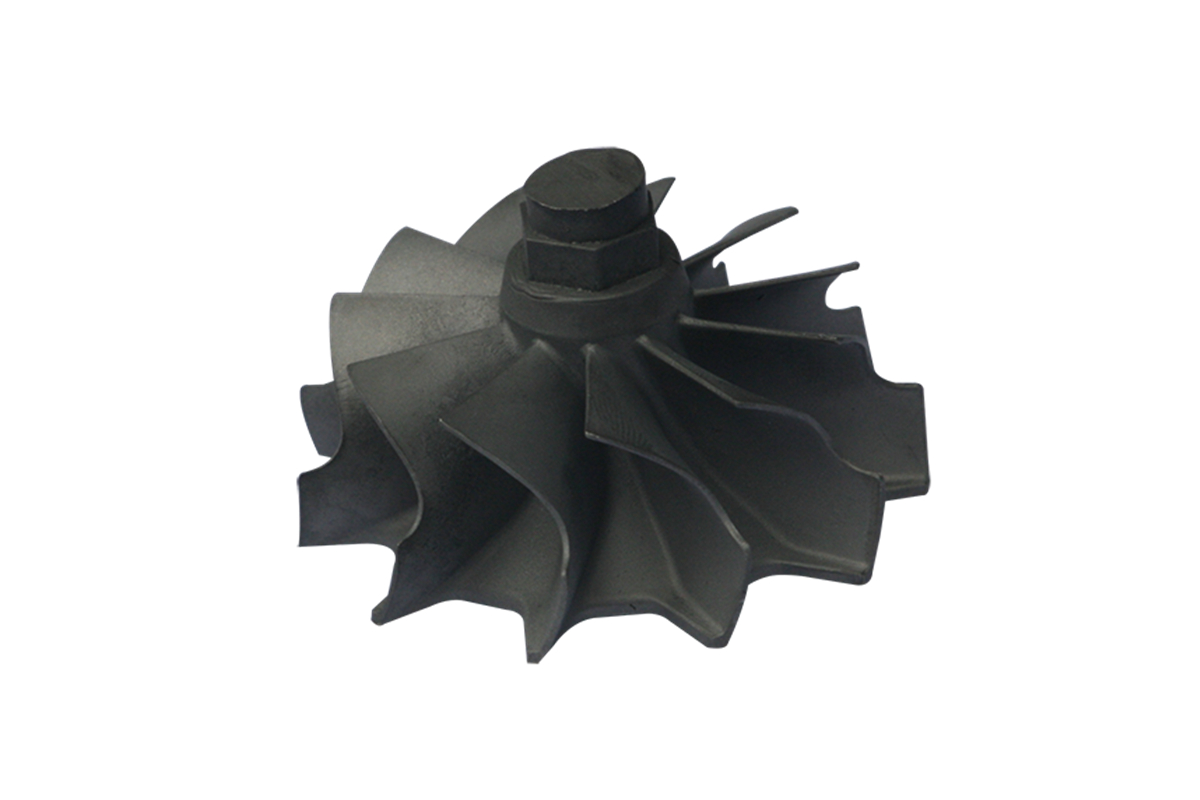
Kerntechnologie des IN713LC Einkristall-Turbinenrotorgusses
Wachsmodellerstellung Großformatige Wachsmodelle werden gespritzt, um die präzise Geometrie von Turbinenrotoren, einschließlich Nabe, Schaufeln und Auswuchtmerkmalen, nachzubilden.
Schalengussformbildung Hochfeste Keramikschalen werden in Schichten (~6–10 mm dick) unter Verwendung von Schlicker und feuerfestem Stuck aufgebaut, um Wärmebeständigkeit und strukturelle Integrität zu gewährleisten.
Kornselektor-Integration Ein spiralförmiger Selektor ist in der Form enthalten, um die Einleitung und das Wachstum eines einzelnen Kristalls entlang der [001]-Orientierung sicherzustellen.
Vakuuminduktionsschmelzen IN713LC-Legierung wird bei ~1450°C in Vakuumöfen (≤10⁻³ Pa) geschmolzen, um Oxide, Gasporosität und Seigerung zu minimieren.
Gerichtete Erstarrung Die Form wird mit 2–4 mm/min aus der Heizzone gezogen, wodurch eine vollständig ausgerichtete Einkristall-Rotorstruktur ohne Korngrenzen entsteht.
Schalenabschlag und Reinigung Nach dem Guss werden Keramikformen durch Hochdruckstrahlen und chemische Reinigung entfernt, um feine Geometrien zu erhalten.
Heißisostatisches Pressen (HIP) HIP wird bei 1150°C und 150 MPa durchgeführt, um innere Porosität zu beseitigen und die mechanische Integrität zu verbessern.
Wärmebehandlung und Alterung Die Rotoren durchlaufen einen Lösungs- und Alterungs-Wärmebehandlungszyklus, um das Gefüge zu verfeinern und die γ'-Phasenverteilung zu optimieren.
IN713LC-Materialeigenschaften für Turbinenrotoren
IN713LC wird aufgrund seiner überlegenen Hochtemperaturleistung, Phasenstabilität und Gießeigenschaften ausgewählt:
Maximale Betriebstemperatur: 982°C (1800°F)
Zugfestigkeit: ≥1034 MPa
Kriechbruchfestigkeit: ≥200 MPa nach 1000 Std. bei 760°C
Kornorientierung: Einkristall [001], Abweichung <2°
Oxidationsbeständigkeit: Hervorragend in Turbinenabgasumgebungen
Gamma-Prime-Anteil: >50% für anhaltende Tragfähigkeit
Fallstudie: IN713LC Einkristallrotor für Leistungsturbine
Projekthintergrund
Ein OEM für Energieanlagen beauftragte Neway AeroTech mit der Herstellung von Einkristall-IN713LC-Turbinenrotoren für eine hocheffiziente Industriegasturbine, die kontinuierlich bei 950–980°C betrieben wird. Das Ziel war es, >20.000 Betriebsstunden mit minimaler Verformung und hoher Rotationsbalance zu erreichen.
Rotoranwendungen
Stromerzeugungsrotoren (z.B. Siemens SGT, GE LM Serie): Verwendet in Grundlast-Gasturbinen, die Kriech- und Oxidationsbeständigkeit erfordern.
Luftfahrtantriebsstrang-Kernrotoren: Hoher Rotationsgeschwindigkeit ausgesetzt, erfordern Ermüdungs- und Thermoschockbeständigkeit.
Marineantriebsturbinen (z.B. LM2500+): Arbeiten in korrosiven Umgebungen mit kontinuierlichem thermischem Zyklus.
Verteidigungs-Turbojet- und Turbofan-Rotoren: Entscheidend für die Einsatzbereitschaft unter schnellen Lastwechseln und hohen G-Manövern.
Rotorstrukturmerkmale
Zentrale Bohrung und Montageschnittstelle für die Wellenintegration
Schaufelfuß und Deckbänder in monolithischer Struktur geformt
Ausgleichsbohrungen, Kühlkanäle und Spitzendichtungen
Komplexe Schaufelprofile, die mit dem Strömungspfad ausgerichtet sind
Fertigungsprozess für IN713LC Einkristallrotor
Integriertes Form- und Selektor-Design Rotorspezifische Wachsbaugruppen umfassen Kornselektoren, Angusssysteme und Keramik-Kühlplatten für optimierte Zugkontrolle.
Vakuumgussdurchführung IN713LC-Legierung wird im Vakuum unter Verwendung von präzisionsgesteuerter gerichteter Erstarrungsausrüstung geschmolzen und gegossen.
Nachguss-HIP-Behandlung HIP bei 1150°C/150 MPa gewährleistet porositätsfreie Strukturen und verbesserte Ermüdungsleistung.
Wärmebehandlung Lösungs- und Alterungsbehandlung passt das Gefüge für Phasenstabilität und Wärmebeständigkeit an.
CNC-Feinbearbeitung Wichtige Oberflächen werden mit Superlegierungs-CNC-Bearbeitung bearbeitet, um enge Toleranzen und Rotationssymmetrie beizubehalten.
Prüfung und ZfP Vollständige Maßprüfung mit CMM und interne Fehlerprüfung mit Röntgen- und Ultraschalltechniken.
Kernherausforderungen beim Rotor-Einkristallguss
Vermeidung von Streukörnern in Mehrschaufel- und dickwandigen Querschnittsbereichen
Kontrolle der Abkühlraten für komplexe Geometrien
Beibehaltung der [001]-Orientierung über variierende Schaufellängen
Erreichen von Balance und Maßkonsistenz nach der Erstarrung
Ergebnisse und Verifizierung
100% Einkristallstruktur mit bestätigter [001]-Orientierung
Kornabweichung <2°, verifiziert durch EBSD
Zug- und Kriechleistung übertraf die Auslegungsvorgaben
Rotor-Dynamikbalance innerhalb von ±3 g·cm ohne Korrektur gehalten
Alle Teile bestanden die ZfP ohne kritische Fehler
FAQs
Warum Einkristallguss für Turbinenrotoren verwenden?
Kann IN713LC ausreichende Leistung für rotierende Teile erreichen?
Welche Prüfungen stellen die Rotorintegrität nach dem Einkristallguss sicher?
Wie wird die dynamische Balance in Einkristallrotoren aufrechterhalten?
Welche Branchen verwenden IN713LC Einkristall-Turbinenrotoren?
