
Inconel 718 Nickellegierung Superlegierung Richtungsguss Turbinenschaufeln
Einführung
Turbinenschaufeln in Hochleistungs-Luft- und Raumfahrt- sowie Industriegasturbinen sind extremen Temperaturen, hohen Rotationslasten und langen thermischen Zyklen ausgesetzt. Diese Bedingungen erfordern Materialien mit außergewöhnlicher Kriechbeständigkeit, Ermüdungsdauerfestigkeit und Oxidationsstabilität. Inconel 718, eine nickelbasierte, ausscheidungshärtende Superlegierung, ist aufgrund ihrer ausgezeichneten mechanischen Leistung bis zu 700°C und hervorragender Schweißbarkeit ein weit verbreitetes Material für Turbinenkomponenten.
Während Inconel 718 traditionell mit gleichachsigen Kornstrukturen gegossen wird, profitieren fortschrittliche Anwendungen heute von Richtungsguss, der die Körner entlang der [001]-Orientierung ausrichtet, um die Kriechfestigkeit und die thermische Ermüdungsbeständigkeit zu verbessern. Neway AeroTech bietet Vakuum-Feinguß von Inconel 718 Turbinenschaufeln unter Verwendung von gerichteter Erstarrung an und bietet so eine verbesserte Bauteilleistung für Luft- und Raumfahrt, Stromerzeugung und Marineturbinensysteme.
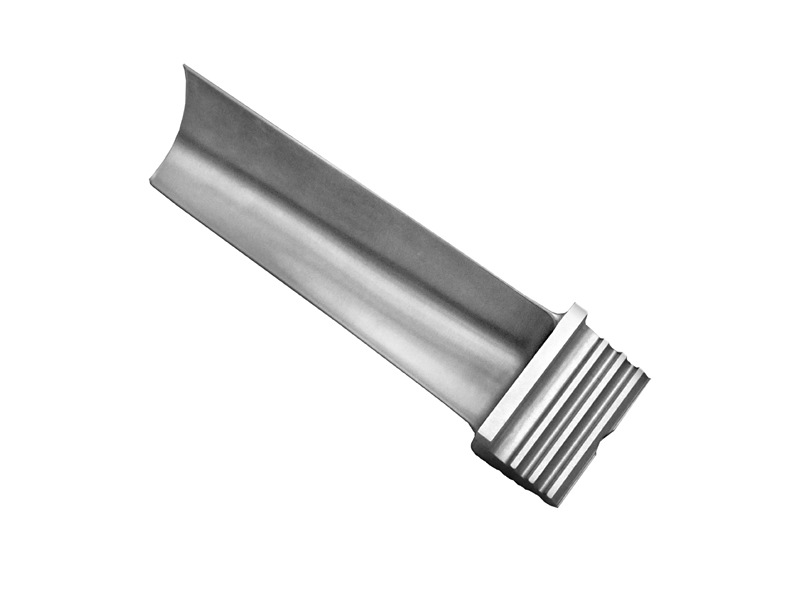
Kerntechnologie des Richtungsgusses für Inconel 718 Turbinenschaufeln
Wachsmodellherstellung Hochpräzise Wachsmodelle werden hergestellt, um die Geometrie von Profil, Fuß und Plattform innerhalb einer Toleranz von ±0,05 mm zu reproduzieren.
Schalengussformkonstruktion Feuerfeste Keramikformen (6–10 mm) werden schichtweise aufgebaut, um die gerichtete Erstarrung und komplexe Schaufelkonturen zu handhaben.
Kornselektor-Integration Spiral-Kornselektoren oder Starterblöcke leiten das gerichtete Wachstum von [001]-säulenförmigen Körnern vom Fuß zur Spitze und reduzieren transversale Grenzen.
Vakuum-Induktionsschmelzen Inconel 718-Legierung wird bei ~1380°C unter Vakuum (≤10⁻³ Pa) geschmolzen, um die chemische Reinheit zu erhalten und Porosität zu verhindern.
Kontrollierte Erstarrung Die Form wird mit 2–4 mm/min durch einen Temperaturgradienten aus dem Ofen gezogen, wodurch gerichtet erstarrte Mikrostrukturen gebildet werden.
Schalenentfernung und Oberflächenbearbeitung Die Schalen werden mittels Hochdruckstrahlen und chemischer Reinigung entfernt, um die Profilgenauigkeit und Oberflächenqualität zu erhalten.
Wärmebehandlung und Ausscheidungshärtung Lösungsglühen und Ausscheidungshärtung stabilisieren die γ′- und γ″-Phasen und verbessern die Zugfestigkeit und Kriechbeständigkeit.
Endbearbeitung und Prüfung EDM, CNC-Bearbeitung, CMM und Röntgenprüfung stellen die Konformität mit den technischen Spezifikationen sicher.
Materialeigenschaften von Inconel 718 im Richtungsguss
Maximale Betriebstemperatur: ~700°C
Zugfestigkeit: ≥1240 MPa
Streckgrenze: ≥1030 MPa
Kriechbruchfestigkeit: ≥180 MPa bei 650°C (1000 Stunden)
Ermüdungsbeständigkeit: Hervorragend unter thermischer und mechanischer Zyklisierung
Kornstruktur: Gerichtet ausgerichtete [001]-Körner mit <2° Abweichung
Phasenstabilität: Kontrollierte γ′- und γ″-Ausscheidung durch Wärmebehandlung nach dem Guss
Fallstudie: Gerichtet gegossene Inconel 718 HPT-Schaufeln für Industriegasturbine
Projekthintergrund
Neway AeroTech wurde ausgewählt, um gerichtet erstarrte Inconel 718-Schaufeln für einen Hochdruckturbinen(HPT)-Abschnitt einer 50 MW Industriegasturbine herzustellen. Der Kunde benötigte ermüdungsbeständige Schaufeln, die bei 670°C für den kontinuierlichen Grundlastbetrieb arbeiten können.
Anwendungsbeispiele
Hochdruckturbinenschaufeln (Flugzeugtriebwerksableitungen) Schnellen thermischen Übergängen und hohen Fliehkräften ausgesetzt.
Stromerzeugungsturbinenprofile Arbeiten unter anhaltenden thermischen Lasten mit minimalen Wartungsausfallzeiten.
Marinegasturbinenrotoren Werden in salzhaltigen, korrosiven Umgebungen mit Anforderungen an thermische Schockbeständigkeit eingesetzt.
Herstellungsablauf für gerichtet gegossene Inconel 718-Schaufeln
Form- und Angussoptimierung CFD-gesteuertes Design stellt gerichteten Kornfluss, reduzierte Turbulenz und minimierte Porosität sicher.
Vakuumgussdurchführung Der Guss wird in Vakuumöfen mit präziser Abzugsratenkontrolle durchgeführt, um das säulenförmige Kornwachstum zu fördern.
Wärmebehandlung und Phasenkontrolle Lösungsglüh- und Ausscheidungshärtungsbehandlungen verfeinern die γ′/γ″-Verteilung und stabilisieren die mechanischen Eigenschaften für Hochzyklusleistung.
CNC-Bearbeitung und EDM-Endbearbeitung Befestigungsfüße, Dichtflächen und Kühllöcher werden mittels CNC-Bearbeitung und EDM fertiggestellt.
Endgültige Qualitätsprüfung Die Kornorientierung wird mittels EBSD verifiziert, Röntgen und CMM stellen eine nullfehlerfreie Lieferung sicher.
Wesentliche Fertigungsherausforderungen
Erzielung einer konsistenten gerichteten Erstarrung in komplexen Profilgeometrien
Verhinderung der Bildung von Streukörnern nahe Schaufelfußübergängen
Sicherstellung vollständiger γ″-Ausscheidung während der Ausscheidungshärtung ohne Überalterung
Einhalten enger Maßtoleranzen nach Wärmebehandlung und Bearbeitung
Ergebnisse und Verifizierung
[001]-Kornorientierung über die Schaufelspannweite mit <2° Abweichung verifiziert
Kriechbruchfestigkeit ≥180 MPa bei 650°C in Testproben bestätigt
Maßtoleranzen innerhalb von ±0,03 mm für alle kritischen Merkmale eingehalten
100%ige Ultraschall- und radiografische ZfP-Konformität für alle Gussteile
Mechanische und metallurgische Zertifizierung gemäß AS9100- und NADCAP-Standards bereitgestellt
FAQs
Warum Richtungsguss für Inconel 718 Turbinenschaufeln verwenden?
Welche Vorteile bietet Inconel 718 gegenüber anderen Superlegierungen?
Wie wird die Kornorientierung während des Richtungsgusses kontrolliert?
Können gerichtete Inconel 718-Schaufeln nach dem Einsatz repariert werden?
Welche Prüfmethoden werden verwendet, um die Gussintegrität zu verifizieren?
