
Impression 3D de composants d'engrenages personnalisés en acier au carbone et en acier inoxydable 30...
Introduction à l'impression 3D d'engrenages personnalisés en alliages d'acier
L'impression 3D permet la fabrication efficace d'engrenages de haute précision en acier inoxydable et en acier au carbone aux profils complexes. Elle est idéale pour les composants de faible volume et de haute résistance dans les systèmes de transmission et de puissance mécanique exigeants.
Chez Neway Aerotech, nos services d'impression 3D métal offrent des solutions sur mesure utilisant de l'acier au carbone, de l'acier inoxydable 304 et 316L pour des engrenages fonctionnels utilisés dans la robotique, l'automobile, l'énergie et l'aérospatiale.
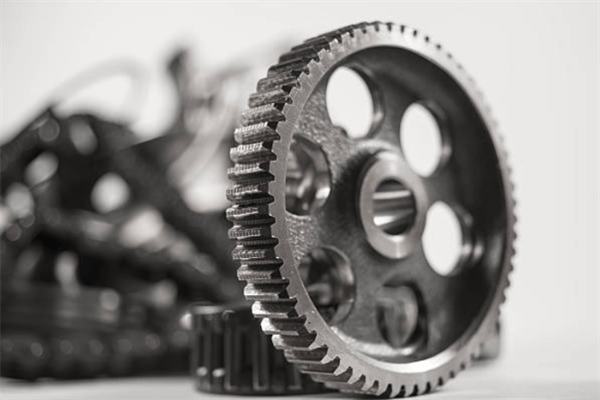
Technologies d'impression 3D pour la fabrication d'engrenages
Procédés d'impression adaptés
Technologie | Épaisseur de couche (μm) | Rugosité de surface (Ra, μm) | Tolérance (mm) | Taille des caractéristiques (mm) | Applications |
|---|---|---|---|---|---|
SLM (Fusion sélective par laser) | 20–50 | 5–15 | ±0,05 | ≥0,3 | Engrenages à forte charge, engrenages de précision à petit module |
DMLS (Frittage laser direct de métaux) | 20–60 | 6–20 | ±0,08 | ≥0,4 | Engrenages d'entraînement industriels, ensembles mécaniques personnalisés |
Binder Jetting (Projection de liant) | 30–100 | 10–25 | ±0,10 | ≥0,6 | Maquettes d'engrenages prototypes, applications à faible charge |
Remarque : Le SLM et le DMLS sont préférés pour les composants finaux nécessitant durabilité, dureté et résistance à l'usure.
Performance des matériaux pour les applications d'engrenages personnalisés
Propriétés de l'acier au carbone et des aciers inoxydables 304 et 316L
Matériau | Résistance à la traction ultime (MPa) | Dureté (HV) | Résistance à la corrosion | Propriétés clés | Applications principales |
|---|---|---|---|---|---|
Acier au carbone | 550–750 | 180–220 | Faible | Haute résistance, rentable, usinable | Composants d'engrenages industriels et agricoles |
510–730 | 170–200 | Modérée | Non magnétique, bonne résistance à l'usure et à l'oxydation | Engrenages pour équipements médicaux, machines alimentaires | |
480–680 | 160–190 | Excellente | Résistant aux chlorures, faible teneur en carbone, ductile | Unités d'engrenages marins, pompes et mélangeurs chimiques |
Stratégie de sélection des matériaux
Acier au carbone : Adapté aux engrenages structurels à forte charge avec une exposition minimale à la corrosion, offrant une grande ténacité et une bonne usinabilité.
Acier inoxydable 304 : Utilisé pour des applications générales nécessitant une résistance modérée à l'usure et un comportement non magnétique.
Acier inoxydable 316L : Sélectionné pour les environnements corrosifs où la rétention de la résistance dans les chlorures et les acides est critique.
Étude de cas : Engrenage en acier inoxydable 316L pour entraînement hydraulique marin
Contexte du projet
Un intégrateur de systèmes marins avait besoin d'un composant d'engrenage planétaire compact capable de fonctionner en continu dans un entraînement hydraulique lubrifié à l'eau de mer. Le matériau devait résister à 1000 heures de cycles de brouillard salin avec une dégradation minimale.
Flux de travail de fabrication
Conception : Importation du modèle STEP d'un engrenage à développante de cercle avec un diamètre extérieur de 42 mm et un module de 0,8 mm.
Matériau : Acier inoxydable 316L sélectionné pour son immunité à la corrosion et sa densité uniforme.
Procédé d'impression : SLM avec une hauteur de couche de 30 μm ; orientation de construction optimisée pour préserver l'intégrité du profil des dents.
Post-traitement : CIC (Compaction Isostatique à Chaud) à 1150 °C et 100 MPa, suivi d'un rectification CNC du profil des dents pour atteindre la classe de précision AGMA 10.
Finition de surface : Électropolissage jusqu'à Ra ≤ 0,6 μm et passivation selon les normes ASTM A967.
Inspection et validation
MMT : Précision dimensionnelle dans les limites de ±0,02 mm sur 16 dents d'engrenage.
Test de brouillard salin : 1000 heures d'exposition selon la norme ASTM B117 sans détection de piqûres ni de rouille.
Microdureté : Moyenne de 190 HV après CIC, stable sur toute la racine et la tête de la dent.
Scan CT : Confirmé une densité >99,95 % sans porosité interne ni délaminage.
Résultats et vérification
L'engrenage en 316L a maintenu l'intégrité du pas, aucun jeu et une stabilité dimensionnelle sous une charge de couple de 12 MPa lors d'une simulation sur banc de 500 heures. Après exposition en service, aucun signe de corrosion, d'usure ou de fracture des dents n'a été observé, validant à la fois la stratégie de matériau et de procédé.
FAQ
Quelle est la rugosité de surface après l'impression 3D de composants d'engrenages métalliques ?
Les engrenages en acier imprimés en 3D peuvent-ils être utilisés dans des systèmes industriels à couple élevé ?
Quels traitements thermiques améliorent la dureté des engrenages en acier au carbone imprimés en 3D ?
Comment le Binder Jetting se compare-t-il au SLM pour la fabrication d'engrenages ?
La passivation est-elle requise pour les pièces d'engrenages en acier inoxydable après impression ?
