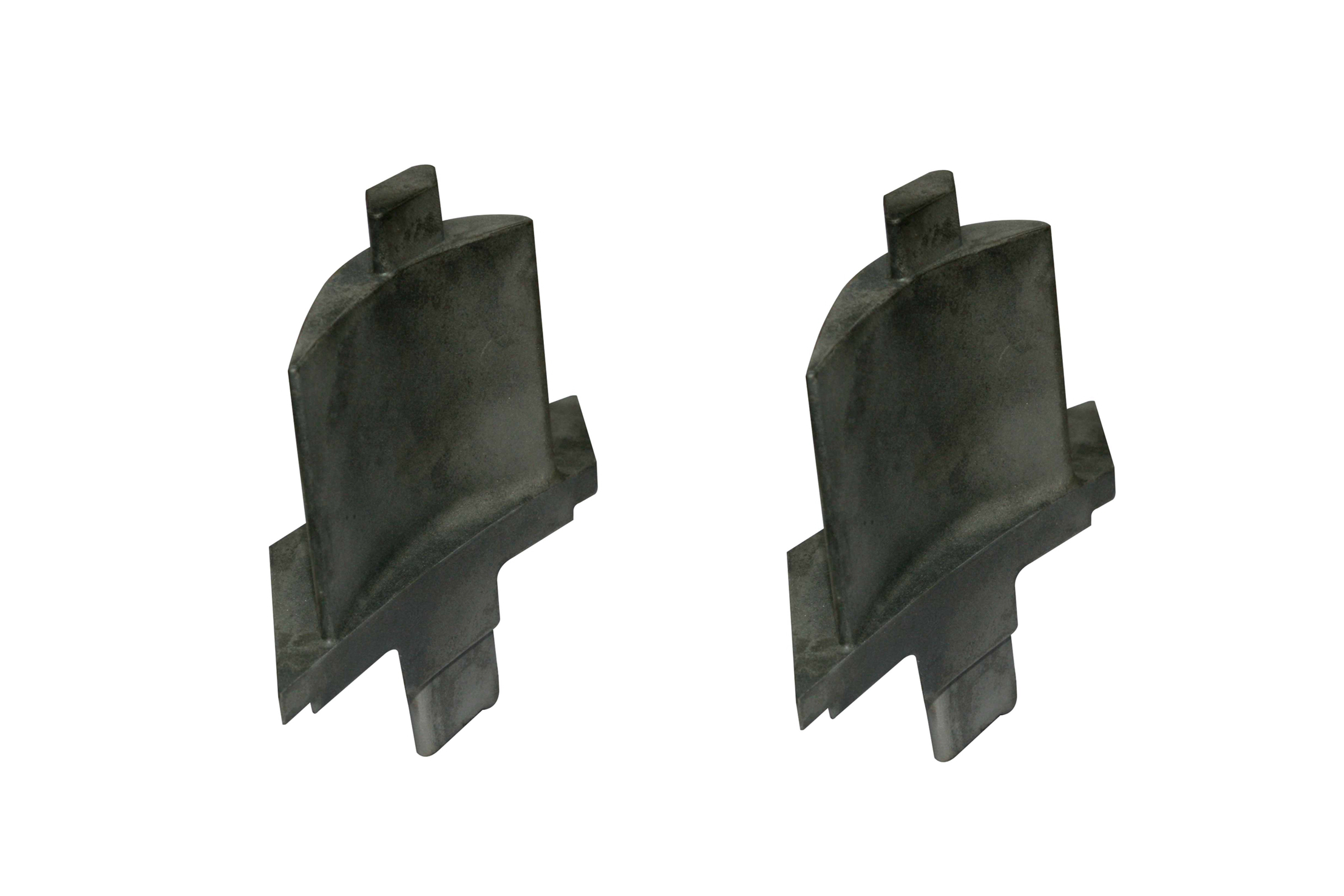
Turbine components such as blades, vanes, and segments in the hot section of aero-engines and gas turbines require materials that deliver high mechanical strength, oxidation resistance, and creep stability at elevated temperatures. Rene N6, a second-generation nickel-based superalloy, is specifically designed for such extreme conditions. When manufactured through directional casting, it achieves columnar grain alignment that significantly improves thermal fatigue resistance and mechanical reliability.
Neway AeroTech provides vacuum investment casting of Rene N6 turbine parts using advanced directional solidification technology. Our components serve critical applications in aerospace, power generation, and defense, where dimensional precision and material integrity are paramount.
Wax Pattern Engineering Injection-molded wax patterns replicate complex part geometries with ±0.05 mm tolerance, including airfoil, platform, and shroud features.
Shell Mold Construction Shell molds are built layer-by-layer using refractory materials, achieving a thickness of 6–10 mm and excellent resistance to thermal stress.
Grain Selector Integration Spiral or bridged grain selectors are added to ensure controlled columnar growth along the [001] crystallographic direction during solidification.
Vacuum Induction Melting Rene N6 is melted under high vacuum (≤10⁻³ Pa) at ~1450°C to achieve chemical homogeneity and low gas content.
Directional Solidification The mold is withdrawn at a controlled rate (2–4 mm/min) through a thermal gradient, forming columnar grains aligned with the turbine gas flow direction.
Shell Removal and Cleaning After solidification, shells are removed using high-pressure blasting and acid leaching, maintaining edge definition and cooling feature integrity.
Hot Isostatic Pressing (HIP) HIP is conducted at 1175°C and 150 MPa to eliminate shrinkage porosity and enhance fatigue resistance.
Heat Treatment Solution and aging treatment is applied to optimize γ′ phase stability and mechanical performance.
Max Operating Temperature: 1100°C
Tensile Strength: ≥1150 MPa at room temperature
Creep Rupture Strength: ≥230 MPa at 980°C, 1000 hours
Grain Orientation: Columnar, [001] direction with <2° deviation
Gamma Prime Volume Fraction: ~70%
Oxidation Resistance: Excellent under prolonged high-temperature exposure
Neway AeroTech was contracted to manufacture first-stage turbine blades and vanes from Rene N6 for a military jet engine program. The project required precise grain alignment, minimal casting defects, and long-term creep stability under 1050–1100°C conditions.
Aeroengine HPT Blades and Vanes (e.g., F119, F135): Operating in extreme thermal gradients and high centrifugal loads.
Industrial Power Turbine Components: Used in hot sections of large-frame turbines for power generation with long service intervals.
Marine Propulsion Turbine Blades: Operating in thermally and chemically aggressive environments requiring oxidation and fatigue resistance.
Wax Assembly Design Casting systems include optimized gating and spiral grain selectors, informed by CFD analysis to control solidification behavior.
Vacuum Casting Execution Rene N6 is poured under vacuum conditions into ceramic shells and directionally solidified with carefully monitored withdrawal speed and temperature gradient.
HIP and Heat Treatment HIP and thermal processing enhance γ′ phase uniformity and eliminate residual casting defects.
Final Machining and EDM Critical cooling passages, bolt holes, and mating faces are completed using CNC machining and EDM.
Quality Control and Testing Components are inspected via CMM, X-ray, and metallographic analysis to confirm internal soundness and grain orientation.
Avoiding stray grains in large airfoil and vane profiles
Managing withdrawal rates for complex geometries
Maintaining dimensional accuracy after post-processing
Ensuring consistent γ′ phase morphology after heat treatment
[001] grain orientation confirmed with <2° deviation via EBSD
Creep rupture strength >230 MPa achieved at 980°C
No shrinkage porosity detected post-HIP
Dimensional tolerance within ±0.03 mm across platforms and mating features
100% pass rate in X-ray and ultrasonic NDT inspections
What makes Rene N6 suitable for directional casting of turbine parts?
How does directional casting improve creep resistance in turbine components?
What industries use Rene N6 turbine blades and vanes?
What non-destructive testing methods are used post-casting?
Can directional casting be applied to large vane or shroud segments?