
Fábrica de Fundição Direcional de Superliga de Pás de Turbina Inconel 713C em Liga de Níquel
Introdução
O Inconel 713C é uma superliga à base de níquel endurecida por precipitação, renomada por sua superior resistência em altas temperaturas, resistência à oxidação e resistência ao fluência, tornando-o um material líder para a produção de pás de turbina. Na Neway AeroTech, somos especializados em serviços de fundição por solidificação direcional para ligas Inconel. Produzimos pás de turbina Inconel 713C com desempenho à fadiga aprimorado, tolerâncias dimensionais precisas (±0,05 mm) e excelentes propriedades térmicas e mecânicas.
Utilizando tecnologia avançada de solidificação direcional, a Neway AeroTech fabrica pás de turbina otimizadas para motores aeroespaciais, turbinas a gás industriais e sistemas de geração de energia que operam nos ambientes mais exigentes.
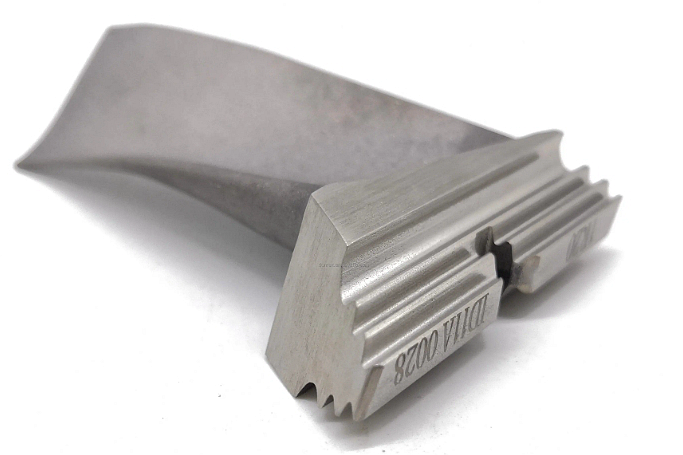
Principais Desafios de Fabricação para Pás de Turbina Inconel 713C Solidificadas Direcionalmente
A produção de pás de turbina Inconel 713C via fundição direcional envolve desafios críticos:
Para maximizar a resistência ao fluência e à fadiga, é necessário alcançar estruturas de grãos colunares isentas de defeitos, alinhadas na direção cristalográfica <001>.
Manter tolerâncias dimensionais rigorosas (±0,05 mm) é necessário para os perfis aerodinâmicos, ajustes da raiz e desempenho da montagem.
Controlar as taxas de solidificação (~3–6 mm/min) e gradientes térmicos para suprimir a formação de grãos errantes e manchas (freckles).
Evitar a segregação elementar durante o resfriamento lento, que pode degradar as propriedades mecânicas.
Processo de Fundição por Solidificação Direcional para Pás de Turbina Inconel 713C
Nosso processo de solidificação direcional altamente controlado inclui:
Fabricação do Modelo de Cera: Moldes de cera usinados por CNC replicando com precisão as geometrias da pá de turbina.
Construção da Casca Cerâmica: Revestimentos cerâmicos multicamadas são aplicados para criar moldes fortes e resistentes ao calor, capazes de suportar as condições de fundição direcional.
Remoção da Cera e Queima da Casca: Remoção da cera via autoclave, seguida pela queima da casca a ~1000°C para garantir a resistência do molde.
Fusão e Vazamento a Vácuo: Superliga Inconel 713C fundida sob vácuo (<0,01 Pa) para garantir pureza química.
Solidificação Direcional: Retirada controlada do molde através de um gradiente de temperatura definido (~15–20°C/cm) em velocidades cuidadosamente controladas, promovendo o crescimento de grãos colunares paralelos ao eixo da pá.
Remoção da Casca e Tratamento Térmico Pós-Fundição: Remoção da cerâmica seguida por tratamento térmico de solubilização (~1150°C) e envelhecimento para refinar a microestrutura e aprimorar as propriedades mecânicas.
Usinagem CNC Final: Alcançando tolerâncias dimensionais finais (±0,01 mm) e acabamentos superficiais (Ra ≤1,6 µm).
Comparação de Métodos de Fabricação para Pás de Turbina Inconel 713C
Método de Fabricação | Precisão Dimensional | Microestrutura | Resistência ao Fluência | Resistência à Fadiga | Eficiência de Custo |
|---|---|---|---|---|---|
Solidificação Direcional | ±0,05 mm | Grão Colunar | Excelente | Excelente | Média |
Fundição Monocristal | ±0,05 mm | Monocristal | Superior | Superior | Média-Alta |
Fundição de Cristal Equiaxial | ±0,05–0,1 mm | Grão Equiaxial | Boa | Boa | Alta |
Estratégia de Seleção do Método de Fabricação
A seleção do melhor método de fundição depende das demandas de desempenho e fatores econômicos:
Solidificação Direcional: Ideal para pás de turbina expostas a carregamentos mecânicos e de alta temperatura contínuos, oferecendo resistência ao fluência e à fadiga significativamente melhor do que pás equiaxiais, com economia de custo em comparação aos métodos monocristal.
Fusão Monocristal: Recomendada para pás de turbina de alta pressão de primeiro estágio que requerem vida útil máxima ao fluência e resistência à fadiga térmica.
Fusão Equiaxial: Utilizada para pás de turbina estacionárias ou de baixa tensão onde alta resistência ao fluência não é crítica.
Matriz de Desempenho do Inconel 713C
Propriedade | Valor | Notas |
|---|---|---|
Temperatura Máxima de Serviço (°C) | 950 | Operação contínua |
Resistência à Tração (MPa) | 1200 | Resistência em alta temperatura |
Limite de Escoamento (MPa) | 860 | Capacidade de carga mecânica estável |
Alongamento (%) | 6–8% | Ductilidade para ciclagem térmica |
Resistência ao Fluência | Excelente | Grãos direcionais aumentam a vida útil |
Resistência à Oxidação | Superior | Estabilidade superficial excepcional |
Vantagens das Pás de Turbina Inconel 713C Solidificadas Direcionalmente
O uso de pás solidificadas direcionalmente em Inconel 713C oferece vários benefícios críticos:
Resistência ao Fluência Aprimorada: Grãos colunares alinhados com a direção da tensão reduzem drasticamente a deformação por fluência.
Vida Útil à Fadiga Melhorada: A eliminação de limites de grãos transversais minimiza os locais de iniciação de trincas.
Resistência em Alta Temperatura Superior: Mantém o desempenho mecânico durante a exposição prolongada a 900–950°C.
Resistência à Oxidação: Excelente proteção contra corrosão por gases quentes em ambientes de turbina.
Técnicas Principais de Pós-processamento
Etapas essenciais de pós-processamento para desempenho superior:
Prensagem Isostática a Quente (HIP): Densifica o material eliminando porosidade interna e melhorando as propriedades à fadiga.
Tratamento Térmico: Recozimento de solubilização (~1150°C) seguido por ciclos de envelhecimento controlados para otimizar o equilíbrio de fases e a resistência mecânica.
Usinagem CNC de Precisão: Alcança tolerâncias dimensionais rigorosas (±0,01 mm) nas raízes das pás e superfícies aerodinâmicas.
Revestimentos Protetores: Aplicação de TBCs (Revestimentos de Barreira Térmica) para estender a vida operacional em altas temperaturas.
Métodos de Teste e Garantia de Qualidade
A Neway AeroTech garante que cada pá de turbina atenda aos rigorosos padrões de qualidade aeroespacial:
Máquina de Medição por Coordenadas (CMM): Inspeções dimensionais com precisão de ±0,005 mm.
Teste Não Destrutivo por Raios-X: Detecção de porosidade interna e trincas.
Microscopia Metalográfica: Verificação da estrutura de grãos para garantir a continuidade dos grãos colunares.
Testes de Tração e Fluência: Validação da resistência mecânica sob condições de serviço simuladas.
Todos os processos estão em total conformidade com os padrões de fabricação aeroespacial AS9100.
Estudo de Caso: Pás de Turbina Inconel 713C Solidificadas Direcionalmente
A Neway AeroTech produziu com sucesso pás de turbina Inconel 713C solidificadas direcionalmente para um grande fabricante de turbinas a gás industriais:
Temperatura de Serviço: Operação contínua até 950°C
Precisão Dimensional: ±0,05 mm alcançado consistentemente em características críticas
Vida Útil à Fadiga: Melhorada em 35% em comparação com pás equiaxiais convencionais
Certificação: Totalmente conforme ao sistema de qualidade aeroespacial AS9100
Perguntas Frequentes (FAQs)
Por que a solidificação direcional é necessária para o desempenho da pá de turbina?
Como o Inconel 713C se comporta em ambientes de alta temperatura contínua?
Quais são as tolerâncias dimensionais alcançáveis na fundição direcional?
Como o HIP melhora a qualidade das pás de turbina Inconel 713C?
Quais padrões de qualidade são usados para fabricar pás solidificadas direcionalmente na Neway AeroTech?
