日本語

Superalloy Single Crystal Casting Turbine Blades Heat Treatment Manufacturer

目次
Precision Heat Treatment for CMSX and SC Superalloy Turbine Blade Performance
Why Heat Treatment is Critical for Single Crystal Turbine Blades
CMSX Single Crystal Alloys We Heat Treat
Case Study: Heat Treatment of CMSX-4 Turbine Blade Castings
Project Background
Typical SC Blade Components and Industries
Heat Treatment Capabilities and Parameters
Results and Verification
Heat Treatment Execution
Post-Treatment Processing
Inspection
FAQs

Precision Heat Treatment for CMSX and SC Superalloy Turbine Blade Performance

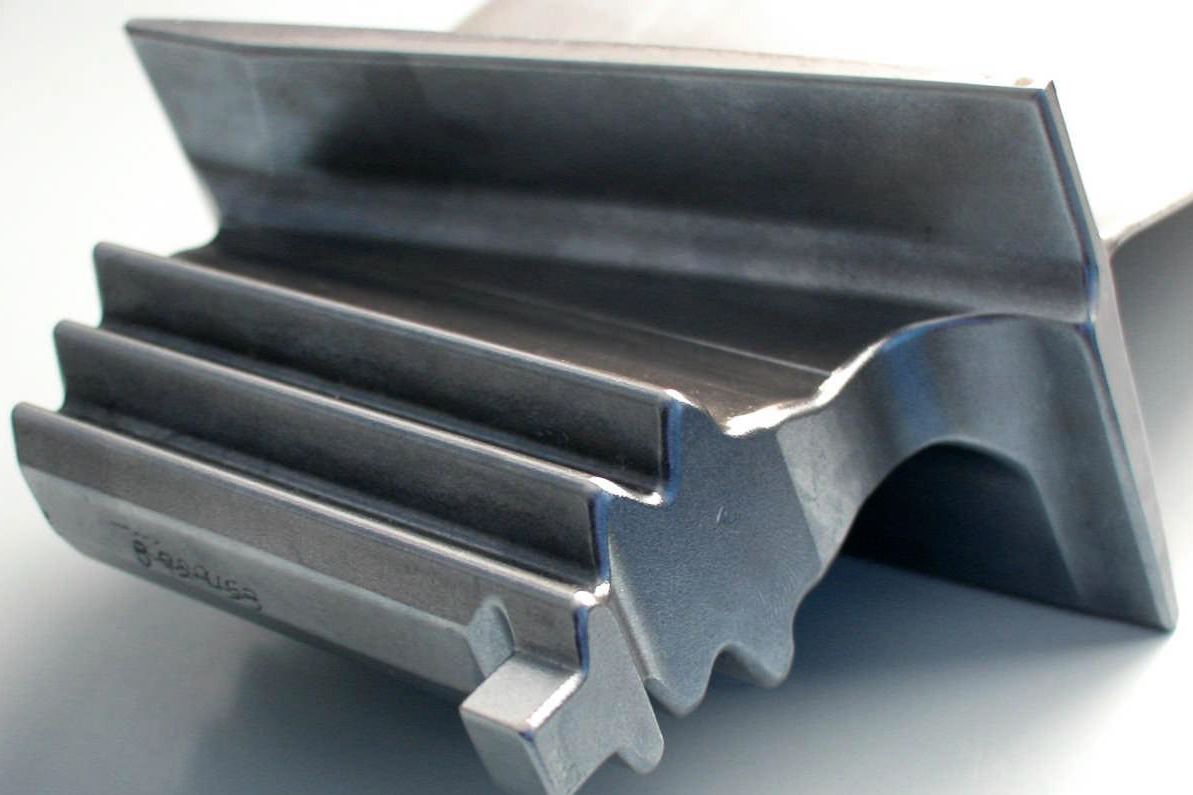
Single crystal turbine blades made from CMSX and other SC superalloys are designed to operate under extreme thermal and mechanical stress in high-pressure turbine stages. These blades require highly controlled heat treatment processes to activate gamma-prime strengthening, stabilize the microstructure, and ensure resistance to creep, fatigue, and oxidation at temperatures exceeding 1100°C.

Neway AeroTech is a certified heat treatment manufacturer for single crystal castings. We specialize in post-casting thermal processing of CMSX-4, CMSX-10, CMSX-2, and other advanced superalloys used in turbine blades for aerospace and power generation sectors.

superalloy-single-crystal-casting-turbine-blades-heat-treatment-manufacturer

Why Heat Treatment is Critical for Single Crystal Turbine Blades

Single crystal blades depend on gamma-prime precipitation and directional stability to perform reliably under severe high-temperature stress cycles. Heat treatment:

  • Activates full mechanical potential through solution and aging cycles

  • Aligns phase distribution with crystallographic direction to reduce creep and distortion

  • Relieves residual casting stress before CNC machining and HIP processing

  • Stabilizes geometry for subsequent TBC coating

We ensure no stray grain formation or recrystallization throughout the cycle.

CMSX Single Crystal Alloys We Heat Treat

Alloy

Max Service Temp (°C)

Heat Treatment Cycle

Applications

CMSX-4

1140

1290°C/3h + 870°C/20h

HPT blades, vanes

CMSX-10

1170

1280°C/4h + 880°C/24h

Rotor blades

CMSX-2

1120

1265°C/3h + 870°C/18h

Guide vanes

We control temperature within ±3°C to avoid grain instability or phase imbalance.

Case Study: Heat Treatment of CMSX-4 Turbine Blade Castings

Project Background

A customer submitted 84 CMSX-4 single crystal airfoils, each 240 mm long with complex internal cooling. Heat treatment was conducted at 1290°C for 3 hours, followed by two-step aging. Post-process SEM and hardness data showed full gamma-prime activation and HAZ-free edges.

Typical SC Blade Components and Industries

Blade Model

Description

Alloy

Industry

SCB-820

Single crystal blade with serpentine passages

CMSX-4

Aerospace

RBD-610

Rotor blade with fir-tree root

CMSX-10

Energy

VNS-450

Vane segment with platform fillets

CMSX-2

Power Generation

Each part undergoes controlled thermal cycles, SEM, and CMM verification.

Heat Treatment Capabilities and Parameters

  1. Solution temperature: 1260–1290°C, depending on alloy; removes residual stress and dissolves interdendritic segregation.

  2. Aging cycles: 870–880°C, for 18–24 hours to promote gamma-prime strengthening and phase uniformity.

  3. Ramp rate: ≤5°C/min, limits thermal gradient and prevents recrystallization in thin trailing edges.

  4. Atmosphere: high-purity argon or vacuum, ensures oxidation-free surfaces before TBC.

  5. Validation: CMM, SEM, hardness, and EBSD for grain structure continuity.

Results and Verification

Heat Treatment Execution

Airfoils were solutioned at 1290°C for 3 hours, followed by aging at 870°C for 20 hours. Thermal uniformity held within ±3°C.

Post-Treatment Processing

Blades were CNC machined to finish profiles. Optional weld repair and HIP processing followed.

Inspection

X-ray NDT and SEM confirmed phase distribution and grain continuity. CMM validated dimensional compliance within ±0.008 mm.

FAQs

  1. What is the standard heat treatment for CMSX single crystal blades?

  2. Can heat treatment affect grain orientation in SC airfoils?

  3. How is recrystallization prevented during thermal cycles?

  4. What inspections follow heat treatment of single crystal parts?

  5. Do you offer heat treatment, HIP, and CNC as an integrated service?