Carbon Sulfur Analysis for Nickel Superalloy Casting Control
Carbon sulfur analysis belongs in a nickel superalloy casting RFQ when the buyer needs impurity evidence tied to a manufacturing decision. Carbon and sulfur are not handled like broad material labels. They are controlled chemistry items that may affect alloy acceptance, melt practice review, contamination investigation, and the confidence a buyer has before releasing a casting lot to heat treatment, machining, or assembly. The RFQ should identify whether the result is needed for incoming material control, cast lot release, deviation review, or comparison with a supplied chemistry requirement.
NewayAeroTech can support superalloy material testing and analysis for custom turbine and hot-section casting projects based on drawings, samples, alloy specifications, and inspection requirements. For nickel superalloy blades, vanes, shrouds, heat shields, combustor hardware, and other cast parts, a carbon sulfur request should be connected to sample origin and acceptance records. The result has less value if the supplier receives a loose sample with no lot boundary, no alloy grade, and no statement of how the report will be used.
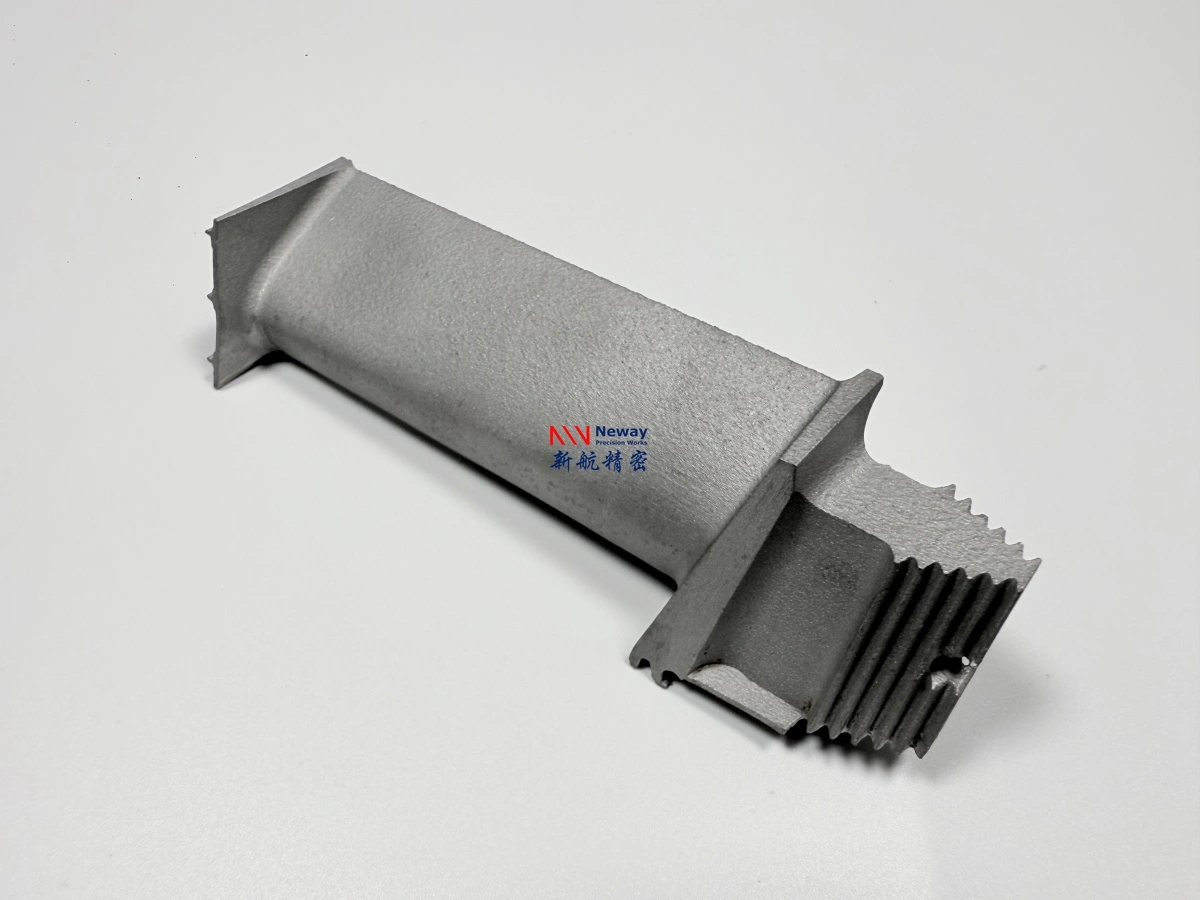
Why Carbon and Sulfur Limits Must Be Quoted Early
For this RFQ, buyers should put carbon and sulfur requirements into the quotation package before the route is priced. If the drawing, material specification, or customer purchase requirement controls these elements, the supplier needs to know the acceptance boundary before sampling, testing, and reporting are planned. A late request can create a mismatch between the casting lot, the sample used for testing, and the document needed for release.
Carbon may be part of the alloy design in some nickel superalloys, while sulfur is commonly treated as a harmful impurity that needs close control. The buyer should not ask for a generic "chemistry report" and assume the carbon and sulfur evidence will answer the release question. The RFQ should state whether the buyer needs actual measured values, comparison with a supplied limit, or a review note attached to a casting release package. If the part will later receive HIP, heat treatment, coating, or precision machining, the timing of the test result also needs to be defined.
Early RFQ question | Buyer should provide | What it prevents |
|---|---|---|
Is carbon controlled by the alloy requirement? | Alloy grade, customer chemistry limits, and whether a range or maximum applies. | Testing against the wrong acceptance basis or treating carbon as a generic impurity. |
Is sulfur a release-critical item? | Required sulfur limit, report format, and whether lot release depends on the result. | Finishing castings before the impurity evidence is available. |
What sample represents the lot? | Casting coupon, gate, runner, remelt sample, or component sample information. | Using a convenient sample that does not support the buyer's release decision. |
Who owns follow-up review? | Whether NewayAeroTech reviews only the test or the full casting route. | Confusion between laboratory evidence and manufacturing responsibility. |
How Casting Route and Remelt History Affect C/S Risk
Carbon sulfur analysis becomes more useful when the casting route is visible. Vacuum investment casting, remelt practice, master alloy source, recycled material boundary, crucible and furnace condition, gating design, and shell-related contamination control can all influence the buyer's confidence in chemistry records. The RFQ does not need to turn the buyer into a foundry operator, but it should tell the supplier whether the test is checking a new route, a changed material source, a process deviation, or routine release evidence.
For vacuum investment casting of nickel superalloy components, the test request should be tied to the casting batch and not only to a material name. Inconel 713C, IN738LC, Rene 80, MAR-M247, and similar casting alloys can have different chemistry limits and different reasons for monitoring impurities. A buyer asking for the same report across several alloys should include the specification for each alloy rather than one shared pass/fail instruction.
Route history also affects how the result should be interpreted. A first sample casting may need chemistry evidence to support a route review before tooling is released for production. A repeat batch may need a report to confirm the lot remains within the accepted control plan. A deviation investigation may need additional material testing or metallographic checks rather than a single number. The supplier's quotation should make this distinction visible.
Route condition | Carbon sulfur concern | Possible follow-up evidence |
|---|---|---|
First trial casting | Whether impurity levels fit the supplied alloy requirement before the route is accepted. | Trial sample report, visual review, FPI, X-ray, and dimensional notes. |
Changed material source | Whether the new source changes impurity risk compared with previous records. | Incoming material confirmation and casting lot comparison. |
Repeat production batch | Whether the lot remains within the accepted chemistry boundary. | Batch report, casting release checklist, and post-process records. |
Deviation or failure review | Whether carbon or sulfur evidence helps explain a processing issue. | Metallography, fracture surface review when supplied, and heat-treatment records. |
Sampling Boundary for Castings, Gates, and Coupons
The sample used for carbon sulfur analysis must represent the decision being made. A separately poured coupon may be acceptable for one release requirement but not enough for another. A gate or runner sample may reflect the casting batch, while a finished component sample may be needed when the buyer is investigating a specific part. A used part sample can be affected by surface oxidation, coating residue, service contamination, or prior cleaning, so the sample location should be defined before the supplier quotes the test.
Buyers should state whether the sample can be destructively cut, whether the supplier may remove surface material before testing, and whether the report should identify the sample location. If the part is small or the available sample is limited, the RFQ should say so. It is better to resolve sample permission before quotation than to discover later that the only available sample cannot support the required test.
NewayAeroTech can review sample suitability when the buyer provides part photos, drawing reference, alloy grade, and sample condition. If the same project also includes casting, the sample plan can be placed within the manufacturing route. If the buyer sends only a loose piece of metal, the supplier may need to ask whether it came from a casting, gate, machined surface, or returned component before accepting the report boundary.
Sample source | Best use in RFQ review | Boundary to confirm |
|---|---|---|
Casting coupon | Lot or heat chemistry support when the coupon is tied to the casting record. | Coupon traceability and whether it represents the relevant casting batch. |
Gate or runner sample | Evidence from the casting tree or batch when the component cannot be cut. | Sampling location, cleaning method, and relation to finished parts. |
Finished component sample | Investigation of a specific part or final lot condition. | Destructive-test permission and whether machined or coated surfaces must be removed. |
Used sample | Material comparison or contamination investigation with caution. | Wear, oxidation, coating residue, repair history, and unreliable surface regions. |
Linking C/S Results With Metallography and Heat Treatment Records
Carbon sulfur results should be reviewed with the surrounding evidence when the part is a turbine or hot-section casting. A measured chemistry value may answer one question, but it does not prove that the casting has no shrinkage, no surface indications, correct dimensions, or acceptable microstructure. If the RFQ problem is impurity control, carbon sulfur analysis may be central. If the problem is cracking, poor cleanup, abnormal structure, or machining difficulty, the buyer may need metallography, FPI, X-ray or CT, hardness, and heat-treatment records as well.
Heat treatment adds another boundary. The test does not confirm that a heat treatment produced the required metallurgical condition, yet the chemistry result may help the buyer decide whether the material entering heat treatment matches the intended alloy requirement. When a casting package includes superalloy heat treatment, the buyer should define whether carbon sulfur evidence is needed before treatment, after treatment, or only as part of the material record.
For custom Inconel alloy casting and other nickel superalloy casting projects, the practical release package may combine chemistry, casting inspection, post-processing, and dimensional reporting. The supplier response should identify which records NewayAeroTech can support in the same manufacturing package and which acceptance decisions remain with the buyer's specification owner.
RFQ Information for Carbon Sulfur Analysis Service
A useful RFQ for carbon sulfur analysis starts with the alloy grade and the decision the report must support. Buyers should send the drawing or part description, casting route if known, sample source, sample condition, quantity of samples, required limits, report language, and whether the result is tied to casting release, heat treatment, machining, coating, or a deviation review. If the project involves a full manufacturing route, include the expected casting quantity and downstream operations.
The buyer should separate requested evidence from desired conclusions. A supplier can report measured values and compare them against supplied limits when the acceptance rule is clear. It should not be asked to create unprovided limits, claim final application approval, or treat a used sample as a perfect design reference. If the buyer does not know the correct limit, the RFQ can ask NewayAeroTech to review the drawing and available material requirement before testing scope is finalized.
When the casting is early-stage, the first response may be a sample-plan review rather than a final price. That is useful when the buyer has not decided whether to test a coupon, a gate, a finished part, or a returned sample. Once the sample boundary and report purpose are settled, the quotation can include the test, timing in the route, and any linked inspection records such as chemical analysis, metallography, FPI, X-ray, CT, CMM, hardness, or heat-treatment documentation.
RFQ item | Information to send | Decision it supports |
|---|---|---|
Alloy and limits | Nickel superalloy grade, customer chemistry requirement, and carbon or sulfur limit. | Correct comparison basis for the report. |
Sample plan | Coupon, gate, runner, finished part, used part, size, condition, and quantity. | Sample suitability, preparation route, and report validity. |
Manufacturing context | Casting route, lot boundary, heat treatment, HIP, machining, or coating scope. | Where the test result sits in the release sequence. |
Report expectation | Measured values, pass/fail comparison, deviation support, or release record. | Prevents a test result that does not answer the buyer's RFQ problem. |
Send the alloy specification, carbon and sulfur limits, sample source, drawing or part description, casting lot context, and report requirement. NewayAeroTech can review whether carbon sulfur analysis, together with casting, post-process planning, and material inspection where needed, fits the custom nickel superalloy casting RFQ.
Related FAQs
What is chemical verification and why is it essential in superalloy manufacturing?
What defects can material testing reveal in superalloy parts?
Which testing methods ensure quality of superalloy components?
How does material testing ensure safety of superalloy components?
Which testing methods are common for superalloy parts in high-performance sectors?
How does NDT ensure the quality and integrity of superalloy components?
What inspections are typically conducted to ensure quality in gas turbine components?