How does NDT ensure the quality and integrity of superalloy components?
Role of NDT in Superalloy Quality Control
Non-destructive testing (NDT) is essential for verifying the structural integrity of superalloy components without damaging them. In demanding applications such as aerospace and aviation and power generation, superalloy parts must withstand extreme temperature, stress, and corrosion. NDT enables detection of internal defects, microcracks, porosity, and dimensional deviations before final assembly or service deployment, ensuring high reliability and compliance with regulatory standards.
NDT Techniques for Superalloy Inspection
Various inspection methods are applied based on component geometry and performance requirements. Surface defects are evaluated using dye penetrant or magnetic particle testing, while internal flaws are detected with ultrasonic inspection. For advanced analysis, industrial CT scanning enables 3D visualization of internal porosity and cooling channel accuracy in components produced via vacuum investment casting or superalloy 3D printing.
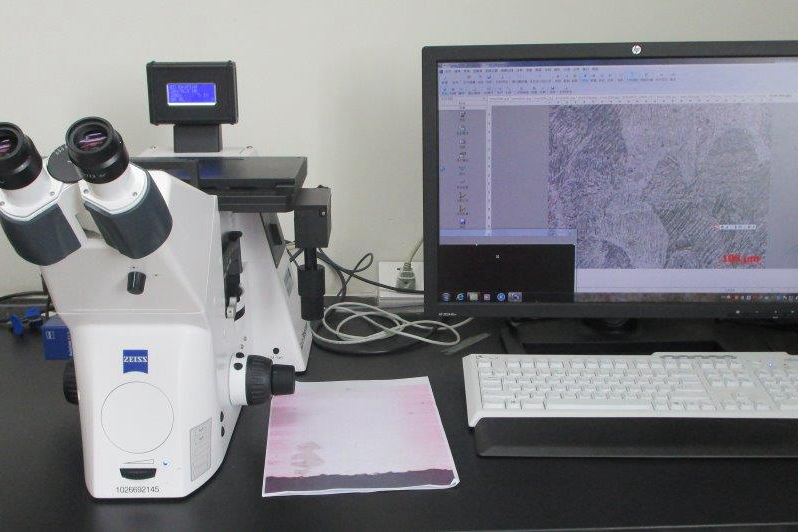
Critical parts such as turbine blades and nozzles may undergo further analysis using metallographic sectioning and material testing and analysis to confirm phase distribution and grain structure integrity.
Integration With Post-Processing and Maintenance
NDT is often performed after hot isostatic pressing (HIP), heat treatment, or precision superalloy CNC machining to verify microstructural stability and dimensional accuracy. For long-term use, NDT methods are also applied during service intervals to monitor component degradation and predict remaining life, particularly for rotating and hot-section parts exposed to creep and fatigue.
Continuous monitoring and requalification ensure that parts can remain in service safely, reducing unplanned downtime and extending operational lifespan.
Ensuring Traceability and Compliance
In safety-critical industries such as military and defense and aerospace, NDT provides documented evidence of compliance with AMS, ASTM, and customer-specific standards. It ensures that every component—whether produced via casting, forging, or additive manufacturing—meets strict performance criteria before certification. This traceability is vital for regulatory approval and for maintaining consistent manufacturing quality across production batches.
By combining advanced inspection with data-driven quality assurance, NDT serves as a foundation for superalloy component reliability, safety, and long-term performance.