What inspections are typically conducted to ensure quality in gas turbine components?
Ensuring Quality in High-Temperature Applications
Gas turbine components, such as blades, vanes, and discs, operate under intense thermal and mechanical loads. To guarantee safety, efficiency, and reliability, manufacturers perform a comprehensive range of inspections throughout the production cycle. From vacuum investment casting and superalloy precision forging to final thermal barrier coating (TBC), each step includes critical testing procedures to verify dimensional accuracy, microstructural integrity, and chemical composition.
These inspections are essential in industries such as aerospace and aviation, as well as power generation, where turbine failures are unacceptable under any circumstances.
Non-Destructive Testing (NDT) Methods
Non-destructive testing is the cornerstone of quality control for gas turbine components. Common techniques include:
Radiographic Testing (RT): Detects internal voids, shrinkage cavities, and inclusions in cast parts like single-crystal blades or equiaxed vanes produced via superalloy directional casting.
Ultrasonic Testing (UT): Identifies cracks or inclusions in dense forgings such as turbine discs made from Rene 95 or Inconel 718.
Fluorescent Penetrant Inspection (FPI) reveals surface-breaking defects on complex geometries, such as cooling holes or airfoil edges, in components produced by superalloy CNC machining.
Eddy Current Testing (ECT): Used for conductive materials like Hastelloy X and Stellite 6B to detect near-surface discontinuities or material inconsistencies.
These NDT techniques allow engineers to detect flaws without damaging the part, ensuring that each component meets strict aerospace-grade standards.
Metallurgical and Dimensional Analysis
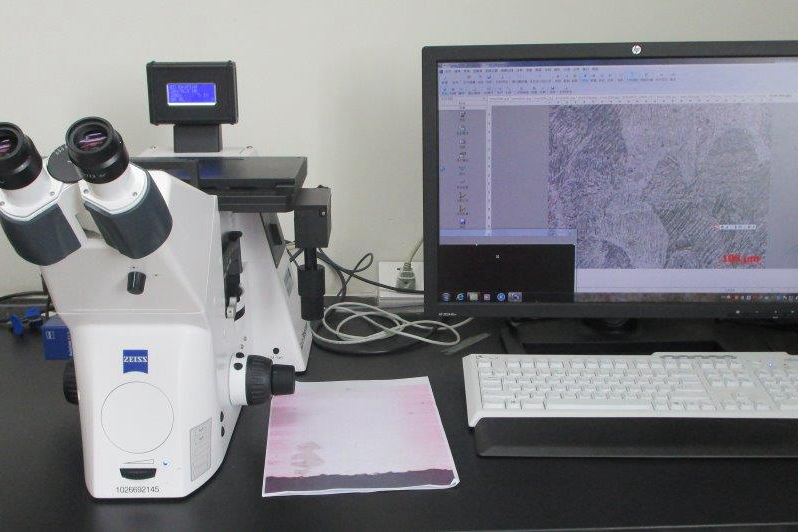
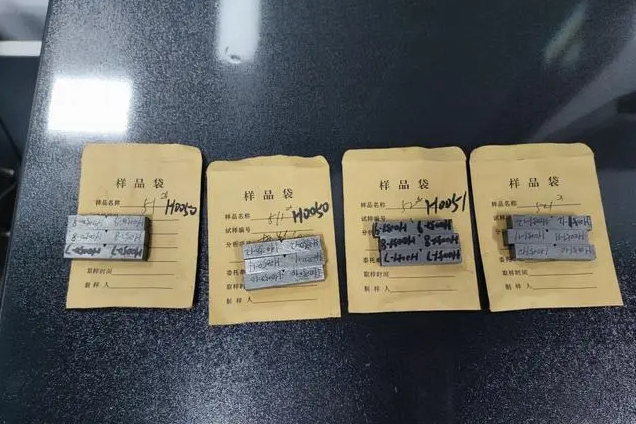
Post-processing inspections focus on the material’s internal structure and surface quality. Material testing and analysis validate alloy composition, microstructure uniformity, and hardness levels. Metallographic examination enables the identification of carbide dispersion, grain orientation, and precipitate morphology, confirming the proper superalloy heat treatment.
For dimensional verification, coordinate measuring machines (CMMs) and laser scanning ensure the accuracy of blade profiles, cooling passages, and mounting interfaces. These precise measurements are vital for maintaining aerodynamic performance and minimizing vibration during turbine operation.
Advanced Inspection for Coatings and Welds
Components with protective surfaces undergo coating integrity assessments. Thermal barrier coatings (TBC) are tested for adhesion, porosity, and thickness to confirm resistance to oxidation and spallation. Similarly, superalloy welding joints are examined using X-ray or ultrasonic inspection to verify complete fusion and the absence of cracks.
Industry Applications and Certification
All inspection data are compiled into certification packages to comply with standards for the aerospace, military, defense, and energy industries. This traceability ensures that every gas turbine component can be tracked from raw material to final assembly, ensuring long-term operational reliability.
Conclusion
Comprehensive inspection—from NDT and metallography to coating analysis and dimensional validation—is the foundation of quality assurance in gas turbine manufacturing. These processes ensure that each component performs flawlessly under the most demanding conditions, supporting safe and efficient turbine operation for years of continuous service.