日本語

Ti-6.5Al-1Mo-1V-2Zr (TA15) Superalloy Casting High-Temperature Reactor Components Company

目次
Introduction
Core Technology: Vacuum Investment Casting of TA15
Material Characteristics of TA15 Alloy
Case Study: TA15 Reactor Component Production
Project Background
Typical High-Temperature Reactor Applications
Manufacturing Solutions for TA15 Components
Core Manufacturing Challenges
Results and Verification
FAQs

Introduction

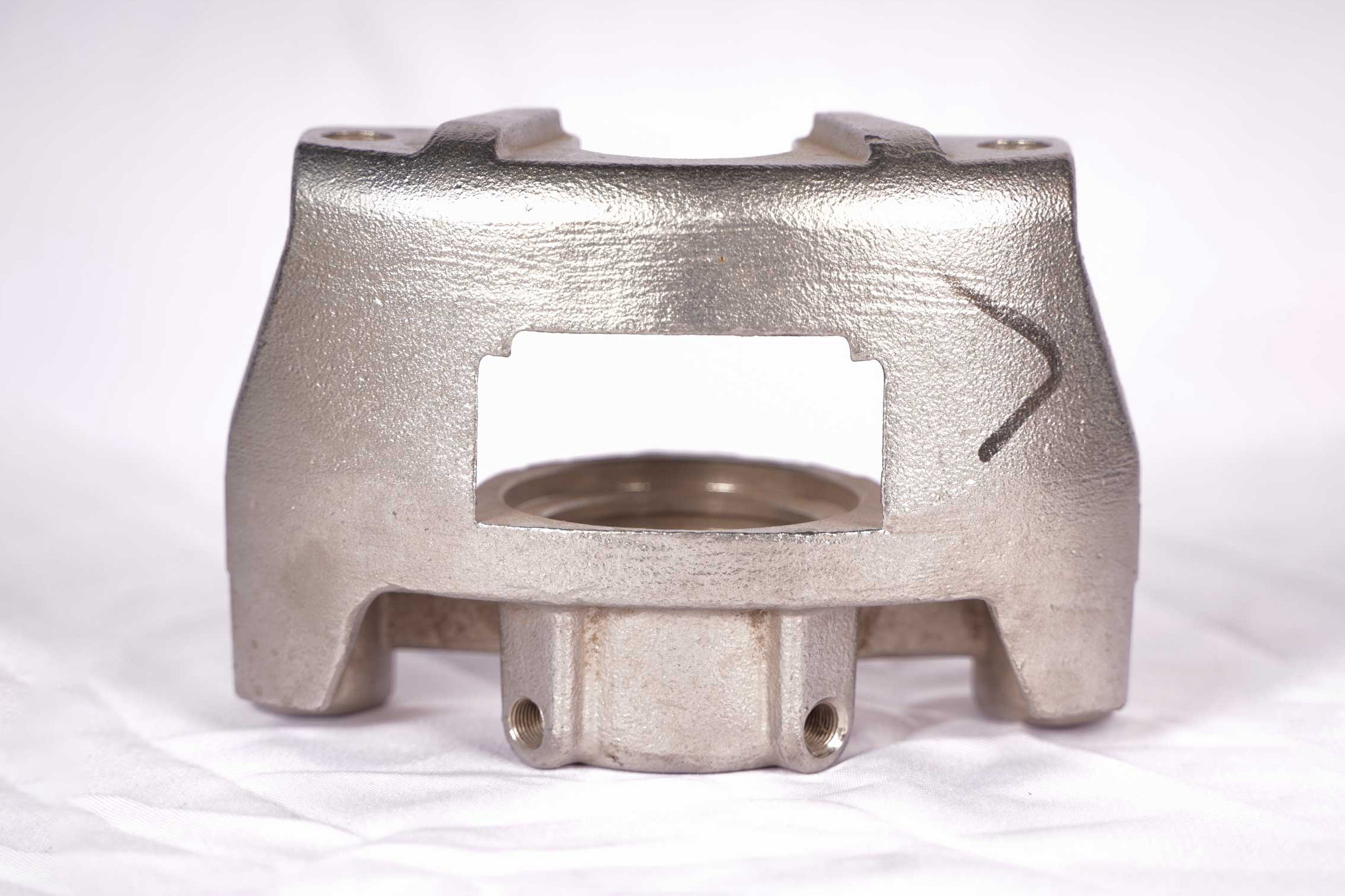
Ti-6.5Al-1Mo-1V-2Zr, known as TA15, is a near-alpha titanium alloy developed for high-temperature structural applications requiring excellent creep resistance, thermal stability, and a moderate strength-to-weight ratio. As a specialized superalloy casting company, we manufacture precision TA15 components for high-temperature reactor systems using vacuum investment casting, achieving tight tolerances (±0.05 mm) and porosity below 1%.

TA15 castings are ideally suited for nuclear and aerospace energy systems, where long-term thermal resistance, dimensional stability, and reliability under load are critical.

ti-65al-1mo-1v-2zr-ta15-superalloy-casting-high-temperature-reactor-components-company

Core Technology: Vacuum Investment Casting of TA15

TA15 components are produced using vacuum investment casting to ensure metallurgical integrity and oxidation control. The alloy is melted and poured at ~1650°C into ceramic shell molds (8–10 layers), with mold preheating at 1000–1050°C. Solidification rates of 30–70°C/min ensure grain refinement (0.5–2 mm), minimize shrinkage defects, and eliminate alpha-case contamination.

Material Characteristics of TA15 Alloy

Ti-6.5Al-1Mo-1V-2Zr (TA15) is a near-alpha titanium alloy featuring high-temperature oxidation resistance and exceptional creep strength. It is commonly used in hot section structures of aerospace and energy equipment. Key properties include:

Property

Value

Density

4.55 g/cm³

Ultimate Tensile Strength

≥950 MPa

Yield Strength

≥880 MPa

Elongation

≥10%

Creep Strength (1000h @ 500°C)

≥180 MPa

Operating Temperature Limit

Up to 550°C

Oxidation Resistance

Excellent

TA15’s strength retention at high temperature makes it ideal for reactor internals, structural enclosures, and thermal shielding parts.

Case Study: TA15 Reactor Component Production

Project Background

A nuclear thermal power developer required creep-resistant alloy enclosures and flange components for a modular high-temperature gas reactor (HTGR). TA15 was selected for its long-duration performance above 500°C. We delivered vacuum-cast components that met RCC-M nuclear specifications, with dimensional flatness of ±0.05 mm and grain structure optimized through post-casting heat treatment.

Typical High-Temperature Reactor Applications

  • HTGR Inlet Flanges: TA15 flanges designed for primary coolant loop connections in gas-cooled reactors such as HTR-PM, offering excellent sealing performance under thermal cycling.

  • Reactor Pressure Boundary Shields: Cast TA15 panels used to support and protect vessel internals against thermal and neutron-induced stress.

  • Helium Gas Diffuser Components: Oxidation-resistant cast structures exposed to high-velocity helium streams at >500°C in compact nuclear cores.

  • Fuel Handling Mechanism Frames: Lightweight, dimensionally stable castings providing precision alignment under variable thermal gradients in high-flux zones.

These parts maintain mechanical performance in corrosive, high-temperature reactor environments with minimal distortion over long operation periods.

Manufacturing Solutions for TA15 Components

Casting Process Wax patterns are formed and invested into ceramic shells, then vacuum cast at ~1650°C. Mold preheating and cooling rates are tightly controlled to avoid hot tearing and ensure full fill of complex shapes.

Post-processing Hot Isostatic Pressing (HIP) is performed at ~920°C and 100 MPa to reduce porosity. Aging and annealing cycles are applied to stabilize the alpha microstructure for long-term creep endurance.

Post Machining CNC machining is used for flanges, bolt interfaces, and sealing surfaces. EDM and deep hole drilling are applied to produce high-aspect cooling channels or access ports.

Surface Treatment To improve oxidation resistance, TA15 parts may receive anodizing or ceramic-based thermal barrier coatings. Shot peening is available to increase surface hardness and fatigue life.

Testing and Inspection All components undergo X-ray NDT, CMM dimensional validation, elevated-temperature tensile testing, and metallographic inspection to confirm microstructure, grain orientation, and phase stability.

Core Manufacturing Challenges

  • Achieving thin-wall castings without alpha-case or shrinkage cracking.

  • Maintaining dimensional tolerances in large cast panels subjected to thermal cycling.

  • Ensuring creep resistance and oxidation protection during 20,000+ hour operational lifespan.

Results and Verification

  • Dimensional flatness and roundness within ±0.05 mm verified by 3D CMM scanning.

  • Porosity <1% achieved post-HIP, confirmed by radiographic inspection.

  • Creep resistance ≥180 MPa at 500°C confirmed by long-duration testing.

  • Microstructural uniformity validated via SEM and optical metallography.

FAQs

  1. What makes TA15 suitable for high-temperature nuclear and aerospace applications?

  2. How is alpha-case formation avoided during titanium casting?

  3. Can TA15 parts be customized for modular reactor designs like HTR-PM or VHTR?

  4. What post-machining capabilities are available for TA15 castings?

  5. What quality standards and testing procedures are followed for TA15 components?