日本語

Rene 108 Precision Casting High-Temperature Engine Parts Fabricator

目次
Introduction
Core Technology: Vacuum Investment Casting of Rene 108
Material Characteristics of Rene 108 Alloy
Case Study: Rene 108 High-Temperature Engine Component Project
Project Background
Typical High-Temperature Engine Applications
Manufacturing Solutions for Rene 108 Components
Core Manufacturing Challenges
Results and Verification
FAQs

Introduction

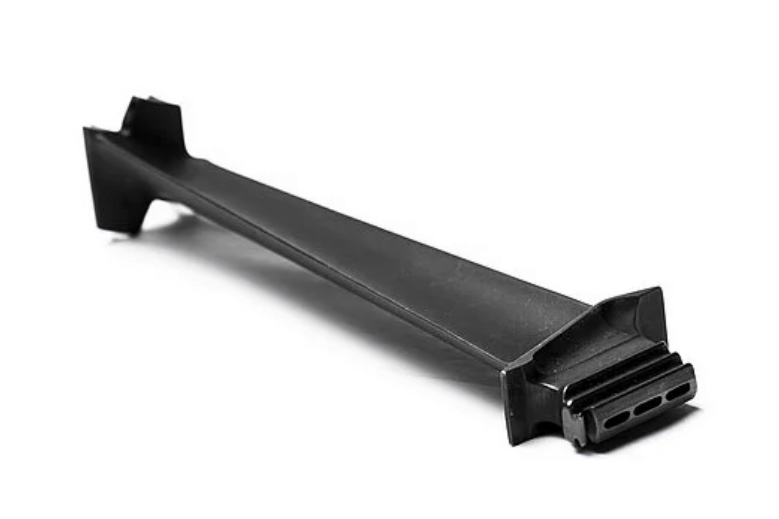
Rene 108 is a high-performance nickel-based superalloy developed for extreme thermal environments, offering outstanding creep resistance, oxidation stability, and structural integrity above 1100°C. As an expert precision casting fabricator, we manufacture Rene 108 components for high-temperature engine systems using vacuum investment casting with dimensional accuracy of ±0.05 mm and porosity under 1%.

Our cast parts are trusted in aerospace turbine and industrial engine applications, where thermal fatigue, gas erosion, and mechanical load demands are critical.

rene-108-precision-casting-high-temperature-engine-parts-fabricator

Core Technology: Vacuum Investment Casting of Rene 108

We apply advanced vacuum investment casting to produce Rene 108 parts with superior microstructure and mechanical properties. The alloy is vacuum melted and poured at ~1455°C into ceramic shell molds preheated to ~1100°C. Controlled solidification at 30–70°C/min yields fine equiaxed grain structures (0.5–2 mm), tight tolerances (±0.05 mm), and minimal shrinkage or segregation.

Material Characteristics of Rene 108 Alloy

Rene 108 is a second-generation nickel-based γ′-strengthened superalloy designed for elevated temperature turbine blade and vane applications. It maintains strength and phase stability at temperatures exceeding 1100°C. Key properties include:

Property

Value

Density

8.65 g/cm³

Tensile Strength (at 980°C)

≥1150 MPa

Yield Strength (at 980°C)

≥950 MPa

Elongation

≥10%

Creep Rupture Strength (1000h @ 1038°C)

≥180 MPa

Operating Temperature Limit

Up to 1120°C

Oxidation Resistance

Excellent

Rene 108 is ideal for rotating and stationary parts operating in aggressive hot gas environments, maintaining structural integrity and oxidation protection.

Case Study: Rene 108 High-Temperature Engine Component Project

Project Background

A military aerospace engine program required cast turbine vanes and transition duct components for a high-thrust engine platform operating above 1100°C. Rene 108 was selected for its oxidation resistance and fatigue strength. Our vacuum-cast parts met AMS 5391 standards and were post-HIP processed and machined to turbine engine-grade tolerances.

Typical High-Temperature Engine Applications

  • High-Pressure Turbine Nozzle Vanes (e.g., F414, EJ200): Rene 108 vanes withstand hot combustion gases and thermal cycling in jet engine hot sections.

  • Transition Duct Segments: Large-area castings exposed to pressure fluctuations and thermal gradients between combustor and turbine.

  • Stator Ring Assemblies: Stationary ring components operating under load at 1050–1120°C in both aerospace and industrial turbines.

  • APU Turbine Rotors: Small, high-speed rotors in auxiliary power units requiring long fatigue life and oxidation resistance.

These parts must endure high heat, flow velocity, and vibration while maintaining precise dimensional tolerances and surface integrity.

Manufacturing Solutions for Rene 108 Components

Casting Process Wax models are assembled and coated with ceramic slurry to form 8–10 shell layers. Vacuum melting and pouring are conducted at ~1455°C. Controlled mold cooling avoids cracking and ensures grain uniformity across thin and thick cross-sections.

Post-processing Hot Isostatic Pressing (HIP) is performed at 1190°C and 100 MPa to eliminate porosity and improve creep resistance. Solution and aging heat treatments promote optimal γ′ phase distribution for mechanical stability.

Post Machining CNC machining is used for precision finishing of seal faces, bolt holes, and flanges. EDM is applied for intricate trailing edges. Deep hole drilling enables cooling channel fabrication for internal turbine blade or duct sections.

Surface Treatment Components can be treated with thermal barrier coatings (TBC) or aluminide coatings to resist oxidation and reduce surface temperature. Polishing and finishing treatments improve aerodynamic and flow efficiency.

Testing and Inspection Each casting is verified by X-ray inspection, CMM dimensional scanning, and elevated-temperature mechanical testing. Metallographic analysis ensures phase integrity and grain boundary soundness.

Core Manufacturing Challenges

  • Casting large-area and thin-wall components with equiaxed grains free of shrinkage and segregation.

  • Achieving dimensional consistency across airfoil and root geometries for turbine applications.

  • Ensuring long-term oxidation and fatigue resistance in high-temperature engine zones.

Results and Verification

  • Dimensional accuracy within ±0.05 mm validated by 3D CMM.

  • Internal porosity <1% achieved post-HIP, verified by X-ray and metallography.

  • Creep rupture strength ≥180 MPa at 1038°C confirmed in 1000-hour testing.

  • Thermal cycling resistance verified through 1000-cycle oxidation/fatigue exposure at 1100°C.

FAQs

  1. What makes Rene 108 ideal for casting high-temperature engine components?

  2. How does Rene 108 compare to other superalloys in turbine applications?

  3. What post-processing treatments are critical for Rene 108 performance?

  4. Can Rene 108 parts be customized for aerospace or industrial turbine systems?

  5. What quality standards are followed for Rene 108 casting, machining, and testing?