日本語

Nimonic 105 Vacuum Investment Casting Aircraft Turbine Vane Components Manufacturer

目次
Introduction
Core Technology: Vacuum Investment Casting of Nimonic 105
Material Characteristics of Nimonic 105 Alloy
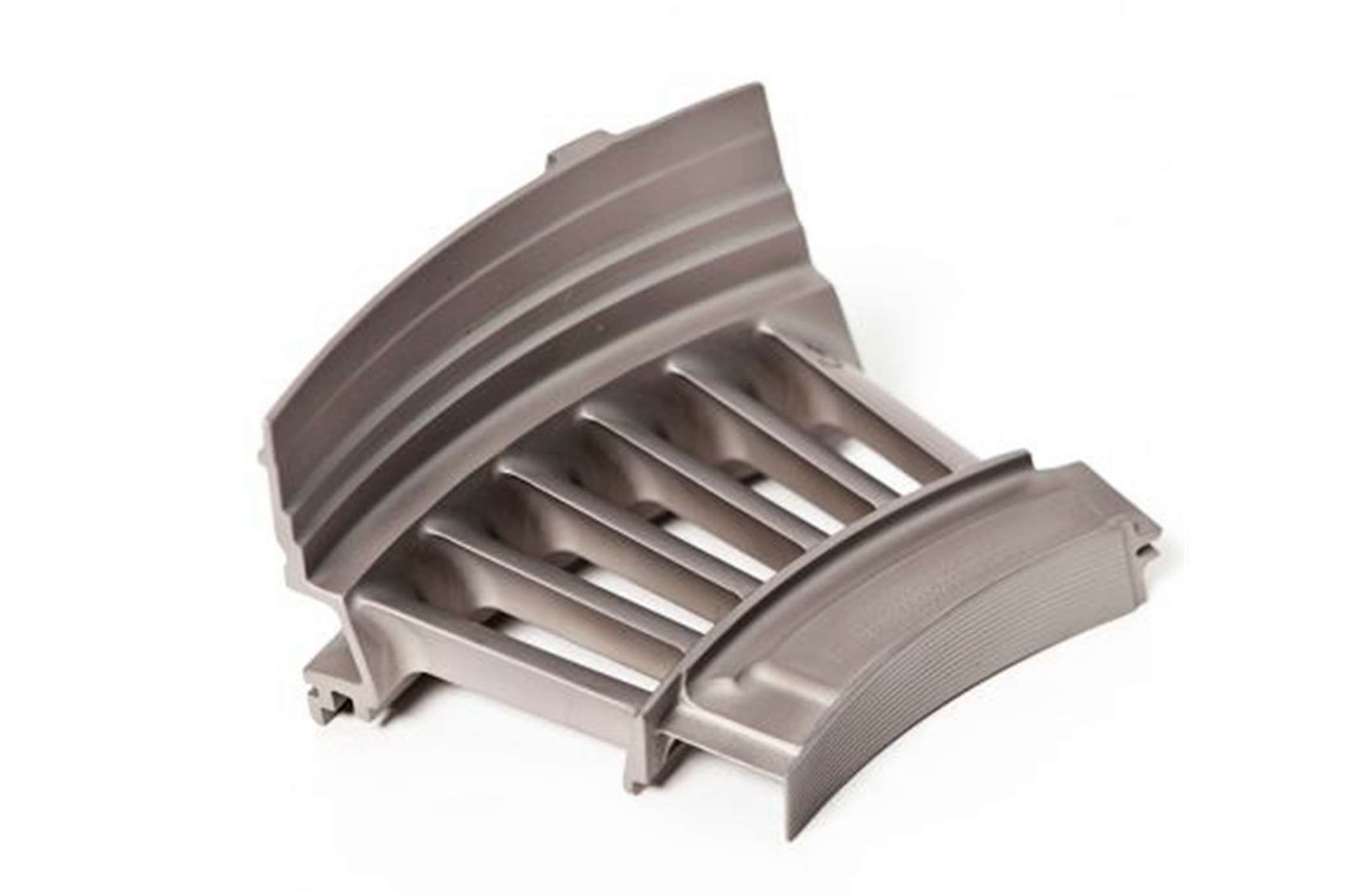
Case Study: Nimonic 105 Aircraft Turbine Vane Components
Project Background
Typical Aircraft Turbine Vane Applications
Turbine Vane Manufacturing Solutions
Core Manufacturing Challenges of Aircraft Turbine Vanes
Results and Verification
FAQs

Introduction

Nimonic 105 is a nickel-chromium-cobalt superalloy engineered for high-temperature strength, excellent creep resistance, and long-term oxidation stability up to 1050°C. As a specialized vacuum investment casting manufacturer, we produce precision turbine vane components from Nimonic 105 with tight dimensional tolerances (±0.05 mm) and low porosity (<1%), tailored for aircraft engine applications under extreme thermal and mechanical stress.

Our advanced casting and inspection capabilities ensure superior performance and service life in aerospace turbine systems.

nimonic-105-vacuum-investment-casting-aircraft-turbine-vane-components-manufacturer

Core Technology: Vacuum Investment Casting of Nimonic 105

Our Nimonic 105 turbine vanes are produced using multi-layer ceramic shell investment casting under high-vacuum conditions (≤10⁻³ torr). Alloy melting occurs at approximately 1400–1450°C, with mold preheating at 1000–1100°C. Controlled solidification (cooling rate: 40–100°C/min) ensures equiaxed grains (0.5–2 mm), excellent microstructural integrity, and dimensional accuracy within ±0.05 mm—crucial for complex vane geometries in jet engines.

Material Characteristics of Nimonic 105 Alloy

Nimonic 105 is a precipitation-hardened nickel-based alloy known for high stress rupture strength and thermal fatigue resistance. It is widely used in aerospace gas turbines and afterburner zones. Key properties include:

Property

Value

Melting Range

1340–1390°C

Density

8.19 g/cm³

Tensile Strength (at 800°C)

≥900 MPa

Yield Strength (at 800°C)

≥650 MPa

Creep Rupture Strength (1000h @ 950°C)

≥200 MPa

Elongation

≥15%

Oxidation Resistance

Excellent up to 1050°C

These properties ensure long-term stability in turbine vane components exposed to hot gas streams and severe thermal cycling.

Case Study: Nimonic 105 Aircraft Turbine Vane Components

Project Background

A commercial jet engine manufacturer required first-stage stator vanes capable of operating at 1000–1050°C under high mechanical loads and continuous thermal cycling. Our solution involved precision-cast Nimonic 105 vanes that meet AMS 5799 and ISO aerospace quality standards. Components were cast with critical wall thicknesses <2 mm and fine surface finish for optimal aerodynamic performance.

Typical Aircraft Turbine Vane Applications

  • High-Pressure Turbine (HPT) Guide Vanes: Designed for sustained high-temperature exposure and aerodynamic loading in engine core zones, demanding extreme creep and fatigue resistance.

  • Nozzle Guide Vanes for Afterburners: Deployed in military engine afterburner sections, where thermal shock and oxidation are severe and structural stability is essential.

  • Variable Stator Vanes (VSVs): Precision-cast vanes with controlled wall profiles for advanced turbofan engines requiring optimized airflow control and thermal expansion compatibility.

  • Intermediate Stage Vanes: Components bridging HPT and LPT sections, exposed to fluctuating temperatures and requiring exceptional microstructural integrity.

These vane types are essential for maintaining engine thermal efficiency, pressure ratios, and long-term performance in high-speed flight environments.

Turbine Vane Manufacturing Solutions

Casting Process Wax patterns are assembled into ceramic molds (8–10 shell layers), followed by vacuum casting with controlled alloy flow and mold heating. Solidification is tightly regulated to control grain size, minimize hot tearing, and ensure complete mold fill.

Post-processing Components are subjected to Hot Isostatic Pressing (HIP) at ~1180°C and 100 MPa to eliminate microporosity and enhance fatigue strength. Final CNC machining ensures strict tolerance control at sealing faces, root platforms, and cooling slot edges.

Surface Treatment Aerospace-grade coatings such as Thermal Barrier Coatings (TBC) (YSZ) are applied via plasma spray to reduce metal surface temperatures by 150–200°C, extending vane life under cyclic thermal stress.

Testing and Inspection All castings undergo non-destructive X-ray inspection, CMM dimensional measurement, and tensile testing at elevated temperatures. Metallographic analysis confirms carbide dispersion and grain boundary structure compliance with engine OEM specs.

Core Manufacturing Challenges of Aircraft Turbine Vanes

  • Achieving ±0.05 mm dimensional control in thin-wall, aerodynamically shaped profiles.

  • Controlling porosity and segregation in high γ' phase content alloys like Nimonic 105.

  • Maintaining mechanical property consistency across large production batches.

Results and Verification

Our delivered Nimonic 105 turbine vanes demonstrated:

  • Porosity <1%, confirmed via radiography and metallographic analysis.

  • Consistent tensile properties at 800–950°C, exceeding AMS 5799 specification minimums.

  • Excellent dimensional consistency validated by 3D CMM scan data within ±0.05 mm tolerances.

FAQs

  1. What makes Nimonic 105 suitable for high-temperature turbine vane applications?

  2. How does vacuum investment casting benefit complex aircraft vane geometries?

  3. What coatings are applied to protect Nimonic 105 vanes from thermal fatigue?

  4. How is microstructure uniformity ensured in aerospace-grade castings?

  5. Can Nimonic 105 vane components be customized for specific engine platforms?