日本語

304 Specialized Power Generation Component Additive Production

目次
Introduction to 304 Stainless Steel Additive Manufacturing for Power Applications
Additive Manufacturing Capabilities for Power Generation Components
Technology Parameters
Why Use 304 Stainless Steel for Power Sector Applications
Post-Processing Strategy
Case Study: 3D Printed 304 Stainless Steel Condensate Valve Cover Plate
Project Background
Manufacturing Workflow
Results and Verification
FAQs

Introduction to 304 Stainless Steel Additive Manufacturing for Power Applications

304 stainless steel is an austenitic alloy known for its excellent corrosion resistance, weldability, and thermal stability. In power generation environments—where exposure to steam, condensate, and corrosive atmospheres is common—304 offers a cost-effective and durable material choice.

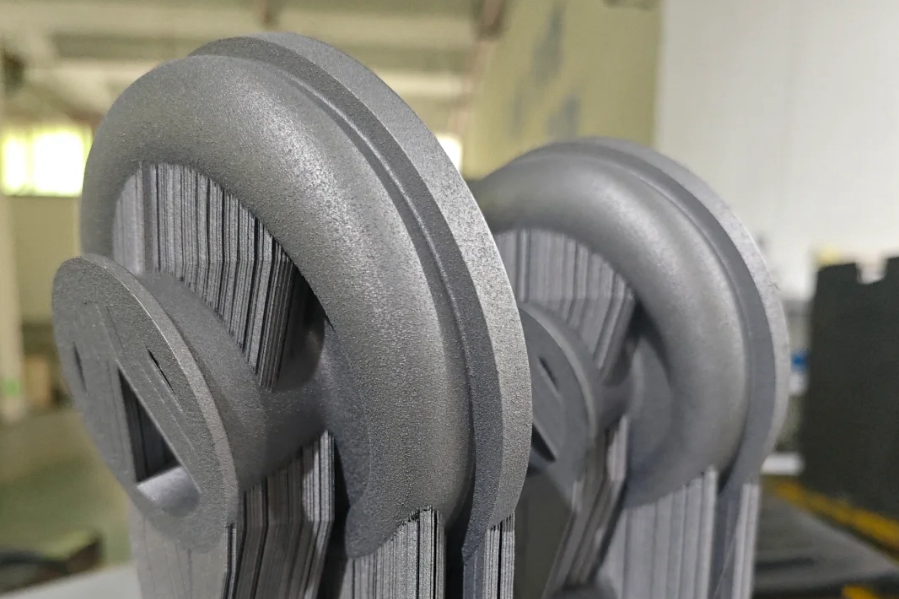
At Neway Aerotech, we provide 304 stainless steel 3D printing services using Selective Laser Melting (SLM) and Direct Metal Laser Sintering (DMLS) to produce specialized power generation components such as flow diffusers, housings, couplings, and instrumentation brackets.

Additive Manufacturing Capabilities for Power Generation Components

Technology Parameters

Technology

Layer Thickness (μm)

Tolerance (mm)

Surface Finish (Ra, μm)

Applications

SLM

30–50

±0.05

6–12

Brackets, diffusers, enclosures, valve caps

DMLS

40–60

±0.08

8–15

Sensors housings, couplings, mounting bases

SLM is preferred for fine-detail parts requiring tight tolerances and high density.

Why Use 304 Stainless Steel for Power Sector Applications

Property

Value

Role in Power Generation Use

Operating Temp Limit

~870°C

Withstands steam and ambient heat

Tensile Strength

500–700 MPa

Handles internal pressure and static loads

Corrosion Resistance

High

Suitable for condensate and chemical exposure

Weldability

Excellent

Supports hybrid assemblies and post-processing

Cost-Effectiveness

Competitive vs. high-nickel alloys

Ideal for non-pressurized or structural parts

Post-Processing Strategy

  • Heat Treatment: Optional stress relief at 850°C for 2 hours.

  • Finishing:

    • Internal channels smoothed via abrasive flow machining.

    • External surfaces bead blasted or electropolished to improve corrosion resistance.

  • CNC Machining used for precision faces, threads, and mating surfaces.

  • Passivation applied to enhance corrosion resistance in moist or acidic systems.

Case Study: 3D Printed 304 Stainless Steel Condensate Valve Cover Plate

Project Background

A power plant customer required a custom condensate valve cover with integrated sensor mount and sealing flange. The geometry was not compatible with conventional milling due to curved undercuts and internal cavities.

Manufacturing Workflow

  1. Design: 5 mm thick plate with curved flow relief channels and tapped bosses for pressure sensors.

  2. Material: Certified 304 stainless steel powder, D50 = 35 μm.

  3. Printing: SLM at 40 μm layer thickness, argon atmosphere.

  4. Post-Processing:

    • Heat treated for stress relief.

    • Machined sealing surface to ±0.01 mm.

    • Threaded ports tapped and verified.

  5. Inspection: CMM dimensional check, pressure testing at 1.5× service load.

Results and Verification

The printed 304 part was delivered in 4 working days, replacing a machined 4-piece assembly. All sealing and port tolerances were within spec, and the part passed thermal cycling from 30°C to 150°C without any warping, confirming material and process reliability.

FAQs

  1. What’s the difference between 304 and 316L stainless steel in power applications?

  2. Can 304 stainless steel be printed with internal channels or lattices?

  3. Is passivation mandatory for 3D printed stainless steel used in wet environments?

  4. How does 3D printed 304 perform under thermal fatigue?

  5. What is the lead time for a custom 3D printed 304 stainless part?