Technologie d'impression 3D en acier inoxydable : Tout ce que vous devez savoir
Le paysage manufacturier subit une transformation profonde, portée par la fabrication additive (FA). Parmi ses applications les plus impactantes se trouve l'impression 3D de l'acier inoxydable, une technologie qui comble l'écart entre la liberté de conception et les propriétés robustes et résistantes à la corrosion de l'une des familles de matériaux les plus fiables de l'industrie. Au-delà du prototypage, la FA en acier inoxydable est désormais une méthode de production viable pour des pièces d'utilisation finale complexes et hautes performances dans les secteurs aérospatial, de transformation chimique et médical. Ce guide explore les principes fondamentaux, les procédés, les matériaux et les avantages de cette technologie révolutionnaire.
Comprendre la technologie de base : la Fusion sur Lit de Poudre Métallique
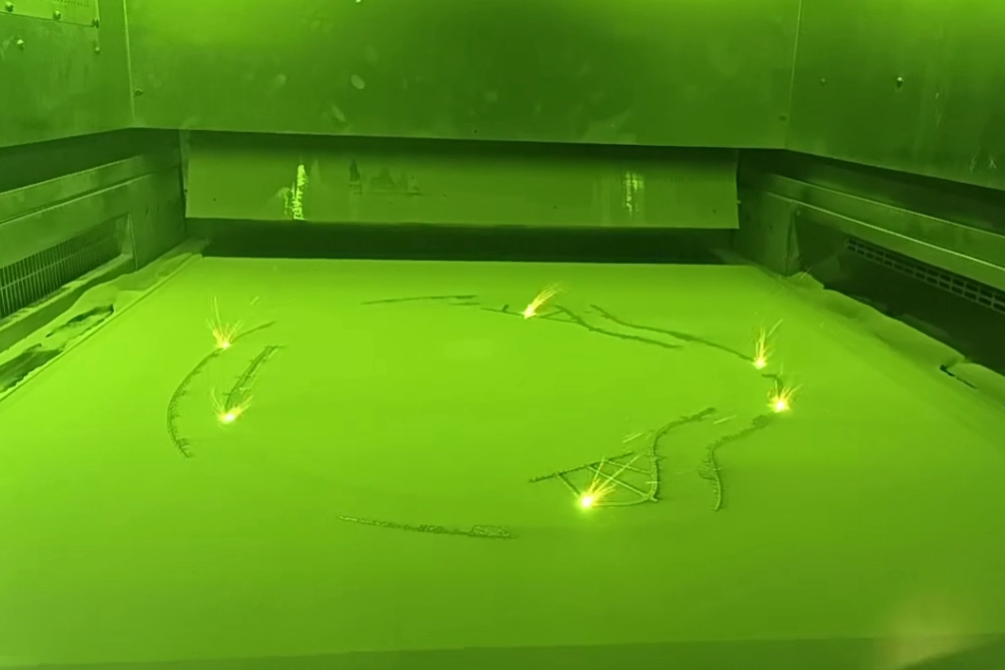
L'impression 3D en acier inoxydable pour applications industrielles utilise principalement un procédé appelé Fusion Laser sur Lit de Poudre (LPBF) ou Frittage Sélectif par Laser (SLM). Dans ce procédé, un laser de haute puissance scanne et fond sélectivement des couches ultra-fines de poudre d'acier inoxydable, les fusionnant ensemble sur la base d'un modèle CAO 3D. Cela se produit couche par couche dans une chambre étanche remplie de gaz inerte (généralement de l'argon ou de l'azote) pour éviter l'oxydation. La précision du laser et la finesse de chaque couche (typiquement 20-60 microns) permettent de créer des géométries impossibles ou prohibitivement coûteuses avec la fonderie traditionnelle ou l'usinage, y compris des canaux internes, des structures en treillis et des formes légères optimisées topologiquement.
Principaux avantages par rapport à la fabrication conventionnelle
L'adoption de l'impression 3D en acier inoxydable offre un ensemble d'avantages convaincants qui résolvent des défis d'ingénierie de longue date : Liberté de conception inégalée : Créez des assemblages consolidés, des canaux de refroidissement intégrés et des formes organiques qui minimisent le poids tout en maximisant la fonction. Du prototypage rapide à la production : Accélérez les cycles de développement en itérant rapidement des prototypes métalliques fonctionnels et passez sans heurt à la production en petites séries ou à la demande. Efficacité matérielle & Réduction des déchets : La nature additive du procédé n'utilise que le matériau nécessaire pour la pièce et les structures de support, contrastant fortement avec les déchets soustractifs de l'usinage CNC. Pièces optimisées pour la performance : La solidification rapide à partir du bain de fusion entraîne une microstructure fine et homogène, produisant souvent des propriétés mécaniques qui égalent ou dépassent celles des équivalents forgés ou moulés.
Le flux de travail de l'impression 3D en acier inoxydable : du fichier à la pièce finie
Produire un composant en acier inoxydable imprimé en 3D qualifié implique un processus méticuleux en plusieurs étapes : 1. Conception & Préparation de fichier (Numérique) : Le processus commence par un modèle 3D optimisé pour la FA (tenant compte des surplombs, du placement des supports et des contraintes résiduelles). Le modèle est "tranché" en couches numériques. 2. Préparation de la poudre & Configuration de la machine : Une poudre d'acier inoxydable de haute qualité, atomisée au gaz (par exemple, 316L) est chargée dans l'imprimante. La plateforme de construction est nivelée et la chambre est purgée avec du gaz inerte. 3. Le processus d'impression : Le laser fusionne méticuleusement chaque coupe transversale. Après chaque couche, le lit de poudre descend, une nouvelle couche de poudre est étalée, et le processus se répète jusqu'à ce que la pièce soit terminée. 4. Post-traitement : Ceci est crucial pour atteindre les propriétés finales. Les étapes comprennent :
Suppression des supports : Les pièces imprimées sont retirées de la plaque de construction, et les structures de support sont détachées.
Relaxation des contraintes & Traitement thermique : Les pièces subissent un traitement thermique ciblé pour relâcher les contraintes internes et optimiser la microstructure et les propriétés mécaniques.
Pressage Isostatique à Chaud (HIP) : Pour les applications critiques, le HIP est utilisé pour éliminer la micro-porosité interne, améliorant la durée de vie en fatigue et la ductilité.
Finition de surface & Usinage : Diverses techniques, du grenaillage à l'usinage CNC de précision sur les interfaces critiques, permettent d'atteindre la qualité de surface et les tolérances dimensionnelles requises.
Principaux matériaux en acier inoxydable pour la FA et leurs propriétés
Le choix du matériau dicte la performance de la pièce. Neway offre une expertise dans l'impression des alliages d'acier inoxydable les plus utilisés et exigeants : Acier inoxydable 316L : Le cheval de bataille de la FA résistante à la corrosion. Il offre une excellente résistance générale à la corrosion, de bonnes propriétés mécaniques et une biocompatibilité, le rendant idéal pour les applications marines, chimiques et certaines applications médicales. Acier inoxydable 17-4 PH (à durcissement structural) : Cette nuance martensitique peut être vieillie après impression pour atteindre une très haute résistance et dureté tout en maintenant une bonne résistance à la corrosion. Elle est parfaite pour les composants structurels, les engrenages et l'outillage. Explorez nos capacités avec le 17-4 PH. Acier inoxydable 15-5 PH : Similaire au 17-4PH mais avec une ténacité et des propriétés mécaniques transversales améliorées. Il est privilégié pour les composants aérospatiaux et de défense de haute intégrité. En savoir plus sur le 15-5PH. Aciers à outils spéciaux & Aciers maraging : Pour les applications nécessitant une résistance à l'usure, une dureté et une résistance extrêmes après vieillissement, comme les moules, les matrices et les pièces industrielles à haute contrainte.
Transformer les industries : Applications principales
L'impression 3D en acier inoxydable permet l'innovation dans un spectre d'industries à haute valeur ajoutée : Aérospatial & Défense : Fabrication de supports légers et consolidés, de composants de systèmes fluides et de pièces de moteur avec un refroidissement interne complexe. La technologie répond aux besoins de la défense et de l'aviation commerciale. Médical & Dentaire : Production de guides chirurgicaux spécifiques au patient, d'implants (lorsque autorisés par la réglementation) et d'instruments chirurgicaux personnalisés à partir de 316L biocompatible ou de Ti-6Al-4V (bien que le titane soit une famille de matériaux différente). Énergie & Transformation chimique : Création de vannes résistantes à la corrosion, de roues de pompe et de composants d'échangeurs de chaleur avec des passages internes optimisés pour les secteurs chimique et pétrolier & gazier. Outillage industriel & Automobile : Développement de moules d'injection à refroidissement conforme pour des temps de cycle plus rapides et fabrication de composants légers et à haute résistance pour l'automobile et les machines lourdes.
L'approche holistique de Neway pour la fabrication additive en acier inoxydable
Chez Neway, nous considérons l'impression 3D non pas comme un service autonome, mais comme un nœud intégré au sein de notre écosystème de fabrication avancée. Nos services d'impression 3D sont soutenus par des décennies d'expertise métallurgique. Nous fournissons : Solution de bout en bout : Du conseil en conception pour la FA (DfAM) et la sélection des matériaux à l'impression, au post-traitement complet et à la validation de la qualité. Expertise en matériaux & procédés : Notre connaissance approfondie de la métallurgie des poudres et du traitement thermique garantit des paramètres optimaux pour chaque nuance d'acier inoxydable. Assurance qualité rigoureuse : Chaque pièce est soumise à des tests et analyses de matériaux stricts, incluant l'inspection dimensionnelle, la mesure de densité et les essais mécaniques, assurant la conformité aux spécifications les plus exigeantes.
Conclusion : Adopter l'avenir de la production de pièces métalliques
L'impression 3D en acier inoxydable est passée d'un outil de prototypage novateur à une technologie de fabrication industrielle centrale. Elle permet aux ingénieurs de s'affranchir des contraintes de conception traditionnelles, d'optimiser la performance des pièces et de rationaliser les chaînes d'approvisionnement pour des composants complexes et à faible volume. Alors que la technologie continue d'évoluer en termes de vitesse, de variété de matériaux et de rentabilité, son adoption ne fera que s'élargir. En vous associant à un fabricant expérimenté comme Neway, qui offre une connaissance métallurgique approfondie et un contrôle complet du processus, vous pouvez exploiter en toute confiance cette technologie transformative pour construire un avenir plus innovant et efficace.
FAQ