
Usinagem por Eletroerosão de Componentes de Ferramentas Personalizadas em Superliga
Introdução à Eletroerosão para Componentes de Ferramentas Personalizadas
A usinagem por eletroerosão, também conhecida como Usinagem por Descarga Elétrica (EDM), é um método preciso utilizado para fabricar componentes intrincados de ferramentas personalizadas em superliga com controle dimensional extremo. Esta técnica sem contato elimina tensões mecânicas durante o processamento, tornando-a ideal para geometrias complexas.
Na Neway Aerotech**, nossos **serviços de usinagem EDM em superliga apoiam fabricantes de ferramentas e moldes na produção de peças de alta temperatura e alta dureza para aplicações aeroespaciais, de energia e de corte industrial.
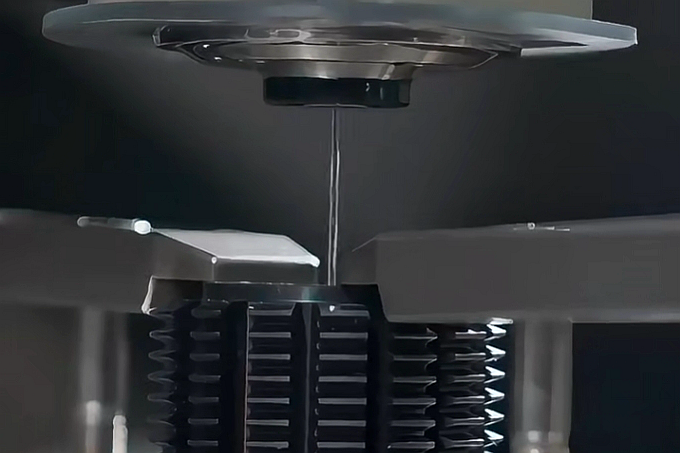
Visão Geral da Tecnologia de Usinagem EDM
Classificação da Usinagem EDM
Processo EDM | Rugosidade Superficial (Ra, μm) | Tolerância Dimensional (mm) | Relação de Aspecto | Zona Afetada pelo Calor (HAZ, μm) | Tamanho Mínimo do Recurso (mm) |
|---|---|---|---|---|---|
EDM a Fio | 0,3–1,2 | ±0,002–±0,01 | Até 20:1 | 2–5 μm | ~0,1 |
EDM por Penetração (Sinker) | 0,4–2,5 | ±0,005–±0,02 | Até 10:1 | 5–10 μm | ~0,2 |
EDM de Furação | 0,5–3,0 | ±0,02–±0,05 | Até 30:1 | 10–15 μm | ~0,1 |
Micro-EDM | 0,1–0,4 | ±0,001–±0,005 | Até 15:1 | <2 μm | <0,05 |
Nota: Os valores de HAZ dependem da energia de descarga, duração do pulso e propriedades do dielétrico.
Estratégia de Seleção de Usinagem EDM
EDM a Fio: Utilizado para contornagem de perfis finos em punções de precisão, matrizes e insertos de ferramentas resistentes ao desgaste.
EDM por Penetração (Sinker): Ideal para formação de cavidades 3D em ferramentas de forjamento e geometrias complexas de moldes personalizados.
EDM de Furação: Aplicado para furos internos de resfriamento ou pinos de ejeção em aços para ferramentas temperados e superligas.
Micro-EDM: Projetado para recursos ultra-pequenos em estampagem fina e ferramentas de estampagem progressiva em miniatura.
Considerações sobre Materiais
Materiais Típicos para Componentes de Ferramentas Personalizadas
Material | Dureza (HRC) | Resistência ao Desgaste | Estabilidade Térmica (°C) | Usinabilidade | Principais Aplicações |
|---|---|---|---|---|---|
40–45 | Excelente | 870 | Pobre | Ferramentas de forjamento ou corte de alto impacto e resistentes ao desgaste | |
35–40 | Alta | 980 | Difícil | Blocos de matriz aeroespacial e ferramentas de conformação | |
36–42 | Moderada | 704 | Razoável | Ferramentaria para prensas de alta temperatura e bases de moldes | |
35–40 | Alta | 920 | Razoável | Ferramentas de corte de alta carga e matrizes de fixadores aeroespaciais | |
30–35 | Excelente | 1040 | Pobre | Insertos de ferramentaria para ambientes corrosivos |
Estratégia de Seleção de Materiais
Stellite 6B: Excelente para ferramentaria abrasiva que requer tenacidade e vida útil ao desgaste acima de 10.000 ciclos sob impacto.
Rene 41: Para matrizes expostas a tensões térmicas >900°C e que requerem integridade dimensional durante ciclos de conformação prolongados.
Inconel 718: Ótimo para matrizes estruturais que necessitam de boa resistência, usinabilidade e resistência à oxidação até 700°C.
Nimonic 90: Preferido em ferramentaria para trabalho a quente de peças aeroespaciais com choque intermitente e exposição térmica cíclica.
Hastelloy C-22: Melhor para ferramentaria de meios corrosivos, como matrizes de extrusão e ferramentas de conformação de ranhuras de vedação.
Estudo de Caso: Usinagem por Eletroerosão de Inserto de Matriz de Corte Personalizada
Contexto do Projeto
Um cliente de ferramentaria aeroespacial solicitou um conjunto de insertos de conformação resistentes ao desgaste para uma linha de produção de componentes de turbina. As matrizes tinham que manter tolerâncias abaixo de 900°C e suportar carregamento de choque mecânico repetido por mais de 100.000 ciclos.
Fluxo de Trabalho de Fabricação
Preparação do Material: Tarugo Rene 41, Ø60 mm × 25 mm, tratado em solução a 1065°C, envelhecido por 8 horas a 760°C.
Pré-usinagem CNC: Deixada uma sobra de 0,5 mm para eletroerosão final nas arestas críticas e superfícies da cavidade.
Processo EDM por Penetração (Sinker): Cavidade 3D conformada com eletrodos de grafite; pulso ligado 100 μs, folga de faísca 0,1 mm.
Micro-EDM: Utilizado para furos de ventilação e chanfro fino; resolução de recurso de 0,2 mm, relação de aspecto 5:1.
Pós-processamento
Tratamento Térmico de Alívio de Tensões a 925°C por 2 horas para reduzir tensões residuais
HIP (Compactação Isostática a Quente) a 1200°C/100 MPa por 4 horas para fechar porosidade subsuperficial
Jateamento de granalha para 150% de cobertura superficial, melhorando a vida à fadiga em 30%
Acabamento Superficial
Polimento de precisão para Ra ≤ 0,4 μm nas faces de trabalho usando pasta de diamante
Passivação para proteção contra corrosão
Arredondamento de arestas mantido dentro de ±0,01 mm conforme especificação do raio de canto
Inspeção
Verificação por MMC (Máquina de Medição por Coordenadas) em 35 pontos críticos, todos dentro da tolerância de ±0,003 mm
END por Raios-X não mostrou defeitos internos
MEV confirmou uniformidade microestrutural e zonas de descarga limpas
Inspeção por ultrassom verificou a integridade de todo o volume
Resultados e Verificação
A inspeção dimensional confirmou que o desvio do perfil estava dentro de ±0,003 mm na geometria da cavidade e 2 μm de planicidade nas superfícies de acoplamento.
O tratamento HIP resultou em 100% de fechamento de poros sem defeitos observáveis sob radiografia de 10x ou testes de imersão por ultrassom.
O acabamento superficial atendeu ao requisito de Ra ≤ 0,4 μm, e as arestas mantiveram definição total após o jateamento de granalha e polimento posterior.
A imagem por MEV não mostrou camada refundida ou microfissuras; as zonas erodidas por faísca eram metalurgicamente estáveis e limpas.
Todas as matrizes de teste excederam 120.000 ciclos na validação de campo, sem desgaste ou fratura observados nas arestas durante a vida útil.
Perguntas Frequentes (FAQs)
Quais materiais de eletrodo são melhores para eletroerosão de componentes de ferramentaria em superliga?
A eletroerosão pode ser usada para acabar aços para ferramentas temperados acima de 50 HRC?
Como garantir a repetibilidade em operações de EDM por penetração em cavidades profundas?
Qual pós-tratamento é recomendado para matrizes de conformação eletroerodidas?
Como controlar a ZAC (Zona Afetada pelo Calor) ao usinar insertos de ferramentas sensíveis ao calor?
