日本語

How LMD Compares to Casting and Forging in Manufacturing

目次
Process Fundamentals and Mechanisms
Mechanical Properties and Material Characteristics
Design Freedom and Geometric Capabilities
Production Economics and Scalability
Material Efficiency and Sustainability
Applications and Industry Adoption
Summary Comparison Table

Process Fundamentals and Mechanisms

Laser Metal Deposition (LMD) operates as an additive manufacturing process where metal powder is injected into a laser-generated melt pool, building components layer-by-layer. This contrasts fundamentally with casting, which involves pouring molten metal into molds, and forging, which plastically deforms metal under compressive forces. LMD's digital nature enables direct CAD-to-part fabrication without tooling, while casting requires pattern-making and mold fabrication, and forging demands custom dies and substantial force application. The thermal characteristics also differ significantly—LMD features rapid heating and cooling cycles, casting involves controlled solidification, and forging typically includes thermomechanical processing that refines grain structure through deformation.

Mechanical Properties and Material Characteristics

Forging typically produces the highest mechanical properties due to grain refinement and work hardening, with excellent fatigue resistance and directional strength. LMD can achieve properties approaching forged materials when combined with hot isostatic pressing and proper heat treatment, though it may exhibit some anisotropy. Casting generally yields the lowest mechanical properties due to coarse microstructures, potential porosity, and chemical segregation. However, LMD offers superior properties to casting for most applications, with tensile strengths typically 15-30% higher and significantly improved fatigue performance.

Design Freedom and Geometric Capabilities

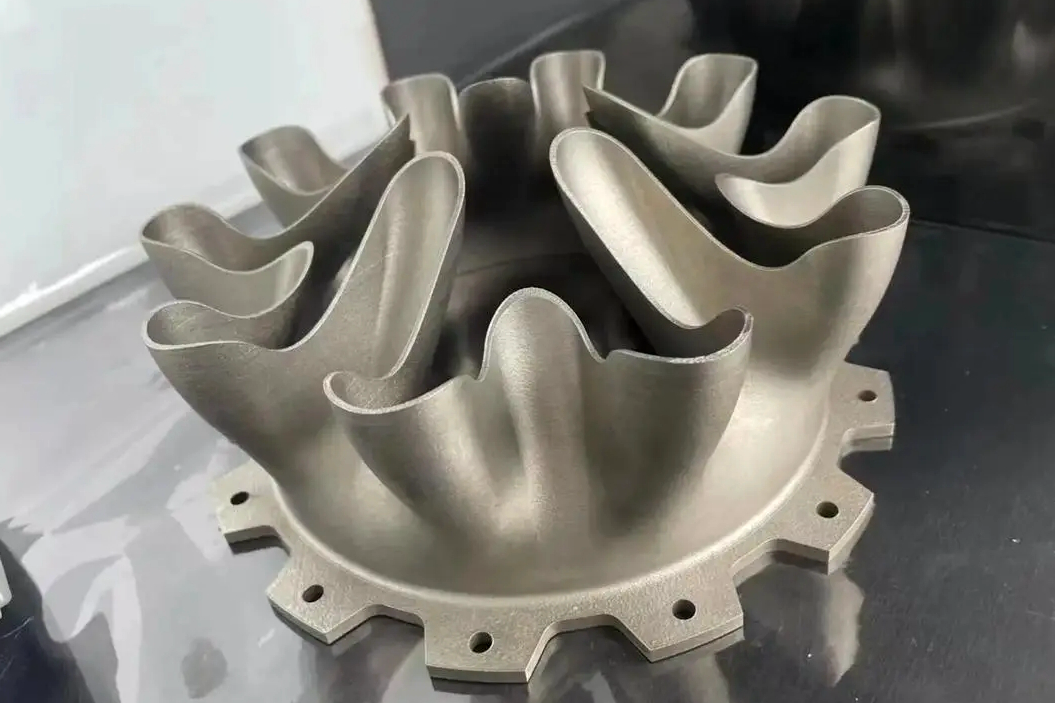
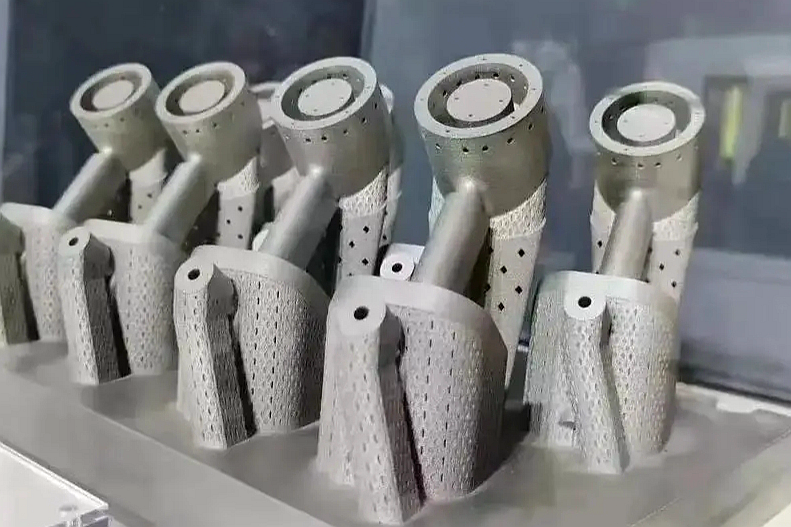
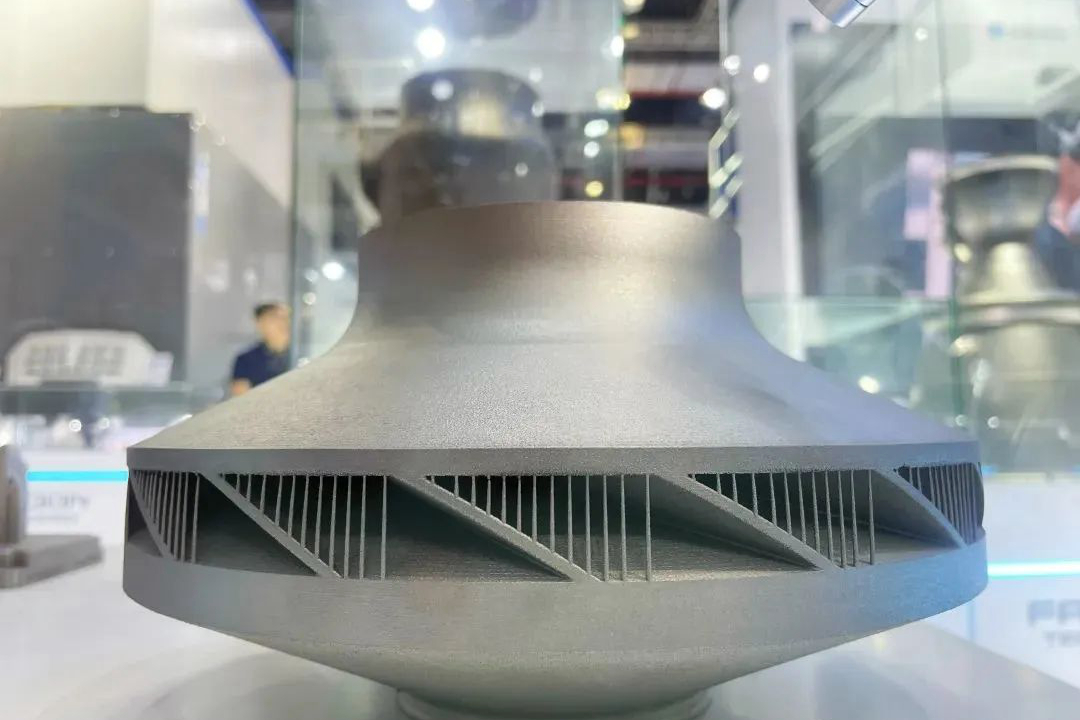
LMD provides unparalleled design freedom, enabling complex internal channels, lattice structures, and topology-optimized geometries impossible with traditional methods. Casting offers moderate complexity but is limited by draft angles, parting lines, and core requirements. Forging is the most restrictive, limited to relatively simple shapes that can be extracted from dies. LMD excels at part consolidation—combining multiple components into single structures—reducing assembly requirements and potential failure points. This makes LMD ideal for components with integrated cooling channels, custom conformal features, and lightweight structures for aerospace applications.

Production Economics and Scalability

Forging becomes most economical at high volumes (typically thousands of units) due to significant tooling investments but offers the lowest per-part cost at scale. Casting is cost-effective for medium to high volumes, with sand casting suitable for low volumes and die casting for high production. LMD requires no tooling, making it ideal for prototypes, custom parts, and low-volume production (1-100 units), though higher per-part cost limits economic viability at scale. LMD's digital nature enables rapid design iterations and customization without tooling modifications, providing flexibility unmatched by traditional methods.

Material Efficiency and Sustainability

LMD offers exceptional material efficiency with buy-to-fly ratios approaching 1.2:1, significantly better than forging (typically 3:1 to 10:1) and casting (1.5:1 to 3:1, including runners and risers). This efficiency is particularly valuable for expensive materials like titanium and nickel superalloys. However, LMD's energy consumption per kilogram of final part is generally higher than traditional methods. Casting generates the most waste material, while forging produces significant scrap through flash and machining allowances. LMD supports sustainability through lightweight designs that reduce energy consumption during product operation, especially in transportation applications.

Applications and Industry Adoption

Forging dominates high-stress applications like connecting rods, turbine disks, and structural components where reliability is critical. Casting is preferred for complex housings, engine blocks, and large components where internal complexity is needed. LMD excels in repair and refurbishment, custom medical implants, aerospace components with integrated cooling, and low-volume production of complex parts. The technology is particularly valuable for oil and gas and power generation industries where rapid production of replacement parts minimizes downtime.

Summary Comparison Table

Factor

LMD

Casting

Forging

Mechanical Properties

Good to Excellent (with HIP)

Fair to Good

Excellent

Design Freedom

Highest

Moderate

Lowest

Tooling Cost

None

Medium to High

Highest

Production Volume

Low to Medium (1-100)

Medium to High (100-10,000+)

High (1,000+)

Material Efficiency

Highest (~85%)

Medium (~60%)

Low (~30%)

Lead Time

Shortest

Medium

Longest

専門家による設計と製造のヒントをメールで受け取りたい方は購読してください。
この投稿を共有: