日本語

Marine Turbine Blade Superalloy Parts Company

目次
Introduction to Marine Turbine Blade Superalloys
Key Manufacturing Challenges for Marine Turbine Blades
Detailed Marine Blade Manufacturing Processes
Vacuum Investment Casting
Directional and Single Crystal Solidification
Comparison of Key Manufacturing Methods
Marine Blade Manufacturing Process Selection Strategy
Marine Superalloy Material Analysis Matrix
Marine Blade Material Selection Strategy
Key Post-processing Techniques
Industry Case Study: Marine Turbine Blade Application
FAQs

Introduction to Marine Turbine Blade Superalloys

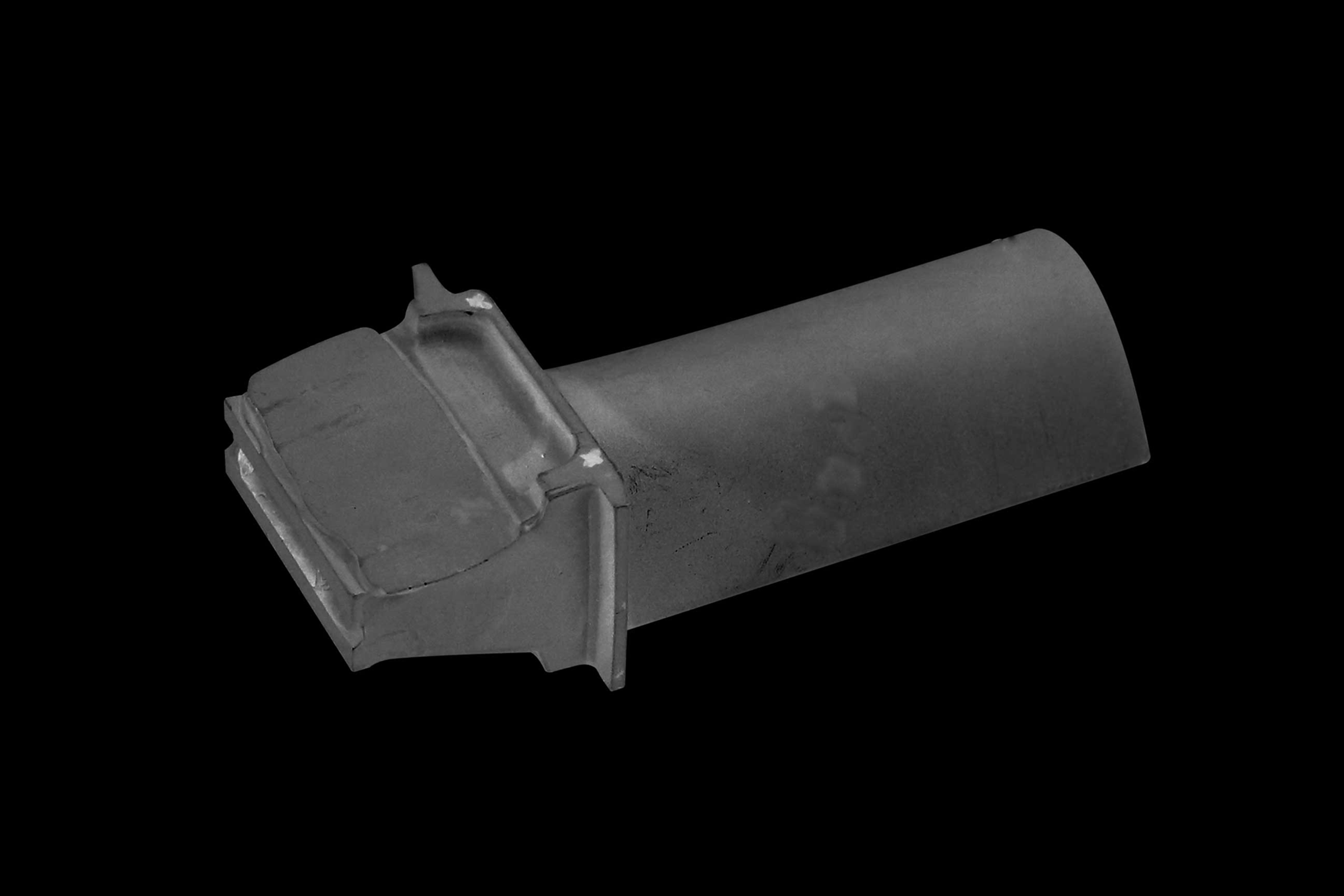
Marine turbine blades demand advanced materials capable of resisting severe corrosion, mechanical stresses, and extreme temperatures. At Neway AeroTech, we specialize in manufacturing high-performance superalloy blades designed specifically for demanding marine environments. Our expert application of vacuum investment casting and advanced machining techniques ensures exceptional accuracy, reliability, and durability of turbine blades.

With extensive marine-industry experience, we deliver customized solutions precisely engineered for superior operational performance.

Key Manufacturing Challenges for Marine Turbine Blades

Manufacturing turbine blades for marine applications involves significant technical challenges:

  • Corrosion Resistance: Blades must withstand constant exposure to saline conditions.

  • High Mechanical Strength: Essential for reliable operation, typically requiring tensile strength above 1000 MPa.

  • Fatigue and Creep Resistance: Ensuring blades maintain integrity under dynamic loading and elevated temperatures (up to 1000°C).

  • Precision Tolerances: Achieving dimensional precision within ±0.10 mm and surface finishes as low as Ra 1.6 µm.

Detailed Marine Blade Manufacturing Processes

Vacuum Investment Casting

  • Creation of accurate wax blade patterns.

  • Formation of ceramic molds and wax removal at approximately 180°C.

  • Vacuum casting (<0.01 Pa pressure) ensuring purity and structural uniformity.

  • Gradual cooling (20–35°C/hour) to reduce internal stresses and defects.

Directional and Single Crystal Solidification

  • Controlled thermal gradients (20–50°C/cm) ensure uniform grain structures.

  • Single-crystal technology eliminates grain boundaries, drastically enhancing creep performance.

  • Slow cooling (20–35°C/hour) minimizes defects, improving overall component integrity.

Comparison of Key Manufacturing Methods

Method

Dimensional Accuracy

Surface Finish

Efficiency

Complexity Capability

Vacuum Investment Casting

±0.15 mm

Ra 3.2–6.3 µm

Moderate

High

Single Crystal Casting

±0.20 mm

Ra 6.3–12.5 µm

Moderate

High

CNC Machining

±0.01 mm

Ra 0.8–3.2 µm

Moderate

Moderate

SLM 3D Printing

±0.05 mm

Ra 6.3–12.5 µm

High

Very High

Marine Blade Manufacturing Process Selection Strategy

  • Vacuum Investment Casting: Optimal for complex blade geometries requiring precision (±0.15 mm) and metallurgical purity.

  • Single Crystal Casting: Ideal for applications demanding superior creep resistance and dimensional stability at ±0.20 mm.

  • CNC Machining: Perfect for achieving precise finishing features, dimensional accuracy ±0.01 mm.

  • SLM 3D Printing: Suitable for rapid prototyping and internal blade structures with tolerances within ±0.05 mm.

Marine Superalloy Material Analysis Matrix

Alloy Material

Tensile Strength (MPa)

Yield Strength (MPa)

Operating Temp (°C)

Corrosion Resistance

Marine Blade Usage

Inconel 625

880

480

980

Outstanding

General marine blades

Hastelloy C-276

750

360

1038

Exceptional

Highly corrosive environments

Nimonic 80A

1050

585

815

Excellent

High-load marine blades

Rene 41

1170

850

1000

Superior

High-temp marine blades

CMSX-4

1300

1000

1150

Exceptional

Single-crystal high-temp blades

Stellite 6

860

700

850

Excellent

Wear-resistant blade applications

Marine Blade Material Selection Strategy

  • Inconel 625: Chosen for excellent seawater corrosion resistance, strength (880 MPa) at operating temperatures up to 980°C.

  • Hastelloy C-276: Ideal for aggressive corrosive marine environments, providing outstanding resistance at up to 1038°C.

  • Nimonic 80A: Selected for blades requiring high mechanical performance (1050 MPa tensile strength) and moderate thermal stability.

  • Rene 41: Optimal for high-temperature applications, with superior tensile strength (1170 MPa) and resistance up to 1000°C.

  • CMSX-4: Preferred material for single-crystal blades demanding the highest creep resistance and strength at temperatures up to 1150°C.

  • Stellite 6: Recommended for exceptional wear resistance and durability in challenging marine conditions at temperatures up to 850°C.

Key Post-processing Techniques

Industry Case Study: Marine Turbine Blade Application

Neway AeroTech recently supplied Inconel 625 turbine blades to an international marine propulsion OEM. Our vacuum investment casting combined with HIP and TBC delivered exceptional dimensional accuracy (±0.15 mm), superior corrosion resistance, and dramatically enhanced operational reliability and lifespan, significantly outperforming market standards.

Our precision manufacturing capabilities and material expertise position us as a trusted industry leader for marine turbine blade components.

FAQs

  1. What lead time can we expect for custom marine turbine blade manufacturing?

  2. Do you support prototyping and small-volume production for marine turbine components?

  3. What industry certifications and quality standards do your marine turbine blades meet?

  4. Which post-processing techniques maximize durability in marine environments?

  5. Can your team assist with alloy selection and blade design optimization for marine applications?