
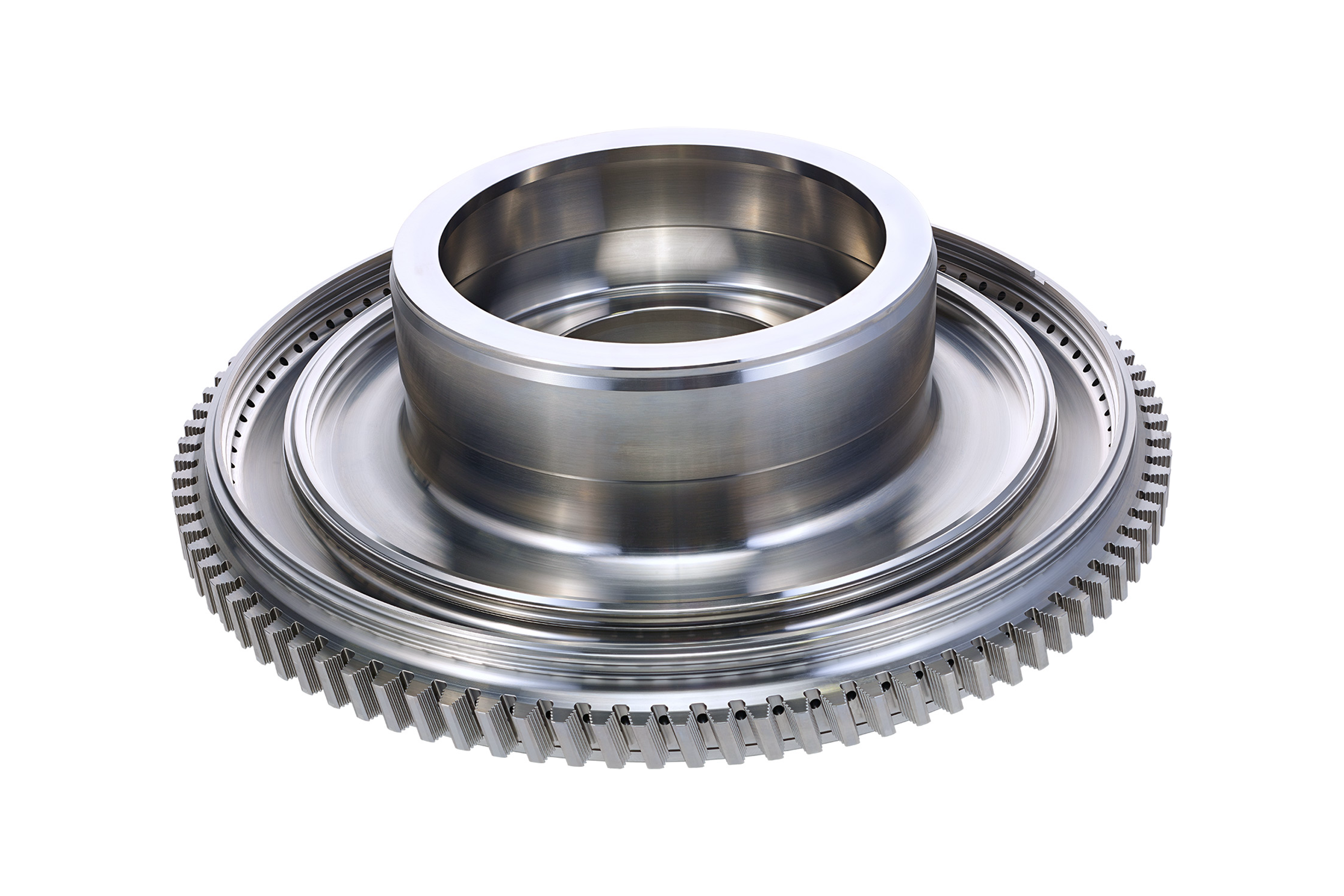
सुपरएलॉय पाउडर धातुकर्म टरबाइन डिस्क
परिचय
पाउडर धातुकर्म टरबाइन डिस्क सुपरएलॉय से निर्मित, चरम परिस्थितियों के लिए डिज़ाइन किए गए महत्वपूर्ण घटक हैं, जो असाधारण यांत्रिक शक्ति (1500 MPa तक तन्य शक्ति) और 750°C तक के कार्य तापमान पर थकान और विसर्पण प्रतिरोध प्रदान करते हैं। न्यूवे एयरोटेक में, हम उन्नत पाउडर धातुकर्म तकनीकों के माध्यम से एयरोस्पेस और बिजली उत्पादन उद्योगों के लिए उच्च-सटीकता वाली सुपरएलॉय टरबाइन डिस्क के उत्पादन में विशेषज्ञता रखते हैं।
हमारे उन्नत विनिर्माण समाधान अत्यधिक मांग वाले अनुप्रयोगों में अनुकूलित सूक्ष्म संरचनाएं, श्रेष्ठ यांत्रिक गुण और अद्वितीय विश्वसनीयता सुनिश्चित करते हैं।
सुपरएलॉय पाउडर धातुकर्म की मूल तकनीक
पाउडर उत्पादन: गैस परमाणुकरण के माध्यम से उत्पादित उच्च-गुणवत्ता वाले मिश्र धातु पाउडर, जो कण आकार एकरूपता (10–100 µm) और नियंत्रित रासायनिक शुद्धता सुनिश्चित करते हैं।
पाउडर संघनन (HIP): हॉट आइसोस्टेटिक प्रेसिंग (HIP) उच्च दबाव (100–200 MPa) और तापमान (1100–1200°C) के तहत पाउडर को समेकित करता है, सरंध्रता को समाप्त करता है।
नियर-नेट शेप फॉर्मिंग: डिस्क को अंतिम ज्यामिति के निकट बनाना मशीनिंग भत्ते को 2–5 mm तक कम करता है, जिससे समय और सामग्री लागत में काफी बचत होती है।
नियंत्रित फोर्जिंग: 1050–1150°C के तापमान पर सटीक फोर्जिंग अनाज संरचनाओं को परिष्कृत करती है, टरबाइन डिस्क के थकान प्रतिरोध और यांत्रिक गुणों को बढ़ाती है।
ताप उपचार: अनुकूलित ताप उपचार चक्र (~1150°C पर विलयन उपचार, 760–800°C पर एजिंग) यांत्रिक गुणों को अनुकूलित करते हैं और सूक्ष्म संरचना को स्थिर करते हैं।
सटीक मशीनिंग: उन्नत CNC मशीनिंग ±0.01 mm के भीतर अंतिम आयामी सटीकता प्राप्त करती है, असाधारण घटक अखंडता सुनिश्चित करती है।
पाउडर धातुकर्म सुपरएलॉय की सामग्री विशेषताएं
गुण | विनिर्देश |
|---|---|
सामान्य मिश्र धातुएं | Rene 95, Rene 88, Udimet 720, FGH97, Astroloy |
तन्य शक्ति | 1200–1500 MPa |
पराभव शक्ति | ≥900 MPa |
थकान शक्ति | उत्कृष्ट उच्च-चक्र थकान गुण |
विसर्पण प्रतिरोध | 700–750°C पर उच्च विसर्पण प्रतिरोध |
ऑक्सीकरण प्रतिरोध | उत्कृष्ट, कठोर परिस्थितियों के लिए उपयुक्त |
कार्य तापमान | 750°C तक |
आयामी सटीकता | ±0.01 mm |
केस स्टडी: सुपरएलॉय पाउडर धातुकर्म टरबाइन डिस्क
परियोजना पृष्ठभूमि
एक प्रमुख एयरोस्पेस इंजन निर्माता को उच्च-प्रदर्शन वाली टरबाइन डिस्क की आवश्यकता थी जो 700°C से अधिक तापमान पर विश्वसनीय रूप से कार्य करने में सक्षम हों और जिनमें बेहतर थकान और विसर्पण प्रतिरोध हो। इन कठोर आवश्यकताओं को प्राप्त करने के लिए पाउडर धातुकर्म सुपरएलॉय का चयन किया गया।
सामान्य टरबाइन डिस्क मॉडल और अनुप्रयोग
उच्च-दबाव कंप्रेसर डिस्क: एयरोस्पेस इंजनों के लिए आवश्यक, जो 15,000 RPM से अधिक घूर्णन गति और लगभग 700°C के तापमान पर विश्वसनीय रूप से कार्य करती हैं।
निम्न-दबाव टरबाइन डिस्क: लंबी आयु वाले वाणिज्यिक जेट इंजनों के लिए महत्वपूर्ण, जो 650°C से अधिक तापमान पर 30,000 से अधिक परिचालन चक्रों के लिए संरचनात्मक अखंडता बनाए रखती हैं।
गैस टरबाइन जनरेटर डिस्क: बिजली संयंत्रों के लिए डिज़ाइन की गई, ये डिस्क लंबी सेवा अवधि में 750°C तक उच्च टॉर्क और थर्मल चक्रण को सहन करती हैं।
समुद्री प्रणोदन टरबाइन डिस्क: नौसैनिक अनुप्रयोगों के लिए अनुकूलित, जो कठोर समुद्री वातावरण में विश्वसनीय प्रदर्शन प्रदान करती हैं, और उच्च तापमान पर लगातार कार्य करती हैं।
विशिष्ट टरबाइन डिस्क का चयन और संरचनात्मक विशेषताएं
श्रेष्ठ विसर्पण शक्ति, थकान प्रतिरोध और ऑक्सीकरण प्रतिरोध के लिए Rene 95 और Udimet 720 जैसे सुपरएलॉय का चयन किया गया। टरबाइन डिस्क में बेहतर स्थायित्व के लिए अनुकूलित बोर ज्यामिति, एकसमान अनाज संरचनाएं और न्यूनतम तनाव सांद्रण कारक होते हैं।
टरबाइन डिस्क घटक विनिर्माण समाधान
पाउडर परमाणुकरण: मिश्र धातु पाउडर को गोलाकार कणों (10–100 µm) में परमाणुकृत किया गया, जिससे सुसंगत रासायनिक संरचना और नियंत्रित सूक्ष्म संरचनाएं सुनिश्चित हुईं।
हॉट आइसोस्टेटिक प्रेसिंग: 150 MPa दबाव और 1150°C पर समेकन पूर्ण घनत्व और सरंध्रता उन्मूलन (<0.1% सरंध्रता) सुनिश्चित करता है।
फोर्जिंग और आकार देना: लगभग 1100°C के तापमान पर नियर-नेट शेप फोर्जिंग सूक्ष्म संरचनाओं को परिष्कृत करती है और ±0.5 mm के भीतर सटीक आयामी सटीकता प्राप्त करती है।
ताप उपचार प्रक्रिया: 1150°C पर विलयन एनीलिंग के बाद 760°C पर एजिंग, जिससे उच्च तन्य शक्ति (~1450 MPa) और इष्टतम थकान प्रतिरोध प्राप्त होता है।
सटीक CNC मशीनिंग: अंतिम मशीनिंग ±0.01 mm के भीतर आयामी सटीकता और श्रेष्ठ सतह परिष्करण सुनिश्चित करती है, जिससे तनाव बढ़ाने वाले कारकों में काफी कमी आती है।
थर्मल बैरियर कोटिंग (TBC): थर्मल बैरियर कोटिंग का अनुप्रयोग परिचालन तापमान क्षमता और संक्षारण सुरक्षा को बढ़ाता है।
अविनाशी परीक्षण (NDT): व्यापक अल्ट्रासोनिक और रेडियोग्राफिक (एक्स-रे) निरीक्षण शून्य आंतरिक दोष सुनिश्चित करते हैं।
अंतिम सत्यापन परीक्षण: कठोर यांत्रिक, थर्मल थकान और विसर्पण परीक्षण अनुकरणित परिचालन परिस्थितियों में टरबाइन डिस्क के प्रदर्शन और स्थायित्व की पुष्टि करते हैं।
मूल विनिर्माण चुनौतियां
न्यूनतम अनाज वृद्धि के साथ एकसमान सूक्ष्म संरचनाएं प्राप्त करना
मशीनिंग के दौरान ±0.01 mm के भीतर आयामी सहनशीलता को नियंत्रित करना
आंतरिक सरंध्रता (<0.1%) के पूर्ण निष्कासन को सुनिश्चित करना
उच्च तापमान पर असाधारण थकान और विसर्पण प्रतिरोध बनाए रखना
परिणाम और सत्यापन
आयामी सत्यापन: कोऑर्डिनेट मेजरिंग मशीन (CMM) ने सभी महत्वपूर्ण आयामों को ±0.01 mm सहनशीलता के भीतर पुष्टि की।
यांत्रिक गुण सत्यापन: 1500 MPa तक तन्य शक्ति और 900 MPa से अधिक पराभव शक्ति प्राप्त की, जो परियोजना लक्ष्यों से अधिक है।
थकान और विसर्पण परीक्षण: घटकों ने थकान जीवन में 30% विस्तार प्रदर्शित किया और 750°C पर 10,000 घंटे से अधिक समय तक विसर्पण अखंडता बनाए रखी।
NDT निरीक्षण: कठोर अल्ट्रासोनिक और रेडियोग्राफिक परीक्षण पास किया, जिससे दोष-मुक्त आंतरिक संरचनाएं सुनिश्चित हुईं।
परिचालन परीक्षण: इंजन परीक्षणों में सफल प्रदर्शन ने परिचालन स्थितियों में विश्वसनीयता और घटक जीवनकाल विस्तार की पुष्टि की।
सतह अखंडता जांच: सतह खुरदरापन लगातार Ra 1.6 µm से नीचे रहा, जिससे वायुगतिकीय दक्षता में काफी सुधार हुआ और घिसाव की संभावना कम हुई।
अक्सर पूछे जाने वाले प्रश्न
पारंपरिक कास्टिंग की तुलना में पाउडर धातुकर्म सुपरएलॉय टरबाइन डिस्क क्या लाभ प्रदान करती हैं?
न्यूवे एयरोटेक आमतौर पर टरबाइन डिस्क के लिए किन मिश्र धातुओं का उपयोग करता है?
न्यूवे एयरोटेक टरबाइन डिस्क में कड़ी आयामी सहनशीलता कैसे प्राप्त करता है?
टरबाइन डिस्क गुणवत्ता आश्वासन के लिए कौन से अविनाशी परीक्षण विधियों का उपयोग किया जाता है?
क्या न्यूवे एयरोटेक विशिष्ट परिचालन आवश्यकताओं के लिए टरबाइन डिस्क को अनुकूलित कर सकता है?
