
Composants de Cœur de Réacteur en Alliage Rene 104 Coulés Monocristallins
Introduction
Les réacteurs nucléaires et thermiques avancés fonctionnent sous des flux thermiques extrêmes, un bombardement neutronique et des charges mécaniques élevées. Les composants du cœur—tels que les aubes directrices de flux, les éléments de transfert de chaleur et les interfaces structurelles—nécessitent des matériaux présentant une résistance exceptionnelle au fluage, une grande résistance à la fatigue thermique et une tolérance aux radiations. Le Rene 104, un superalliage à base de nickel de nouvelle génération, est conçu pour des performances supérieures à haute température et sous des niveaux de contrainte élevés. Lorsqu'il est produit via la coulée monocristalline, les composants en Rene 104 éliminent les joints de grains, améliorant significativement la durabilité dans les environnements de réacteur.
Neway AeroTech est spécialisé dans la coulée à la cire perdue sous vide de l'alliage Rene 104 en utilisant des techniques avancées de sélecteurs en spirale pour produire des structures monocristallines. Nos pièces coulées soutiennent les applications dans l'énergie nucléaire, les systèmes de défense et le traitement thermique, où la longévité des composants et la précision dimensionnelle sont critiques.
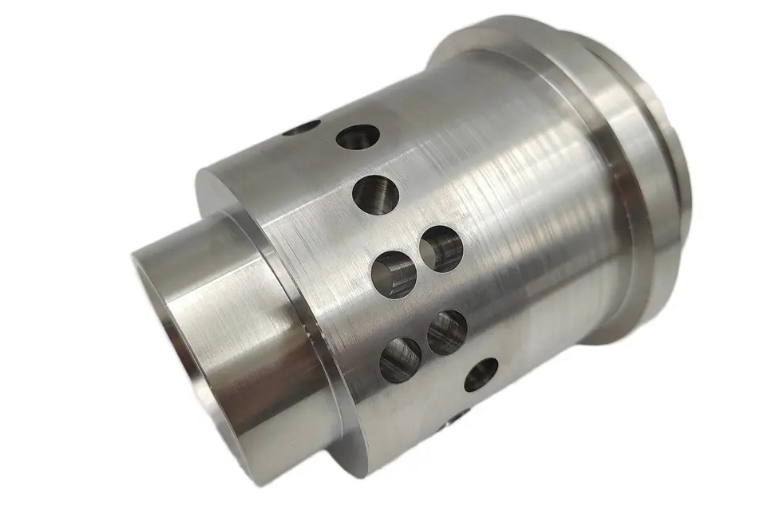
Technologie de Base de la Coulée Monocristalline pour les Composants de Réacteur en Rene 104
Ingénierie du Modèle en Cire Des modèles en cire complexes sont produits avec une tolérance de ±0,05 mm pour reproduire des géométries complexes telles que des canaux internes et des guides de flux à parois minces.
Construction du Moule Céramique en Coquille Les coquilles sont construites avec des matériaux réfractaires jusqu'à une épaisseur de 6–10 mm, capables de supporter la solidification directionnelle dans des gradients thermiques dépassant 1000°C.
Conception du Sélecteur de Grains Les sélecteurs en spirale initient la croissance monocristalline le long de l'axe [001], garantissant des structures sans joints de grains pour une intégrité maximale à haute température.
Fusion par Induction sous Vide L'alliage Rene 104 est fondu sous vide élevé (≤10⁻³ Pa) à ~1450°C pour maintenir la pureté et éliminer les inclusions.
Solidification Directionnelle Le moule est retiré lentement à une vitesse de 2–4 mm/min de la zone chaude pour permettre la croissance d'un grain unique aligné avec les vecteurs de contrainte principaux.
Démoulage et Finition de Surface Le retrait de la coquille est effectué via un grenaillage à haute pression et un lessivage chimique pour préserver les canaux de refroidissement et les caractéristiques d'assemblage.
Pressage Isostatique à Chaud (HIP) Le HIP à 1180°C et 150 MPa élimine la porosité de retrait et améliore les performances en fatigue.
Traitement Thermique et Finition CNC Le traitement thermique de mise en solution et de vieillissement optimise la distribution de la phase γ′. Les géométries finales sont finies via l'usinage CNC et l'électro-érosion (EDM).
Propriétés du Matériau Rene 104 pour l'Utilisation en Cœur de Réacteur
Température Maximale de Fonctionnement : ~1200°C
Résistance à la Traction : ≥1250 MPa
Résistance à la Rupture par Fluage : ≥250 MPa à 1100°C pendant 1000 heures
Teneur en Phase Gamma Prime : ~70%
Résistance à l'Oxydation & à la Corrosion : Excellente dans les environnements à haute radiation et haute température
Structure Granulaire : Monocristal [001], déviation <2° confirmée par EBSD
Étude de Cas : Composants Monocristallins en Rene 104 pour Cœur de Réacteur Haute Température
Contexte du Projet
Neway AeroTech a été sélectionné pour produire des aubes directrices de cœur et des interfaces de buse pour un prototype de réacteur à haute température refroidi au gaz (HTGR). Le projet nécessitait des composants monocristallins en Rene 104 avec une microstructure impeccable, une orientation granulaire constante et une stabilité dimensionnelle sous une opération continue à 1200°C.
Applications
Aubes de Contrôle de Flux du Réacteur Nécessitent une structure monocristalline pour éliminer la déformation par fluage dans les chemins de charge alignés avec l'écoulement.
Pales d'Interface de Transfert de Chaleur Fonctionnent sous de forts gradients thermiques ; exigent une résistance à la fissuration et une stabilité à l'oxydation.
Segments de Guide de Buse & Écrans Doivent maintenir la géométrie et l'alignement des interfaces après des cycles thermiques prolongés.
Solution de Fabrication pour les Composants de Réacteur Monocristallins en Rene 104
Conception du Système de Coulée avec Support CFD L'analyse CFD assure un écoulement uniforme du métal et des gradients thermiques, optimisant la directionnalité de la solidification.
Exécution de la Solidification sous Vide La solidification directionnelle est contrôlée via des plaques de refroidissement et un zonage du four pour guider l'allongement du grain [001] à travers des profils complexes.
Traitement HIP et Thermique Le HIP élimine la porosité résiduelle, tandis que le traitement thermique stabilise la phase γ′ et améliore la résistance à long terme.
Usinage CNC et Assemblage Final Les dimensions critiques et les structures de refroidissement sont réalisées avec l'usinage CNC et l'usinage par électro-érosion (EDM).
Inspection et Certification La vérification de l'orientation granulaire (EBSD), le CMM et la validation par rayons X garantissent la conformité aux exigences de qualité nucléaire.
Défis de Fabrication
Atteindre la croissance monocristalline dans des géométries à parois minces et des canaux qui s'entrecroisent
Prévenir les grains parasites dans les sections longues alignées avec l'écoulement
Maintenir l'intégrité dimensionnelle après le HIP et le traitement thermique
Éviter la recristallisation aux transitions des fentes de refroidissement
Résultats et Vérification
Alignement monocristallin [001] confirmé (déviation <2° via EBSD)
Élimination à 100% de la porosité par HIP sur l'ensemble du lot de coulée
Aucune déformation dimensionnelle après cyclage thermique à 1200°C
Tolérances finales dans la plage de ±0,03 mm sur toutes les surfaces d'appariement
Exigences de tests non destructifs (rayons X, ultrasons) et d'étanchéité à haute pression satisfaites
FAQ
Pourquoi le Rene 104 est-il adapté aux composants de cœur de réacteur nucléaire ou thermique ?
Quels avantages la coulée monocristalline offre-t-elle par rapport à la coulée équiaxe ou directionnelle ?
Comment l'orientation granulaire est-elle contrôlée et vérifiée dans les pièces monocristallines ?
Quelles normes de qualité les pièces coulées de qualité nucléaire doivent-elles respecter ?
Le Rene 104 peut-il être utilisé pour des composants rotatifs ainsi que statiques ?
