
Turbines à Rotors en Superalliage Mar-M 247 Coulés Monocristallins
Introduction
Les rotors de turbine sont soumis aux conditions opérationnelles les plus exigeantes dans les turbines à gaz, combinant des forces centrifuges élevées, des charges thermiques extrêmes et une exposition prolongée à l'oxydation et au fluage. Pour répondre à ces exigences, des superalliages à base de nickel avancés comme le Mar-M 247 sont utilisés pour leurs propriétés mécaniques exceptionnelles à haute température. Lorsqu'ils sont produits par coulée monocristalline, les rotors de turbine en Mar-M 247 obtiennent des structures sans joints de grains, offrant une résistance supérieure au fluage, une résistance à la fatigue et une stabilité thermique sous fonctionnement continu au-dessus de 1000°C.
Neway AeroTech fournit des composants monocristallins en Mar-M 247 par coulée à la cire perdue sous vide en utilisant des sélecteurs de grains en spirale et un contrôle précis de la solidification directionnelle. Nos pièces coulées soutiennent la propulsion aérospatiale, la production d'énergie et les systèmes de défense où l'intégrité dimensionnelle et la résistance à la fatigue sont critiques.
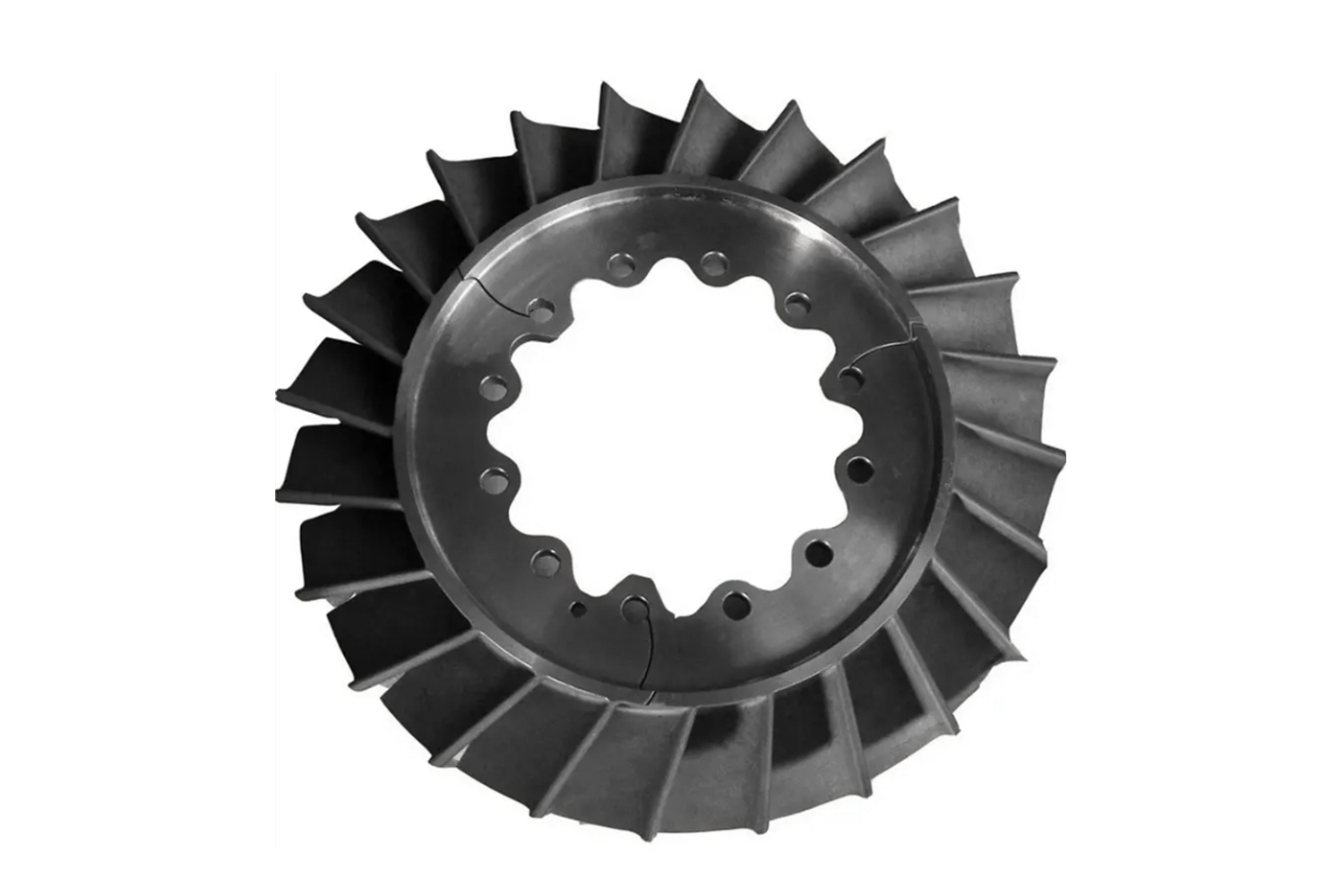
Technologie de Base de la Coulée Monocristalline pour Rotors Mar-M 247
Fabrication du Modèle en Cire Les modèles en cire sont créés avec une précision de ±0,05 mm pour reproduire la géométrie du moyeu du rotor, les attaches des aubes et les détails des fentes de refroidissement.
Construction du Moule en Coquille Des moules céramiques réfractaires sont construits jusqu'à 10 mm d'épaisseur, supportant les exigences thermiques et mécaniques des grandes pièces coulées de rotor.
Intégration du Sélecteur de Grains Les sélecteurs en spirale initient une croissance contrôlée des grains [001] du moyeu du rotor vers l'extérieur, éliminant toutes les faiblesses des joints de grains.
Fusion par Induction sous Vide Le Mar-M 247 est fondu sous vide (≤10⁻³ Pa) à 1450–1480°C, préservant la chimie de l'alliage et empêchant les inclusions gazeuses.
Processus de Solidification Directionnelle Le moule est retiré à une vitesse de 2–4 mm/min sous un gradient thermique précisément contrôlé pour produire des structures monocristallines sur tout le diamètre du rotor.
Retrait et Nettoyage de la Coquille Les coquilles sont retirées par grenaillage haute pression et lessivage chimique pour préserver l'intégrité des arêtes et la qualité de surface.
Pressage Isostatique à Chaud (HIP) Un traitement HIP à 1180°C et 150 MPa élimine la porosité de retrait et améliore la durée de vie en fatigue dans les zones de contraintes élevées.
Traitement Thermique et Usinage Final Un cycle de mise en solution et de vieillissement stabilise la phase γ′. Les dimensions finales sont obtenues par usinage CNC et EDM.
Propriétés du Matériau Mar-M 247 dans les Applications de Rotors Monocristallins
Température Maximale de Fonctionnement : 1150°C
Résistance à la Traction : ≥1100 MPa à température ambiante
Résistance à la Rupture par Fluage : ≥220 MPa à 980°C pendant 1000 heures
Teneur en Gamma Prime : ~65–70%
Résistance à l'Oxydation : Excellente dans les environnements de gaz chauds continus
Microstructure : Monocristal orienté [001] avec une déviation <2°
Étude de Cas : Rotor Monocristallin Mar-M 247 pour Turbine à Gaz Industrielle
Contexte du Projet
Neway AeroTech a été chargé de produire un rotor monocristallin en Mar-M 247 pour une turbine à gaz industrielle utilisée dans la production d'électricité en charge de base continue. Le composant nécessitait une porosité nulle, des tolérances dimensionnelles serrées et une orientation des grains monocristallins vérifiée pour fonctionner au-dessus de 1050°C dans des conditions de charge 24h/24 et 7j/7.
Exemples d'Applications
Rotors de Cœur de Moteurs d'Aéronefs (ex. étages HPT) : Aubes rotatives et disques exposés à des contraintes cycliques et des gradients thermiques.
Rotors pour la Production d'Énergie : Roues de turbine utilisées dans les turbines à gaz industrielles de classe Frame nécessitant une haute résistance au fluage et à l'oxydation.
Turbines de Propulsion Marine : Rotors soumis à des flux de gaz chargés de sel et à haute température avec des cycles de démarrage-arrêt rapides.
Solution de Fabrication pour Rotors de Turbine Mar-M 247 Monocristallins
Conception de Moule Informée par CFD Les conceptions du système de coulée, y compris les plaques de refroidissement et l'orientation des sélecteurs, sont validées par simulation CFD pour minimiser la turbulence et favoriser la solidification directionnelle.
Exécution de la Coulée sous Vide La coulée à la cire perdue sous vide est réalisée avec un contrôle précis des zones thermiques pour maintenir l'orientation des grains et éliminer les grains parasites.
Traitement HIP et Traitement Thermique Post-Coulée Le traitement HIP élimine la porosité interne. Le traitement thermique favorise une distribution uniforme de la phase γ′, maximisant la résistance à la fatigue thermique.
Usinage Final et Inspection Les surfaces critiques sont finies par CNC et EDM. L'inspection comprend l'analyse par MCM, rayons X et EBSD.
Principaux Défis de la Coulée de Rotors
Maintenir la croissance monocristalline à travers les moyeux de rotor de grand diamètre
Prévenir la fissuration à chaud aux transitions des fentes de refroidissement et aux pieds d'aubes
Éviter la recristallisation dans les zones de faible masse ou à gradient thermique élevé
Contrôler la distorsion dimensionnelle pendant le traitement HIP et le traitement thermique
Résultats et Vérification
Orientation des grains [001] confirmée par EBSD avec une déviation <2° sur l'ensemble du rotor
Porosité de 0% confirmée après traitement HIP par tests ultrasonores et aux rayons X
Performance de rupture par fluage dépassant 220 MPa à 980°C
Précision dimensionnelle dans une plage de ±0,03 mm aux interfaces critiques des pieds d'aubes
Taux de réussite de 100% dans les tests d'acceptation mécaniques et non destructifs
FAQ
Pourquoi le Mar-M 247 est-il idéal pour les applications de rotors de turbine monocristallins ?
Quels sont les avantages des pièces coulées monocristallines par rapport aux pièces coulées équiaxes pour rotors ?
Comment l'orientation des grains [001] est-elle maintenue sur de grands diamètres de rotor ?
Quelles industries utilisent des rotors monocristallins en Mar-M 247 ?
Quelles inspections garantissent l'intégrité structurelle des rotors de turbine ?
