
Fabricant de Composants de Turbocompresseur en Superalliage Inconel 738LC à Cristaux Équiaxes
Introduction
Les turbocompresseurs dans les turbines à gaz aérospatiales, automobiles et industrielles sont continuellement exposés à des gaz d'échappement à haute température, à des gradients thermiques extrêmes et à des charges mécaniques sévères. Leurs composants de section chaude—y compris les roues de turbine, les aubes et les diffuseurs—doivent allier résistance au fluage, résistance à la fatigue et durabilité à l'oxydation. L'Inconel 738LC, une modification à faible teneur en carbone de l'Inconel 738, est un superalliage à base de nickel spécialement conçu pour les composants moulés à haute température, offrant une meilleure soudabilité et un risque réduit de fissuration.
Neway AeroTech est un fabricant leader de composants de turbocompresseur utilisant la fonderie à cristaux équiaxes. Notre procédé de moulage à la cire perdue sous vide pour l'Inconel 738LC garantit une microstructure stable, une précision dimensionnelle fiable et des propriétés mécaniques supérieures. Nous servons des clients dans les secteurs aérospatial, automobile et de production d'énergie dans le monde entier.
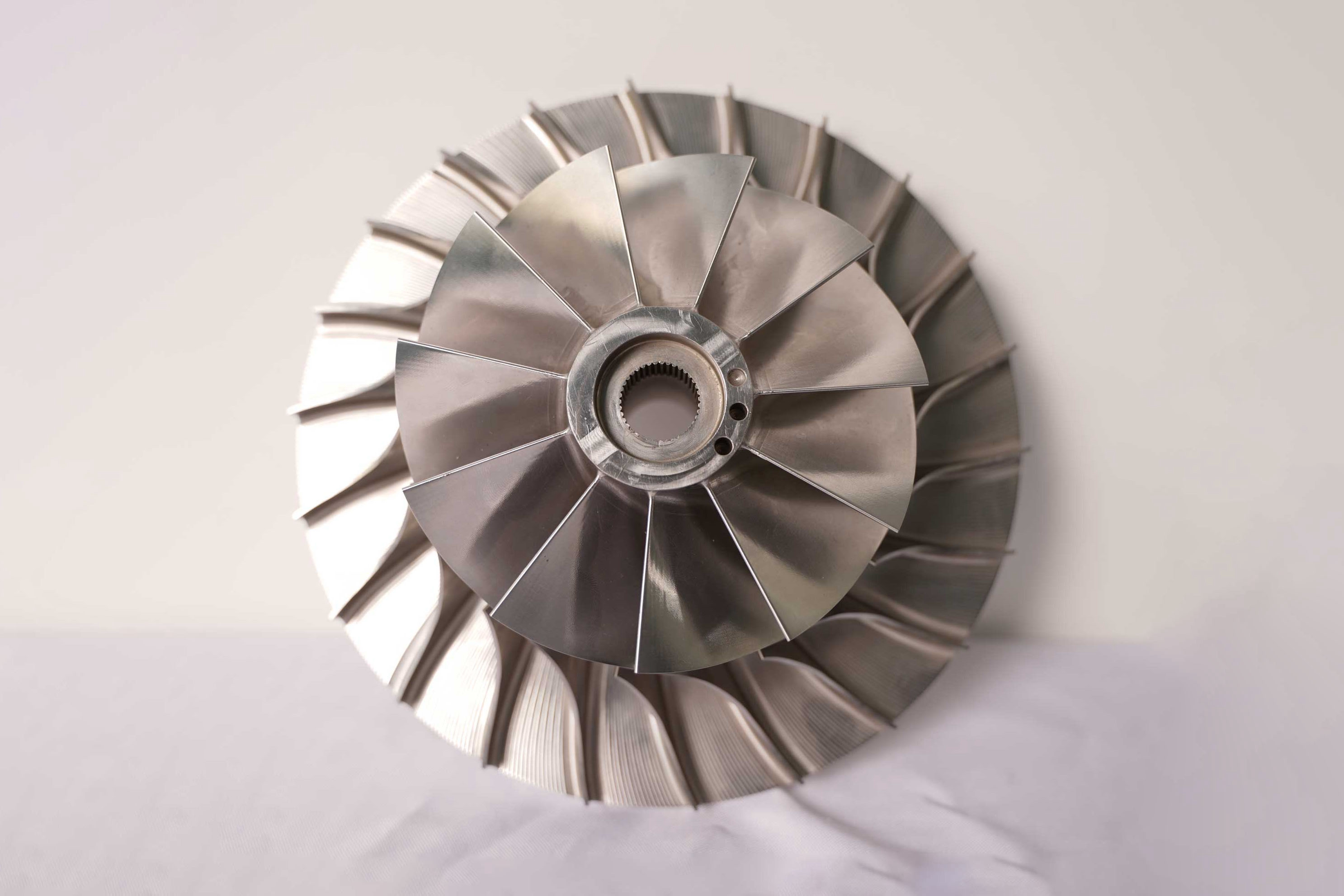
Technologie de Base de la Fonderie Équiaxe pour les Composants Turbo en Inconel 738LC
Production du Modèle en Cire Des modèles en cire de haute précision reproduisent les géométries complexes des aubes, roues et carter avec une précision de ±0,05 mm.
Construction du Moule en Coquille Des coquilles céramiques de 6 à 8 mm d'épaisseur sont construites couche par couche pour supporter les charges thermiques élevées et assurer la régularité de l'écoulement du métal.
Fusion par Induction sous Vide L'alliage Inconel 738LC est fondu à ~1450°C sous vide (≤10⁻³ Pa) pour assurer la stabilité chimique et le contrôle des inclusions.
Solidification à Cristaux Équiaxes L'alliage fondu remplit le moule préchauffé et se solidifie sous refroidissement contrôlé, produisant des structures de grains uniformes et isotropes (ASTM 5–7).
Démoulage et Nettoyage Les coquilles sont retirées par grenaillage mécanique et lessivage chimique, préservant les caractéristiques de refroidissement et les contours fins.
Traitement Thermique Post-Fonderie Un traitement de mise en solution et de vieillissement favorise la stabilisation de la phase γ′ et réduit les contraintes résiduelles.
Usinage CNC et EDM Les caractéristiques finales—telles que les faces d'étanchéité, les attaches de racine et les passages d'huile—sont usinées en utilisant l'usinage CNC et l'EDM.
Inspection et Contrôle Qualité L'intégrité dimensionnelle et interne est vérifiée en utilisant la Métrologie Tridimensionnelle (CMM), les rayons X et les essais par ultrasons.
Propriétés du Matériau Inconel 738LC pour les Composants de Turbocompresseur
Température de Fonctionnement Maximale : 1050°C
Résistance à la Traction : ≥1000 MPa
Résistance à la Rupture par Fluage : ≥200 MPa à 850°C (1000 h)
Limite d'Élasticité : ≥850 MPa
Résistance à l'Oxydation : Excellente sous exposition continue aux gaz d'échappement
Soudabilité : Améliorée grâce à la teneur réduite en carbone
Contrôle de la Taille des Grains : ASTM 5–7 sous fonderie équiaxe
Étude de Cas : Roues de Turbine en Inconel 738LC pour Turbocompresseurs Aérospatiaux
Contexte du Projet
Un OEM aérospatial mondial avait besoin de roues de turbine et de segments de diffuseur en Inconel 738LC pour un turbocompresseur haute performance fonctionnant à 1000°C sous charge thermique cyclique. Les priorités du client incluaient la résistance à la fissuration, la cohérence dimensionnelle et une traçabilité conforme aux normes ISO sur tous les lots de production.
Applications
Turbocompresseurs Auxiliaires Aérospatiaux nécessitent une résistance à la fatigue à long terme et une résistance à l'oxydation sous cyclage en altitude et démarrages rapides.
Turbos de Performance Automobile, Les roues de turbine et les carter sont exposés à des températures d'échappement extrêmes et à des cycles de suralimentation.
Systèmes Turbo pour Générateurs Industriels Diffuseurs et aubes intégrés fonctionnant à des rapports de pression élevés avec un débit de refroidissement minimal.
Flux de Fabrication pour les Composants Turbo en Inconel 738LC
Conception du Système d'Alimentation Assistée par CFD L'analyse CFD optimise le remplissage du moule et le comportement au refroidissement pour éviter les points chauds et la ségrégation.
Exécution de la Fonderie Équiaxe sous Vide La coulée est réalisée sous vide en utilisant des moules en coquille et une solidification strictement contrôlée pour former des grains équiaxes.
Processus de Traitement Thermique Le traitement thermique améliore la stabilité des phases et la résistance mécanique.
Finition et Contrôle des Tolérances La finition de précision est réalisée en utilisant l'usinage CNC et l'EDM pour respecter des tolérances aussi serrées que ±0,02 mm.
Inspection Finale La validation dimensionnelle est effectuée en utilisant la Métrologie Tridimensionnelle (CMM), avec un dépistage des défauts via les rayons X et les méthodes par ultrasons.
Principaux Défis de Fabrication
Maintenir la stabilité dimensionnelle pendant les cycles de traitement thermique
Prévenir les criques à chaud et le grossissement des grains dans les géométries complexes de moyeu
Assurer la cohérence microstructurale entre les sections minces et épaisses
Atteindre la soudabilité et la compatibilité avec les réparations sur site
Résultats et Vérification
Taille de grain ASTM 6 atteinte de manière cohérente sur tous les composants du lot
Résistance à la rupture par fluage >200 MPa confirmée par des essais de traction sur éprouvettes
Tolérances finales des pièces dans la plage de ±0,03 mm pour les ensembles rotatifs
Taux de réussite de 100 % pour les END sur plusieurs lots de production
Conformité dimensionnelle et métallurgique documentée selon les normes AS9100 et NADCAP
FAQ
Pourquoi l'Inconel 738LC est-il privilégié pour les composants de turbocompresseur ?
Comment la fonderie équiaxe améliore-t-elle les performances des pièces de section chaude ?
Les pièces moulées en Inconel 738LC peuvent-elles être soudées ou réparées sur site ?
Quelles normes de qualité sont suivies dans la production des composants turbo ?
Quel est le délai de livraison typique pour les pièces turbo en Inconel 738LC ?
