
Aubes de Turbine en Superalliage IN713LC Moulées en Cristaux Équiaxes
Introduction
L'IN713LC est un superalliage à base de nickel durci par précipitation, largement utilisé dans les applications d'aubes de turbine à haute température. Sa résistance supérieure au fluage, sa résistance à la fatigue thermique et sa stabilité à l'oxydation en font un matériau idéal pour les aubes fonctionnant dans des conditions extrêmes. Lorsqu'elles sont produites via le moulage en cristaux équiaxes, les aubes en IN713LC présentent une structure granulaire uniforme et une fiabilité mécanique sur des géométries complexes.
Chez Neway AeroTech, nous proposons le moulage à la cire perdue sous vide de précision pour les aubes de turbine en IN713LC en utilisant une technologie avancée de solidification équiaxe. Nos processus soutiennent des industries telles que l'aérospatiale, la production d'énergie et la défense, répondant aux normes AS9100 et NADCAP.
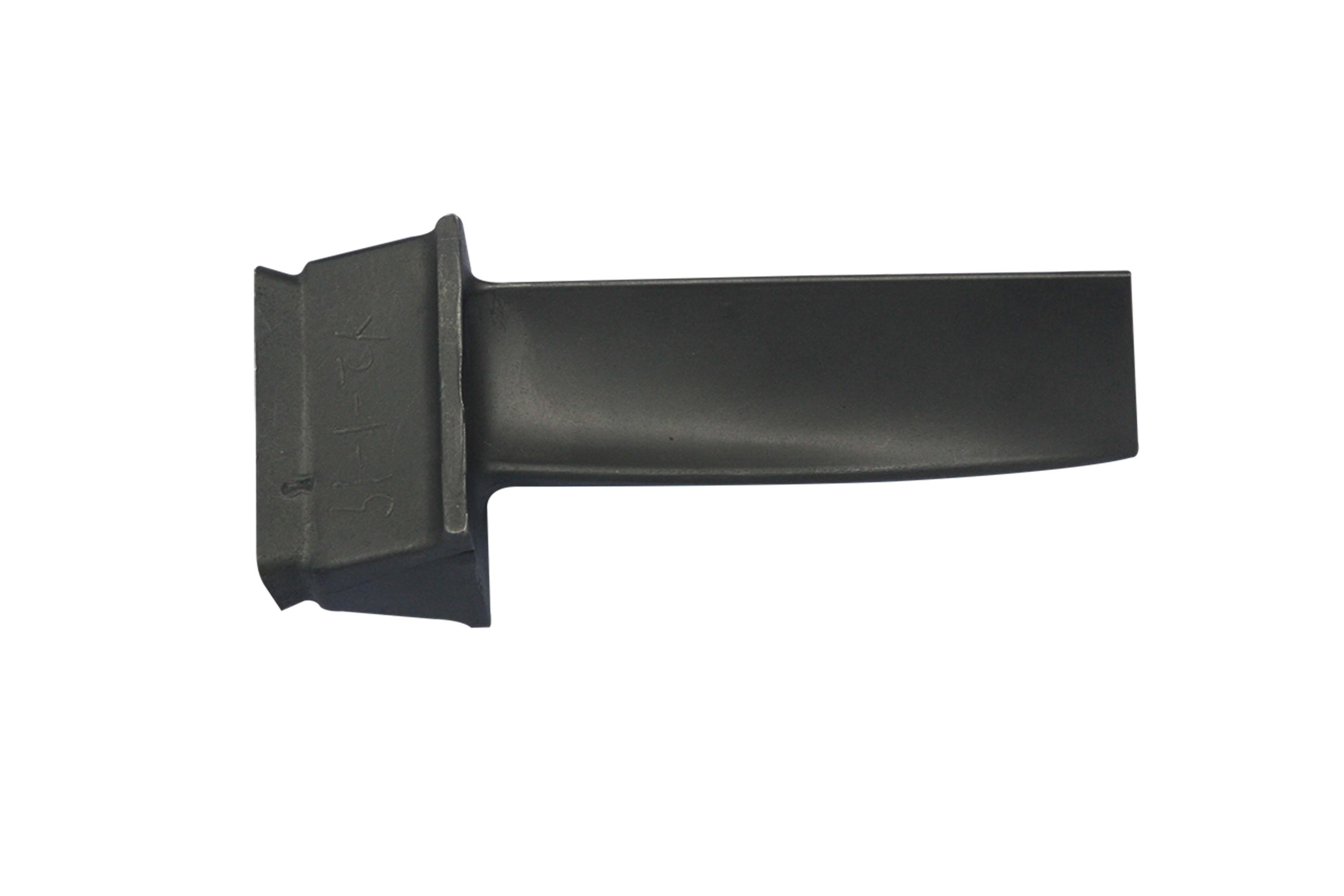
Technologie de Base du Moulage en Cristaux Équiaxes de l'IN713LC
Production du Modèle en Cire Les modèles en cire moulés par injection sont fabriqués avec des tolérances de ±0,05 mm pour reproduire les géométries détaillées des profils aérodynamiques et les structures de refroidissement.
Construction de la Coquille Céramique Plusieurs couches céramiques sont appliquées sur le modèle en cire, formant un moule robuste de 6 à 8 mm adapté à la coulée d'alliages à haute température.
Décire et Cuisson de la Coquille Le décire en autoclave à 150°C élimine les modèles en cire, suivi d'un frittage de la coquille à 1000–1100°C pour la résistance structurelle.
Fusion par Induction sous Vide L'alliage IN713LC est fondu sous vide élevé (≤10⁻³ Pa) en utilisant la fusion par induction sous vide, garantissant la pureté et une chimie uniforme.
Solidification Équiaxe L'alliage fondu est coulé dans des coquilles préchauffées et solidifié dans des conditions contrôlées pour produire des grains équiaxes fins (0,5–2 mm).
Élimination et Nettoyage de la Coquille Après refroidissement, les coquilles céramiques sont éliminées par grenaillage, préservant les surfaces complexes des aubes et les caractéristiques de refroidissement.
Traitement Thermique Le traitement de mise en solution à 1200°C et le vieillissement à 850°C améliorent la résistance de la phase γ' grâce au traitement thermique.
Inspection et Finition Les pièces sont usinées et finies en utilisant l'usinage CNC sur superalliage et inspectées via la MCM et les rayons X pour garantir la conformité qualité.
Propriétés du Matériau IN713LC pour Aubes de Turbine Équiaxes
Température de Fonctionnement Maximale : 982°C (1800°F)
Résistance Ultime à la Traction : ≥1034 MPa
Limite d'Élasticité : ≥862 MPa
Résistance à la Rupture par Fluage : ≥200 MPa à 760°C pendant 1000 heures
Allongement : ≥5%
Résistance à l'Oxydation : Excellente sous chargement thermique cyclique
Taille de Grain (ASTM) : 5–7 sur toute la section de l'aube
Étude de Cas : Production d'Aubes Équiaxes en IN713LC pour Turbine à Gaz
Contexte du Projet
Un OEM mondial de turbines de puissance a sélectionné Neway AeroTech pour produire des aubes de turbine de premier étage en IN713LC en utilisant le moulage en cristaux équiaxes pour une turbine à gaz industrielle de 60 MW. Le projet nécessitait des tolérances dimensionnelles serrées, une grande cohérence mécanique et une durabilité à la fatigue thermique sous fonctionnement continu à 950°C.
Applications
Aubes de Turbine à Gaz Industrielles (ex. : GE Frame 6B) : Utilisées dans les centrales électriques nécessitant une fiabilité thermique et mécanique à long terme.
Moteurs Turbopropulseurs Aérospatiaux (ex. : PW100) : Aubes soumises à des charges de température cycliques et à des environnements d'oxydation agressifs.
APU et Moteurs d'Hélicoptère : Profils d'aubes compacts exigeant des matériaux légers et résistants au fluage.
Turbines à Gaz Navales (ex. : LM2500) : Aubes résistantes à la corrosion nécessaires pour les systèmes de propulsion marine.
Processus de Fabrication pour les Aubes Équiaxes en IN713LC
Ingénierie de l'Assemblage en Cire Le profil de l'aube et le système d'alimentation sont conçus avec le support de l'analyse CFD pour assurer un écoulement fluide du métal et une uniformité granulaire.
Construction de Coquille de Précision et Coulée sous Vide L'IN713LC est coulé sous vide dans des moules préchauffés, garantissant la formation de grains équiaxes fins et une ségrégation minimale.
Traitement Thermique Post-Coulée Le traitement thermique stabilise la phase γ', augmentant la résistance au fluage et la stabilité dimensionnelle.
Finition CNC et EDM Les dimensions finales sont obtenues via l'usinage CNC et l'EDM, en particulier pour les canaux de refroidissement internes et les racines en forme de sapin.
Inspection et Qualification L'analyse métallographique, les rayons X et la validation par MCM garantissent que chaque aube répond aux spécifications dimensionnelles et structurelles.
Principaux Défis du Moulage d'Aubes Équiaxes
Obtenir une structure granulaire uniforme dans des profils aérodynamiques complexes
Prévenir la microségrégation pendant la solidification
Maintenir la précision sur les bords de fuite fins et les trous de refroidissement
Garantir la résistance à l'oxydation lors d'une exposition prolongée à une fatigue à haut nombre de cycles
Résultats et Vérification
Taille de grain ASTM de 6–7 confirmée sur toute l'envergure de l'aube
Porosité interne nulle après coulée vérifiée par rayons X
Les propriétés mécaniques ont dépassé les références de 1034 MPa en traction et 200 MPa en fluage
Tolérances dimensionnelles maintenues dans ±0,03 mm après finition CNC
Conformité 100% aux END sur le lot de production
FAQ
Quels sont les avantages du moulage équiaxe pour les aubes de turbine ?
Comment l'IN713LC se compare-t-il aux autres superalliages dans les applications d'aubes ?
Quel post-traitement est nécessaire après le moulage équiaxe ?
Comment assurez-vous la cohérence de la taille des grains sur toute l'aube ?
Quelles industries utilisent le plus couramment les aubes équiaxes en IN713LC ?
