
Alliages haute température Moulage directionnel Postcombusteurs
Introduction
Le moulage directionnel d'alliages haute température est une méthode de fabrication critique pour les composants de postcombustion qui doivent résister à une chaleur extrême, à l'oxydation et aux vibrations dans les systèmes de moteurs supersoniques. Chez Neway AeroTech, nous sommes spécialisés dans le moulage de pièces complexes de postcombustion en utilisant des alliages à base de nickel tels que Rene 77, CMSX-4 et Inconel 738 avec une orientation des grains contrôlée pour maximiser la résistance au fluage, la durée de vie en fatigue et la durabilité aux chocs thermiques dans la propulsion aérospatiale et les moteurs à réaction militaires.
La solidification directionnelle aligne les structures de grains le long de l'axe principal de contrainte des pièces de postcombustion, réduisant les défaillances aux joints de grains et améliorant les performances dans des environnements à haute température fluctuants jusqu'à 1200°C.
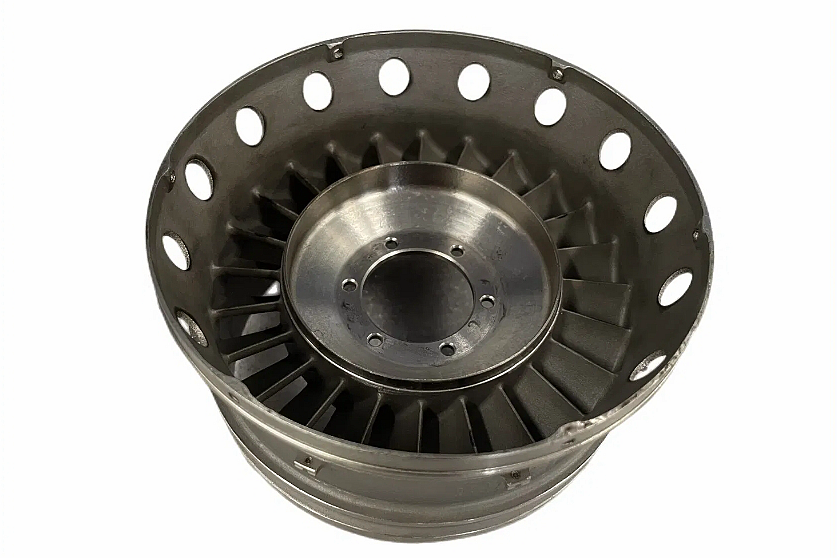
Technologie de base du moulage directionnel pour postcombusteurs
Assemblage de cire et préparation du moule : Des modèles en cire de haute précision sont assemblés et des moules en coquille céramique sont construits avec 8 à 10 couches de barbotine pour la résistance.
Fusion sous vide et coulée : Des superalliages à base de nickel tels que Rene 77 et Inconel 738 sont coulés sous vide pour éviter l'oxydation.
Four de solidification directionnelle : Le moulage est effectué en utilisant le procédé Bridgman avec des vitesses de retrait de 3 à 6 mm/min et un gradient thermique de ≥10°C/mm.
Contrôle de l'orientation des grains : Toutes les pièces sont solidifiées le long de la direction <001>, la structure des grains s'étendant de la base à la pointe, améliorant la résistance le long des chemins de contrainte primaires.
Traitement thermique post-coulée : Un traitement de mise en solution et de vieillissement dissout les phases à bas point de fusion et optimise la précipitation de γ′ pour la résistance à haute température.
Usinage CNC et finition : L'usinage CNC multi-axes garantit des tolérances de ±0,02 mm sur les bords de tuyère, les actionneurs et les interfaces d'étanchéité.
Revêtement barrière thermique (optionnel) : Des revêtements TBC sont appliqués pour augmenter la résistance à l'oxydation et réduire la température de surface du métal sous les cycles de postcombustion.
Caractéristiques des matériaux des alliages moulés directionnellement pour postcombusteurs
Alliage | Température max (°C) | Résistance au fluage | Résistance à l'oxydation | Application principale |
|---|---|---|---|---|
Inconel 738 | 1050 | Modérée | Excellente | Guides de tuyère, chemises |
Rene 77 | 1100 | Élevée | Excellente | Segments d'anneaux structuraux |
CMSX-4 | 1150 | Supérieure | Élevée | Segments d'aubes, stabilisateurs de flamme |
Rene N5 | 1160 | Élevée | Excellente | Supports de tuyère de postcombustion |
Étude de cas : Segments d'aubes de postcombustion en CMSX-4 moulés directionnellement
Contexte du projet
Un intégrateur de moteurs militaires avait besoin de segments d'aubes à haute résistance et résistants à l'oxydation pour la section de postcombustion d'un moteur à réaction supersonique. Le CMSX-4 a été sélectionné pour ses performances en moulage directionnel, sa teneur élevée en γ′ et sa compatibilité avec les systèmes TBC.
Composants typiques de postcombustion moulés directionnellement
Segments d'aubes (CMSX-4) : Assurent le contrôle du flux dans la section de tuyère convergente-divergente, supportant des gaz d'échappement à 1100–1150°C et des cycles thermiques rapides.
Stabilisateurs de flamme (Inconel 738) : Soutiennent la stabilité de la combustion sous flux variable ; nécessitent une résistance structurelle et à l'érosion.
Segments d'anneaux d'actionneurs (Rene 77) : Résistent à la charge de torsion et à l'oxydation tout en permettant le mouvement de la tuyère dans des environnements à haute température.
Structures de support et entretoises (Rene N5) : Fournissent des chemins de charge pour le fonctionnement de la tuyère, résistant à la déformation par fluage pendant l'expansion de poussée en postcombustion.
Solution de fabrication pour pièces de postcombustion moulées directionnellement
Injection de modèles en cire et assemblage en grappe : Modèles en cire produits avec une tolérance de ±0,05 mm ; assemblés avec une orientation optimisée des canaux d'écoulement pour un remplissage cohérent de la coquille.
Construction de la coquille céramique : 8 à 10 couches de céramique à base de zircon/silice appliquées et durcies sous humidité et température contrôlées.
Moulage par solidification directionnelle : Vitesse de retrait du four contrôlée entre 3 et 6 mm/min ; gradient thermique maintenu à 10–15°C/mm pour un alignement <001> optimal.
Traitement thermique : Mise en solution à 1220–1250°C et vieillissement à 870–1050°C affinent la microstructure γ/γ′ et stabilisent les phases de l'alliage.
Usinage de précision : L'usinage CNC garantit l'ajustement avec les structures d'accouplement sous des tolérances de ±0,02 mm.
Application de TBC (optionnel) : Un TBC projeté par plasma à l'air est appliqué sur les surfaces externes exposées au flux du jet d'échappement.
Inspection par END : Les rayons X garantissent une structure interne sans défaut ; l'orientation est validée en utilisant l'EBSD.
Validation finale : La géométrie est confirmée via une inspection par MMT et des tests de déformation thermique sont menés conformément aux spécifications aérospatiales.
Résultats et vérification
Résistance au fluage : Les segments de postcombustion en CMSX-4 ont réussi un test de fluage de 1000 heures à 1120°C avec une élongation <1%.
Précision de l'orientation des grains : L'EBSD a confirmé une orientation <001> avec une déviation inférieure à 12° pour 100% des pièces.
Durée de vie en fatigue thermique : Ont supporté avec succès 20 000 cycles thermiques de 300°C à 1150°C sans fissuration.
Résistance à l'oxydation : Les pièces avec TBC ont résisté à l'oxydation pendant 1500 heures dans des gaz d'échappement de carburéacteur cycliques.
Précision dimensionnelle : L'usinage final vérifié avec une tolérance de ±0,02 mm sur les surfaces d'accouplement et d'étanchéité.
FAQ
Quels sont les avantages du moulage directionnel pour les composants de postcombustion ?
Quels alliages sont les plus couramment utilisés pour les tuyères et stabilisateurs de flamme moulés directionnellement ?
Comment l'orientation des grains améliore-t-elle les performances en fluage et en fatigue dans les postcombusteurs ?
Le moulage directionnel peut-il supporter des géométries creuses complexes dans les aubes de postcombustion ?
Quelles méthodes de test sont utilisées pour garantir l'alignement des grains et l'intégrité des pièces ?
