
Service d'impression 3D de pièces aérospatiales et aéronautiques sur mesure en acier inoxydable
Introduction à la fabrication additive en acier inoxydable dans le secteur aérospatial
L'acier inoxydable offre une excellente combinaison de résistance mécanique, de résistance à la corrosion et de stabilité thermique, ce qui en fait un matériau fiable pour les composants structurels et fonctionnels dans les applications aérospatiales et aéronautiques. La fabrication additive permet la production de pièces légères et haute performance en acier inoxydable, dotées de géométries complexes, de fonctionnalités intégrées et de délais de réalisation réduits.
Chez Neway Aerotech, nos services d'impression 3D en acier inoxydable prennent en charge la fabrication de supports, boîtiers, fixations et composants internes personnalisés de qualité aérospatiale en utilisant les procédés SLM et DMLS.
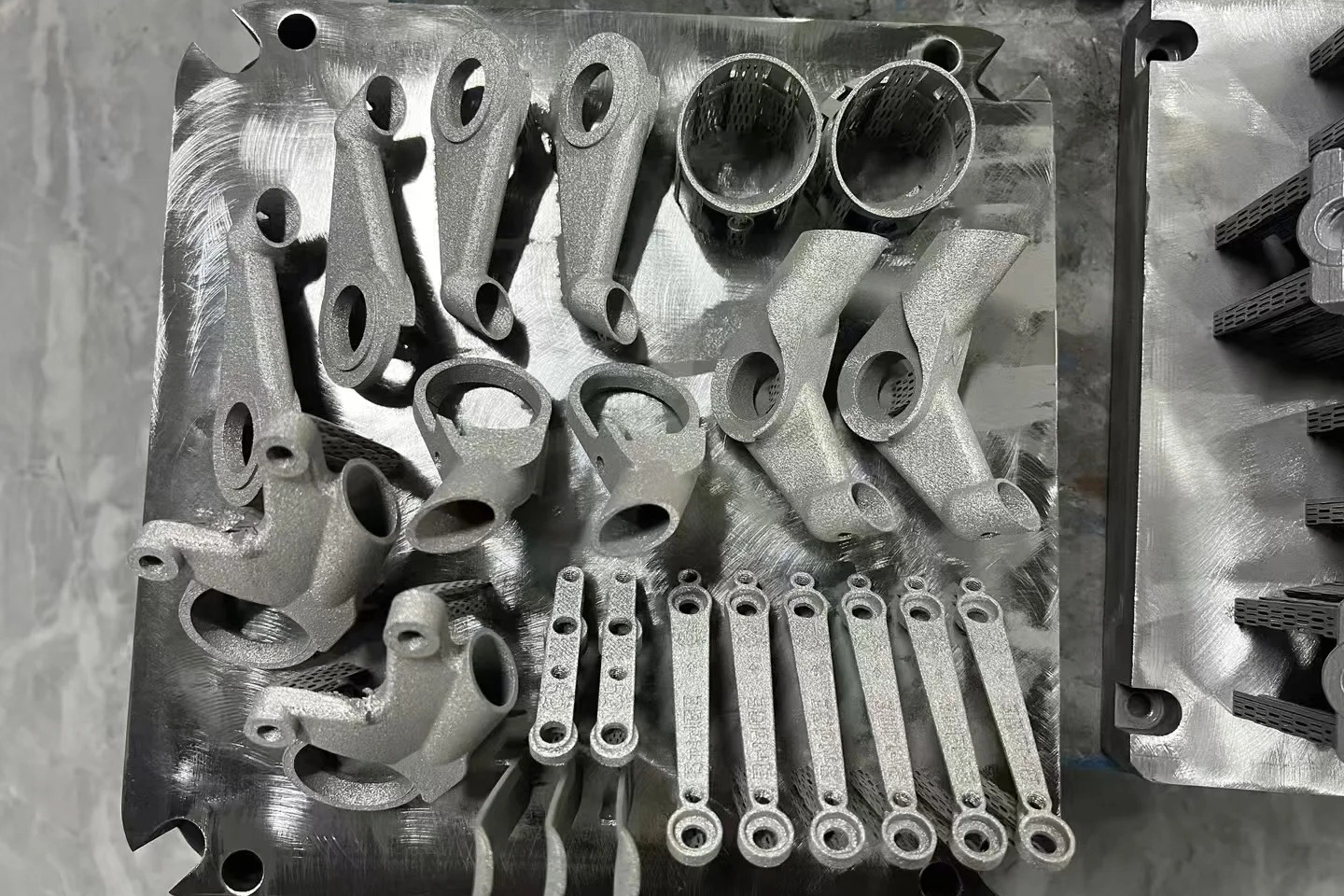
Capacités de fabrication additive pour les pièces aérospatiales en acier inoxydable
Paramètres de procédé et caractéristiques des pièces
Technologie | Épaisseur de couche (μm) | Précision (mm) | Rugosité de surface (Ra, μm) | Composants adaptés |
|---|---|---|---|---|
SLM | 30–50 | ±0,05 | 6–12 | Supports, montures, clips, couvercles de systèmes de carburant |
DMLS | 40–60 | ±0,08 | 8–15 | Boîtiers avioniques, fixations, pièces structurelles |
Le SLM est préféré pour les pièces à parois minces avec des tolérances critiques ; le DMLS pour les composants et assemblages plus massifs.
Nuances d'acier inoxydable pour les applications aérospatiales
Nuance | Résistance à la traction (MPa) | Dureté (HV) | Limite de température (°C) | Principaux avantages |
|---|---|---|---|---|
Acier inoxydable 316L | 480–680 | 160–190 | ~870 | Excellente résistance à la corrosion, soudable |
Acier inoxydable 17-4PH | 900–1150 | 300–380 | ~600 | Haute résistance, durci par précipitation |
Acier inoxydable 304 | 500–700 | 170–200 | ~800 | Rentable avec une protection générale contre la corrosion |
Pourquoi choisir l'acier inoxydable pour les pièces aérospatiales imprimées en 3D
Résistance à la corrosion : Adapté à l'exposition au carburéacteur, aux fluides hydrauliques et à l'humidité dans des environnements variables.
Stabilité dimensionnelle : Maintient les tolérances lors de larges fluctuations de température typiques des opérations aérospatiales.
Intégrité mécanique : Une haute résistance à la traction et une bonne résistance à la fatigue font de l'acier inoxydable un matériau idéal pour les composants porteurs.
Soudabilité et post-traitement : Compatible avec l'usinage CNC, la passivation et les techniques d'assemblage pour des ensembles hybrides.
Étude de cas : Support structurel en acier inoxydable 17-4PH imprimé en 3D pour l'avionique
Contexte du projet
Un fournisseur aéronautique de rang 1 avait besoin d'un support de montage avionique léger avec des fonctionnalités intégrées de routage de câbles, conçu pour l'isolation vibratoire et la résistance à la corrosion due à l'exposition aux fluides hydrauliques. L'approche traditionnelle impliquait des assemblages multipièces et du brasage.
Flux de fabrication
Conception : Structure creuse remplie de treillis avec deux bossages de montage intégrés.
Matériau : Acier inoxydable 17-4PH choisi pour sa haute résistance et sa résistance à la fatigue.
Procédé d'impression : SLM avec une épaisseur de couche de 40 μm ; atmosphère d'argon, laser de 350 W.
Post-traitement :
Traitement thermique HIP + H900.
Grenaillage de surface jusqu'à Ra ≤ 6 μm.
Usinage CNC sur toutes les surfaces de montage.
Inspection : Contrôle par MMT et essais de traction réalisés pour valider la conformité.
Résultats et vérification
La pièce finale a atteint une réduction de poids de 40 % par rapport à la référence en aluminium usiné, tout en respectant les normes de résistance et de vibration. Les essais de fatigue ont dépassé 10⁷ cycles à 500 MPa, et les tolérances dimensionnelles ont été maintenues dans ±0,02 mm sur tous les plans de référence.
FAQ
Quels types d'acier inoxydable sont les mieux adaptés aux applications d'impression 3D aérospatiale ?
Les pièces imprimées en acier inoxydable sont-elles adaptées aux environnements à fortes vibrations ?
Comment le traitement thermique affecte-t-il l'acier inoxydable 17-4PH après l'impression ?
Les composants imprimés en acier inoxydable peuvent-ils être soudés ou brasés à d'autres pièces ?
Quelle est la taille maximale de pièce disponible pour l'impression 3D en acier inoxydable ?
