
Stainless Steel Custom Aerospace and Aviation Parts 3D Printing Service
Introduction to Stainless Steel Additive Manufacturing in Aerospace
Stainless steel offers an excellent combination of mechanical strength, corrosion resistance, and temperature stability, making it a reliable material for structural and functional components in aerospace and aviation applications. Additive manufacturing enables the production of lightweight, high-performance stainless steel parts with complex geometries, integrated features, and reduced lead times.
At Neway Aerotech, our stainless steel 3D printing services support the fabrication of custom aerospace-grade brackets, housings, fasteners, and internal components using SLM and DMLS processes.
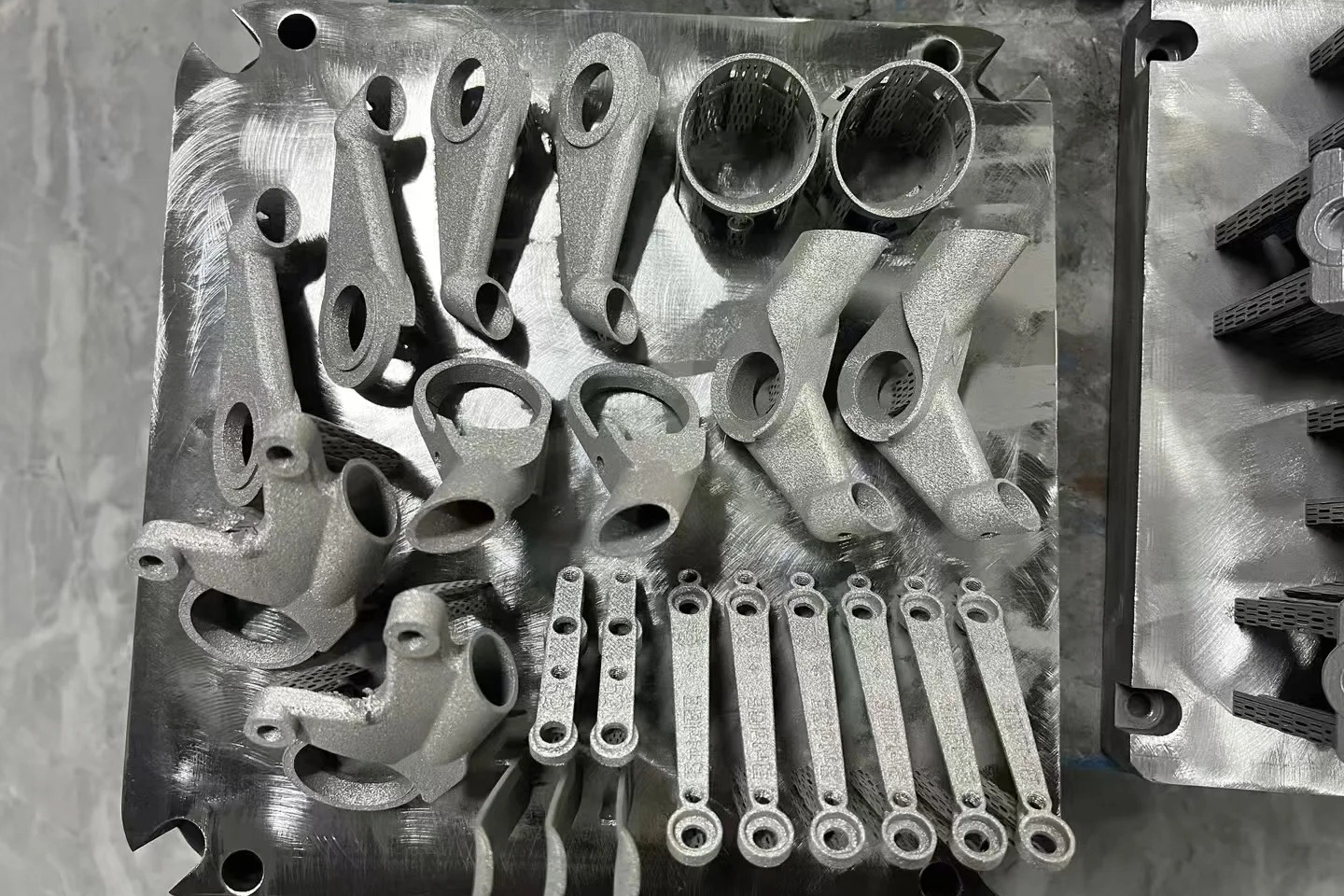
Additive Manufacturing Capabilities for Stainless Steel Aerospace Parts
Process Parameters and Part Characteristics
Technology | Layer Thickness (μm) | Accuracy (mm) | Surface Roughness (Ra, μm) | Suitable Components |
|---|---|---|---|---|
SLM | 30–50 | ±0.05 | 6–12 | Brackets, mounts, clips, fuel system covers |
DMLS | 40–60 | ±0.08 | 8–15 | Avionics housings, fasteners, structural parts |
SLM is preferred for thin-walled parts with critical tolerances; DMLS for bulkier components and assemblies.
Stainless Steel Grades for Aerospace Applications
Grade | UTS (MPa) | Hardness (HV) | Temperature Limit (°C) | Main Benefits |
|---|---|---|---|---|
316L Stainless Steel | 480–680 | 160–190 | ~870 | Excellent corrosion resistance, weldable |
17-4PH Stainless Steel | 900–1150 | 300–380 | ~600 | High strength, precipitation hardened |
304 Stainless Steel | 500–700 | 170–200 | ~800 | Cost-effective with general corrosion protection |
Why Choose Stainless Steel for Aerospace 3D Printed Parts
Corrosion Resistance: Suitable for exposure to jet fuel, hydraulic fluids, and moisture in variable environments.
Dimensional Stability: Maintains tolerances across wide temperature fluctuations typical in aerospace operations.
Mechanical Integrity: High tensile strength and fatigue resistance make stainless steel ideal for load-bearing components.
Weldability and Post-Processing: Compatible with CNC machining, passivation, and joining techniques for hybrid assemblies.
Case Study: 3D Printed Stainless Steel 17-4PH Structural Bracket for Avionics
Project Background
A Tier 1 aviation supplier required a lightweight avionics mounting bracket with integrated wire routing features, designed for vibration isolation and resistance to corrosion from hydraulic fluid exposure. The traditional approach involved multi-part assemblies and brazing.
Manufacturing Workflow
Design: Lattice-filled hollow structure with two integral mounting bosses.
Material: 17-4PH stainless steel chosen for high strength and fatigue resistance.
Printing Process: SLM at 40 μm layer thickness; argon atmosphere, 350 W laser.
Post-Processing:
HIP + H900 heat treatment.
Surface blasted to Ra ≤ 6 μm.
CNC machining on all mounting surfaces.
Inspection: CMM and tensile testing performed to validate conformance.
Results and Verification
The final part achieved a 40% weight reduction over the machined aluminum baseline while meeting strength and vibration standards. Fatigue testing exceeded 10⁷ cycles at 500 MPa, and dimensional tolerances were held within ±0.02 mm across all datum planes.
FAQs
What types of stainless steel are best for aerospace 3D printing applications?
Are stainless steel printed parts suitable for high-vibration environments?
How does heat treatment affect 17-4PH stainless steel after printing?
Can stainless steel printed components be welded or brazed to others?
What is the largest part size available for stainless steel 3D printing?
