
Atelier de traitement thermique des pièces moulées monocristallines en alliage CMSX
Traitement thermique de précision pour les aubes et ailettes de turbine de la série CMSX
Les superalliages monocristallins de la série CMSX—tels que CMSX-4 et CMSX-10—sont la base des composants modernes de turbines à gaz haute performance. Ces alliages offrent une résistance supérieure au fluage, une résistance à la fatigue thermique et une protection contre l'oxydation. Cependant, leurs propriétés mécaniques dépendent fortement d'un traitement thermique précis après le moulage à la cire perdue sous vide monocristallin pour contrôler la précipitation de γ′, éliminer les contraintes résiduelles et prévenir la recristallisation.
Neway AeroTech exploite un atelier de traitement thermique dédié pour les composants de turbine en alliage CMSX, fournissant des traitements thermiques de stabilisation, de vieillissement et post-HIP de qualité OEM. Notre atelier accompagne les clients des secteurs aérospatial, de la production d'énergie et des turbines industrielles avec des cycles thermiques conformes NADCAP, personnalisés pour les géométries d'aubes, d'ailettes et de segments.
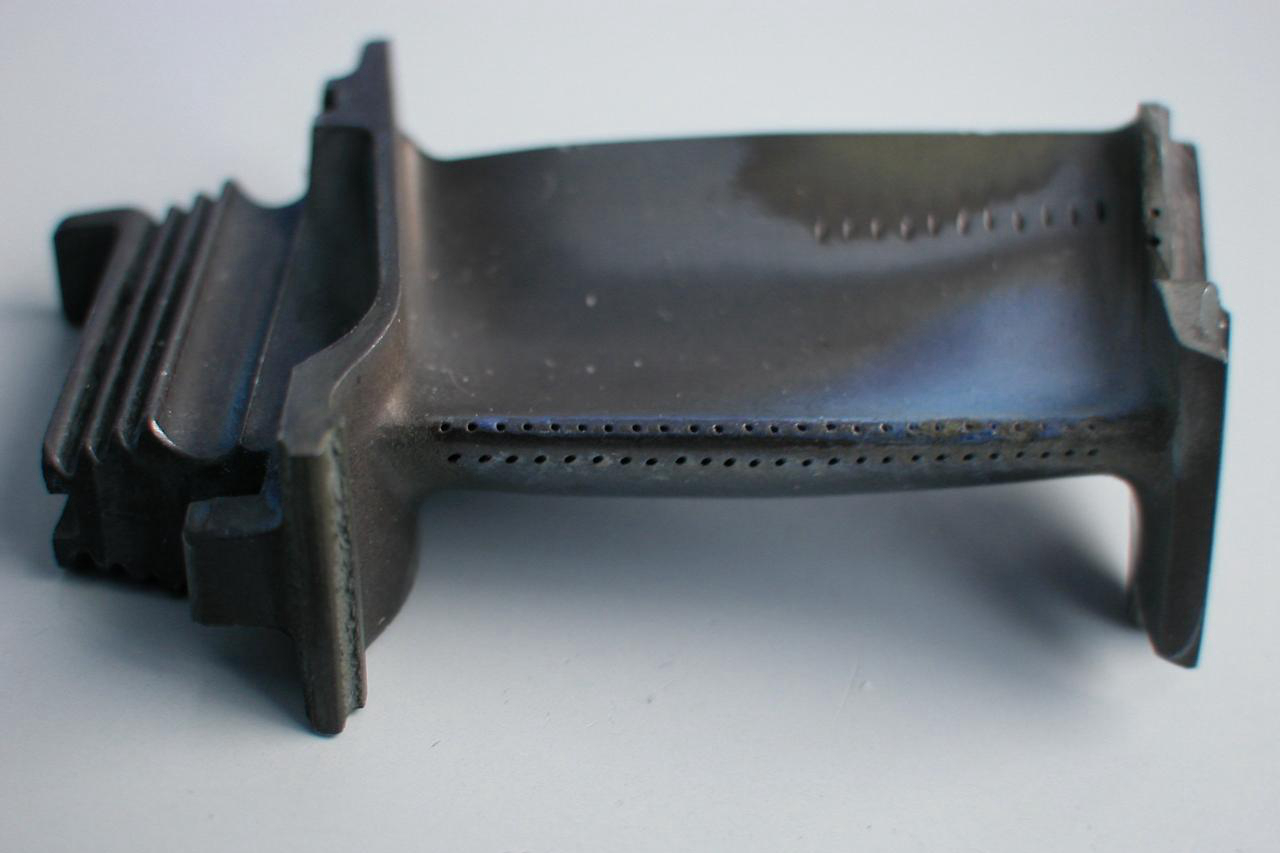
Services principaux de traitement thermique pour les superalliages CMSX
Le traitement thermique monocristallin nécessite des vitesses de montée en température faibles, des atmosphères inertes et des profils de vieillissement pilotés par la microstructure.
Stabilisation à 1140–1175°C pour le déchargement des contraintes et la stabilisation de la solidification
Vieillissement en deux étapes à 870°C et 760°C pour optimiser la morphologie de γ′ et la résistance mécanique
Fours sous vide ou à argon de haute pureté pour prévenir l'oxydation et préserver l'état de surface
Faibles vitesses de montée (≤2°C/min) pour éviter la germination de grains parasites ou la recristallisation
Chaque traitement CMSX est traçable avec une documentation complète des profils de température et de temps.
Alliages CMSX courants et applications pour aubes
Alliage | Température de service max (°C) | Limite d'élasticité (MPa) | Application |
|---|---|---|---|
1140 | 980 | Aubes de turbine de premier étage | |
1160 | 1040 | Ailettes de turbine haute pression | |
1100 | 900 | Écrans de turbine et segments de refroidissement | |
1120 | 910 | Ailettes directrices de buse, profils de rotor |
Les alliages CMSX sont conçus pour une exposition à long terme aux contraintes thermiques et mécaniques dans les sections de turbine haute pression.
Étude de cas : Traitement thermique d'un ensemble de profils CMSX-10
Contexte du projet
Un OEM aérospatial nécessitait une stabilisation et un vieillissement pour des aubes de turbine CMSX-10 avec canaux de refroidissement 3D. Les aubes ont subi une stabilisation à 1165°C pendant 4,5 heures suivie d'un vieillissement à 870°C et 760°C. L'évaluation MEB a confirmé une précipitation complète de γ′, aucune recristallisation, et une distribution des carbures conforme aux spécifications de microstructure de l'OEM.
Composants CMSX traités et industries
Composant | Alliage | Procédé | Industrie |
|---|---|---|---|
Aube HPT | CMSX-4 | Stabilisation + Vieillissement double | |
Segment d'écran | CMSX-6 | Recuit + Vieillissement | |
Profil de rotor | CMSX-2 | HIP + Vieillissement | |
Groupe d'ailettes | CMSX-10 | Déchargement de contraintes + Vieillissement |
Tous les composants subissent une validation métallographique, un test de dureté et une inspection de profil après traitement.
Défis du traitement thermique CMSX
Risque de recristallisation si les vitesses de montée ou de trempe ne sont pas contrôlées
Formation incomplète de γ′ réduit la résistance au fluage et la résistance mécanique
Oxydation de surface dans des environnements de four non contrôlés dégrade la durée de vie des composants
Distorsion de la plateforme et du bord de fuite due aux gradients de température
Formation de grains parasites compromet l'intégrité et l'orientation monocristalline
Solutions techniques de l'atelier de traitement thermique CMSX
Contrôle de four multi-zones ±2°C pour une uniformité thermique sur le lot d'aubes
Recuit sous vide avec <10⁻⁵ torr pour des résultats sans oxydation
Vieillissement double chronométré pour une taille optimisée de γ′ (cible 300–500 nm)
Supports protégeant l'orientation pour éviter le mouvement de la plateforme pendant les cycles thermiques
Résultats et validation
Exécution du traitement thermique
Les fours ont maintenu une uniformité à ±2°C. Toutes les aubes ont été suivies individuellement avec un ID de lot, des courbes thermiques et un enregistrement en temps réel. Temps total du cycle thermique : 23 heures.
Résultats métallurgiques
La microstructure finale a montré une distribution homogène de γ′ sur la plateforme et le profil. Aucune recristallisation détectée. Dureté atteinte 400–430 HV avec une variance minimale entre les lots.
Inspection finale
Inspection MMT a confirmé aucune déformation au-delà de ±0,02 mm. Inspection aux rayons X a montré l'intégrité structurelle. Analyse MEB a validé la morphologie des phases et les joints de grains.
FAQ
Quel est le cycle de vieillissement utilisé pour les aubes de turbine CMSX-4 ?
Les aubes CMSX-10 peuvent-elles être traitées sans risque de recristallisation ?
Comment la taille des précipités γ′ est-elle contrôlée pendant le vieillissement ?
Quelles méthodes d'inspection confirment l'intégrité monocristalline après traitement thermique ?
Proposez-vous une intégration HIP et traitement thermique pour les pièces moulées CMSX ?
