
Ti-6.5Al-1Mo-1V-2Zr (TA15)
Présentation du matériau
Le Ti-6.5Al-1Mo-1V-2Zr, communément appelé TA15, est un alliage de titane α-β à haute résistance spécifiquement conçu pour les pièces aérospatiales légères et les structures complexes produites par fabrication additive. Sa composition offre un excellent équilibre entre résistance spécifique, résistance à la fatigue et stabilité thermique, permettant des performances exceptionnelles dans des environnements opérationnels exigeants. Le TA15 est particulièrement bien adapté aux procédés de fusion sur lit de poudre tels que l'impression 3D de titane, où une fusion contrôlée et un refroidissement rapide créent des microstructures fines et améliorent les caractéristiques mécaniques. L'alliage maintient une fiabilité structurelle à des températures élevées et offre une excellente résistance à la corrosion, ce qui en fait un choix privilégié pour les supports d'avion, les composants de compresseur et les assemblages porteurs. Grâce aux capacités avancées d'impression 3D de superalliages de Neway, les composants en TA15 atteignent des tolérances plus serrées et des performances améliorées par rapport aux pièces usinées ou forgées traditionnellement.
Options de matériaux alternatifs
Les matériaux alternatifs au TA15 dépendent d'exigences de performance spécifiques telles que la capacité de température, la résistance à la fatigue et le coût. Pour les structures aérospatiales générales, le Ti-6Al-4V (TC4) est le remplacement le plus courant en raison de sa disponibilité et de son rapport coût-efficacité. Lorsqu'une ténacité supérieure est requise, le Ti-6Al-4V ELI offre une ductilité améliorée. Pour les applications ultra-haute résistance, le Ti-5Al-5V-5Mo-3Cr (Ti5553) fournit une résistance et une trempabilité considérablement plus grandes. Pour les applications nécessitant une résistance à l'oxydation plus élevée, le Ti-6Al-2Sn-4Zr-6Mo ou le Ti-6Al-2Sn-4Zr-2Mo sont des options viables. Ces alternatives permettent aux ingénieurs d'adapter la sélection de l'alliage aux températures de fonctionnement, aux charges structurelles, aux défis de corrosion ou aux contraintes de fabrication.
Tableau de dénomination internationale
Région / Norme | Nomination / Désignation |
|---|---|
Chine (GB/T) | TA15 |
États-Unis (UNS / AMS) | Aucun équivalent exact ; le plus proche : Ti-6Al-2Sn-4Zr-2Mo |
Europe (EN/DIN) | Aucun équivalent direct |
Russie | VT22L (classe similaire) |
Japon (JIS) | Aucun équivalent direct |
Intentions de conception du TA15
Le TA15 a été initialement développé pour offrir une résistance à la température et une résistance mécanique supérieures à celles des alliages de titane α-β conventionnels, tout en restant rentable et fabricable. Son objectif de conception était d'assurer des performances structurelles à long terme autour de 500 °C, d'améliorer la résistance au fluage et d'offrir un comportement robuste en fatigue pour les applications aérospatiales. L'aluminium favorise la stabilité de la phase α et la résistance à haute température, tandis que le Mo et le V améliorent la trempabilité et optimisent l'équilibre α-β. Le zirconium améliore la résistance au fluage et contribue à la stabilité microstructurale à des températures élevées. Avec l'avènement de la fabrication additive, le TA15 a gagné en importance grâce à son comportement de solidification favorable, sa capacité à former des microstructures raffinées et son aptitude à produire des composants légers aux géométries complexes. Aujourd'hui, le TA15 est largement utilisé dans les supports aérospatiaux, les structures de drones (UAV), les carters de compresseur et les cadres porteurs nécessitant des rapports résistance/poids supérieurs.
Composition chimique (% en poids)
Élément | % en poids |
|---|---|
Al | 6,0–7,0 |
Mo | 0,5–1,5 |
V | 0,5–1,5 |
Zr | 1,5–2,5 |
Fe | ≤0,30 |
C | ≤0,10 |
N | ≤0,05 |
O | ≤0,15 |
H | ≤0,015 |
Ti | Reste |
Propriétés physiques
Propriété | Valeur |
|---|---|
Densité | 4,45 g/cm³ |
Plage de fusion | 1600–1660 °C |
Conductivité thermique | ~7,5 W/m·K |
Chaleur spécifique | ~560 J/kg·K |
Module d'élasticité | 110 GPa |
Coefficient de dilatation thermique | 9,0×10⁻⁶ /K |
Propriétés mécaniques (FA + Traitement thermique)
Propriété | Valeur |
|---|---|
Résistance à la traction ultime | 1000–1150 MPa |
Limite d'élasticité | 900–1000 MPa |
Allongement | 8–12 % |
Striction | 25–35 % |
Résistance à la fatigue (grand nombre de cycles) | ~550 MPa |
Résistance au fluage | Excellente à 500–550 °C |
Caractéristiques du matériau
Le TA15 offre un équilibre exceptionnel entre résistance à la traction, stabilité thermique et résistance à la fatigue, ce qui le rend idéal pour les applications aérospatiales et industrielles hautes performances. La microstructure biphasée α-β permet aux concepteurs d'obtenir des propriétés sur mesure grâce au traitement thermique, améliorant la ductilité et la durée de vie en fatigue après la fabrication additive. Par rapport au Ti-6Al-4V, le TA15 présente une résistance supérieure à des températures plus élevées, assurant une stabilité dimensionnelle et une fiabilité structurelle sous des charges cycliques. L'alliage offre également une excellente résistance à la corrosion dans les atmosphères marines, oxydantes et à haute température. Le TA15 démontre une soudabilité favorable, permettant la fabrication hybride et la réparation. Son rapport rigidité/poids est exceptionnellement avantageux pour la conception de structures légères. Lorsqu'il est produit par impression 3D SLM de titane, l'alliage présente des microstructures raffinées, une faible porosité et une cohérence supérieure, ce qui en fait l'un des matériaux les plus fiables pour les applications aérospatiales critiques.
Performance des procédés de fabrication
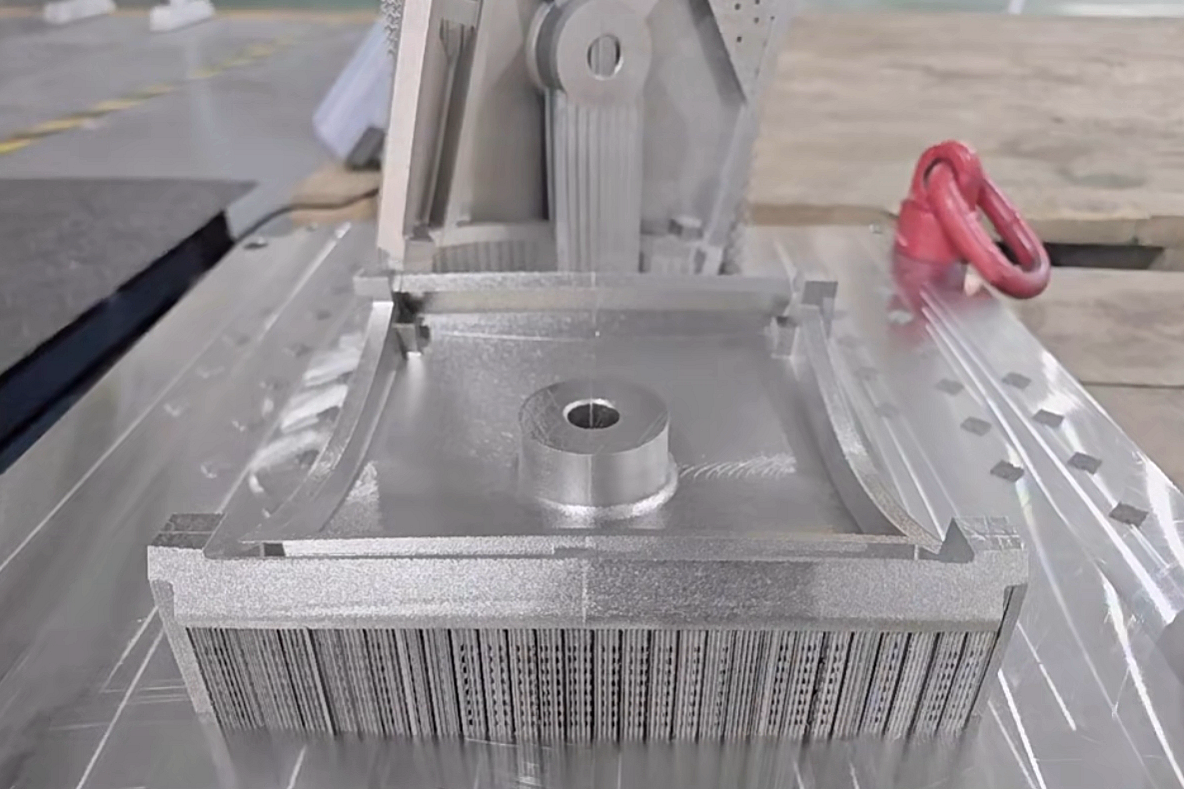
Le TA15 performe très bien dans la fabrication additive par fusion sur lit de poudre grâce à ses caractéristiques stables de bain de fusion et à son comportement de solidification rapide. Le refroidissement rapide pendant l'impression produit de fines structures martensitiques α′ qui peuvent être transformées en un mélange α-β optimal grâce au traitement thermique. Le résultat est une combinaison solide de ténacité, de ductilité et de performance en fatigue. Dans les procédés de moulage à cire perdue sous vide, le TA15 nécessite des conditions de coulée contrôlées en raison de sa fluidité modérée, mais il reste viable pour les composants de forme quasi nette. L'usinage du TA15 nécessite une gestion prudente de la chaleur en raison de sa faible conductivité thermique. Lors des opérations de finition ou de l'usinage CNC de superalliages, des outils tranchants et un refroidissement à haute pression sont nécessaires pour maintenir la précision dimensionnelle. Pour les caractéristiques structurelles plus profondes, le perçage de trous profonds fournit une méthode efficace pour créer des canaux internes. L'usinage par électroérosion (EDM) est particulièrement efficace lors de la création de formes complexes ou de structures à parois minces. La fabrication additive offre au TA15 son plus grand avantage, permettant des structures en treillis, des conceptions optimisées topologiquement et des composants légers difficiles ou impossibles à produire par des moyens conventionnels. Le post-traitement via le post-traitement de superalliages garantit que les pièces imprimées en TA15 répondent aux normes aérospatiales exigeantes.
Post-traitements applicables
Le TA15 réagit bien à plusieurs voies de post-traitement qui améliorent la densité, la fiabilité et les propriétés mécaniques. Le Compactage Isostatique à Chaud (HIP) élimine la porosité interne et stabilise les microstructures, améliorant considérablement les performances en fatigue. Un traitement thermique ultérieur affine la microstructure α-β, optimisant à la fois la résistance et la ductilité. Pour un service à haute température, les Revêtements Barrière Thermique (TBC) peuvent améliorer la résistance à l'oxydation. La vérification de la qualité par le biais des essais et analyses de matériaux assure l'intégrité structurelle et la conformité aux normes aérospatiales.
Applications courantes
Le TA15 est largement utilisé dans les composants structurels aérospatiaux, y compris les cadres d'ailes, les supports de cabine, les structures de drones (UAV), les carters de compresseur et les supports hydrauliques. Sa nature légère et sa capacité à haute température le rendent idéal pour les structures de support de moteurs à température moyenne et les assemblages porteurs. Au-delà des applications aérospatiales, le TA15 est utilisé dans la production d'énergie, les pièces automobiles hautes performances, les structures robotiques et les mécanismes de précision nécessitant des rapports résistance/poids optimisés. La fabrication additive étend ses applications pour inclure des dispositifs médicaux personnalisés et des équipements de performance, qui nécessitent des géométries complexes et des caractéristiques légères.
Quand choisir le TA15
Le TA15 doit être sélectionné lorsqu'un alliage de titane avec une résistance à la température et une résistance mécanique supérieures à celles offertes par le Ti-6Al-4V est requis. Il est idéal pour les applications fonctionnant à des températures autour de 500 °C et nécessitant une stabilité à long terme, une forte résistance à la fatigue et une déformation minimale par fluage. Sa compatibilité avec la fabrication additive le rend particulièrement précieux pour les pièces aérospatiales optimisées topologiquement, les structures légères et les géométries internes complexes. Choisissez le TA15 lorsque les composants nécessitent un équilibre entre résistance, capacité de température, soudabilité et résistance à la corrosion. Il convient également aux applications nécessitant des performances fiables sous chargement cyclique. Le TA15 n'est pas idéal pour les environnements extrêmes dépassant 600 °C, où les superalliages à base de nickel sont plus appropriés.
Explorer les blogs associés
