Quels post-traitements améliorent la résistance à la chaleur des composants en superalliage ?
Revêtements barrière thermique pour la protection de surface
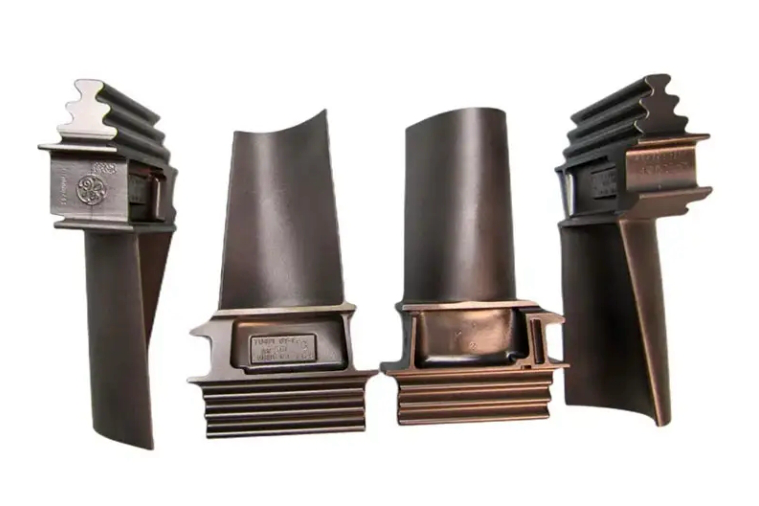
La méthode la plus directe pour améliorer la résistance à la chaleur est l'application de revêtements barrière thermique (TBC). Ces revêtements céramiques, typiquement de la zircone stabilisée à l'yttria, créent une couche isolante protectrice sur la surface du composant. Cette barrière peut réduire la température du métal de base de plusieurs centaines de degrés Celsius, permettant à des composants en superalliage comme les aubes de turbine et les chambres de combustion de fonctionner dans des environnements qui dépasseraient autrement leurs points de fusion. Le système TBC fonctionne en conjonction avec une couche de liaison résistante à l'oxydation pour fournir une protection complète contre la chaleur extrême et la dégradation environnementale.
Traitement thermique pour la stabilité microstructurale
Des processus de traitement thermique précis sont fondamentaux pour développer et stabiliser la microstructure qui confère la résistance à la chaleur inhérente. Pour les superalliages à base de nickel, le traitement de mise en solution suivi du vieillissement optimise la distribution, la taille et la fraction volumique des précipités gamma prime (γ')—la phase de durcissement primaire qui maintient sa résistance à haute température. Ce durcissement structural contrôlé assure que le matériau conserve ses propriétés mécaniques et résiste à la déformation par fluage sous charge thermique soutenue, ce qui est critique pour les composants dans les turbines aérospatiales.
Compression isostatique à chaud pour l'élimination des défauts
La compression isostatique à chaud (HIP) améliore significativement la résistance à la chaleur en éliminant les défauts internes. Les pores microscopiques et les cavités inhérents aux composants fabriqués par moulage ou fabrication additive agissent comme des concentrateurs de contrainte et des sites d'amorçage pour les fissures de fatigue thermique. Le procédé HIP applique une température élevée et une pression isostatique pour éliminer ces cavités internes, créant un matériau entièrement dense avec des propriétés homogènes. Cette densification améliore la résistance au fluage et prolonge la durée de vie en service du composant dans des conditions thermiques cycliques.
Techniques d'amélioration de surface
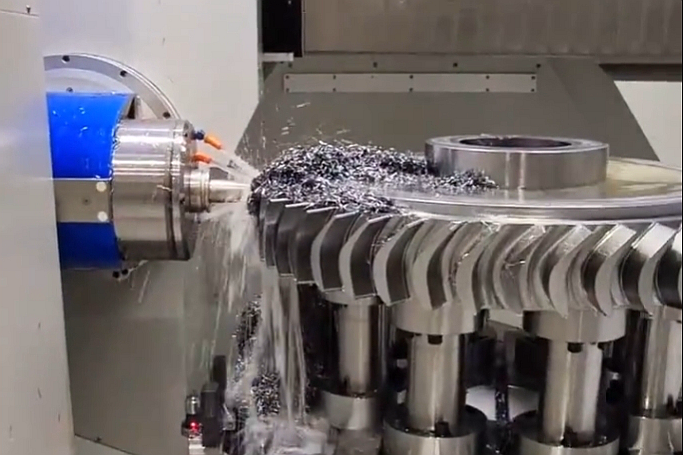
Des traitements de surface supplémentaires contribuent également à la résistance à la chaleur. Le grenaillage laser par impulsion introduit des contraintes résiduelles de compression dans la couche superficielle, améliorant significativement la résistance à la fissuration par fatigue thermique. Pour les composants rotatifs critiques comme ceux fabriqués par métallurgie des poudres, ce processus peut prolonger la durée de vie en fatigue de plusieurs ordres de grandeur. De même, des techniques de soudage et de réparation spécialisées permettent l'application d'alliages plus résistants à la chaleur sur les zones à forte usure, créant des composants à gradient fonctionnel avec des performances thermiques optimisées.
Approche combinée pour une performance maximale
La résistance à la chaleur la plus efficace est obtenue par une combinaison stratégique de ces procédés. Une séquence typique pourrait inclure le HIP pour éliminer les défauts internes, suivi d'un traitement thermique précis pour optimiser la microstructure, et culminer avec l'application d'un TBC pour l'isolation thermique de surface. Cette approche multidimensionnelle assure que les composants en superalliage peuvent résister aux exigences thermiques extrêmes des systèmes modernes de production d'énergie et de propulsion tout en maintenant l'intégrité structurelle tout au long de leur durée de vie en service conçue.