
Superlegierungstiefbohren für Hochleistungsbauteile in Luft- und Raumfahrt sowie Energieerzeugung
Hochschlankheitsbearbeitung für thermisch und druckkritische Komponenten
In Luft- und Raumfahrt sowie Energieerzeugungsanwendungen erfordern Komponenten wie Turbinenschaufeln, Düsen, Wärmetauscherrohre und Kraftstofffördersysteme oft innere Bohrungen mit einer Tiefe von mehr als 20×D. Diese Bohrungen müssen enge Maßtoleranzen, Oberflächenintegrität und Ausrichtung unter extremen thermischen und mechanischen Belastungen beibehalten. Präzises Tiefbohren in Superlegierungen ist entscheidend, um Dauerhaftigkeit, thermische Leistung und Ermüdungsbeständigkeit in diesen hochbelasteten Umgebungen sicherzustellen.
Neway AeroTech spezialisiert sich auf CNC-Tiefbohrbearbeitung und Superlegierungsbauteilfertigung mit Materialien wie Inconel 718, Rene 88, CMSX-4 und Hastelloy X. Unsere Tiefbohrdienste unterstützen missionkritische Komponenten in Turbinentriebwerken, Kraftstoffverteilern und Hochtemperatur-Drucksystemen.
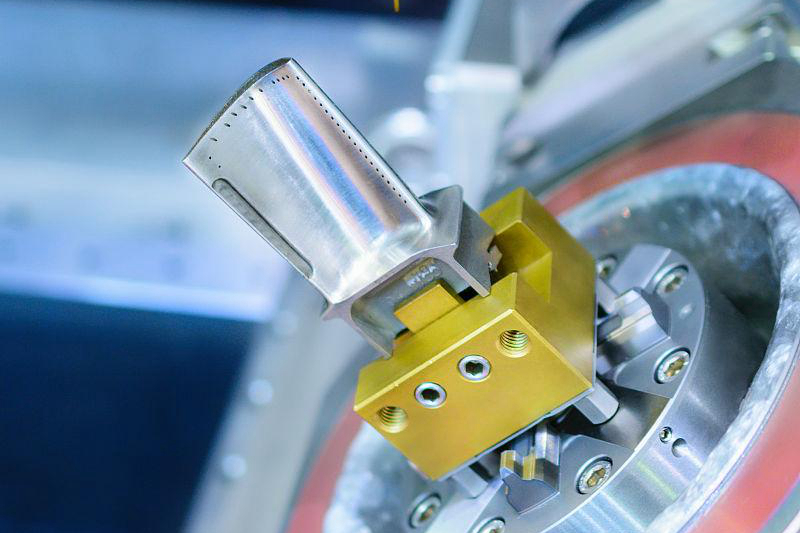
Kerntechnologien für Tiefbohren in Superlegierungsbauteilen
Hochleistungs-Tiefbohren erfordert eine Kombination aus starren Spannvorrichtungen, fortschrittlichem Werkzeug und Kühlsystemen, um Bohrungsgeradheit und thermische Stabilität sicherzustellen.
Einlippen-Tiefbohren und BTA-Systeme mit Konzentrizität ≤0,01 mm für Bohrungen über 20×D
Hochdruckkühlmittel (bis zu 100 bar) für Spanabfuhr und Temperaturkontrolle
Hartmetall- und CBN-Werkzeuge optimiert für Superlegierungen mit geringer Leitfähigkeit und hoher Festigkeit
Echtzeit-Vorschub-, Drehmoment- und Durchbiegungsüberwachung zur Erkennung von Werkzeugbelastung und zur Vermeidung von Bohrungsabweichung
Unser Prozess erreicht eine Oberflächengüte von Ra ≤ 0,6 μm und eine Bohrungsausrichtung innerhalb von ±0,01 mm über eine Tiefe von 300+ mm.
Häufig tiefgebohrte Superlegierungswerkstoffe
Legierung | Max. Temp. (°C) | Anwendungen | Bohrschwerpunkt |
|---|---|---|---|
704 | Düsenringe, Statorhalterungen | Gerade Bohrungen, Dichtflächen | |
980 | Rotorschaufeln, Kühlhülsen | Konvergierende Bohrungen, innere Löcher | |
1140 | Tragflächen, Turbinenschaufeln | Filmkühlkanäle | |
1175 | Brennkammerrohre, Gehäuse | Tiefkanalbohrung |
Superlegierungen bieten ausgezeichnete Kriech- und Oxidationsbeständigkeit, erfordern jedoch hochspezialisierte Bearbeitung, um Härte und Kaltverfestigungseffekte zu kontrollieren.
Fallstudie: Tiefbohrbearbeitung einer CMSX-4-Turbinentragfläche
Projekthintergrund
Ein Turbinenhersteller benötigte tiefe Kühlkanäle in CMSX-4-Tragflächen mit einer Lochtiefe ≥150 mm und Eintrittswinkeln von 30–45°. Die Bohrungstoleranz betrug ±0,01 mm, und die Oberflächengüte musste Ra ≤ 0,5 μm betragen. Mit 5-Achsen-Einlippen-Tiefbohren und In-Prozess-Tastung erreichte Neway AeroTech die vollständige Spezifikationserfüllung.
Typische tiefgebohrte Komponenten und Anwendungen
Komponente | Legierung | Lochtiefe | Branche |
|---|---|---|---|
Schaufelkühlkanal | CMSX-4 | 25×D | |
Kraftstoffförderrohr | Inconel 718 | 30×D | |
Düsenhülse | Rene 88 | 22×D | |
Auspuffkrümmerbuchse | Hastelloy X | 18×D |
Komponenten werden durch Röntgen-, REM- und nachbearbeitende CMM-Prüfung validiert, um die Integrität der Strömungswege zu bestätigen.
Technische Herausforderungen beim Tiefbohren von Superlegierungen
Thermische Entfestigung bei >600°C in Inconel- und Rene-Legierungen reduziert die Werkzeugstandzeit beim Langzyklusbohren
Werkzeugdurchbiegung >0,02 mm über 25×D Tiefen erfordert Mehrfachkorrektur und Tastfeedback
Oberflächengüte Ra ≤ 0,5 μm ist für Kühlmittelströmung und Dichtflächen in Turbinenschaufeln erforderlich
Innere Gratkontrolle ist entscheidend für die Strömungseffizienz in konvergierenden oder sich kreuzenden Bohrungen
Eintrittswinkelfehler >1° führen zu Bohrungsaustrittsabweichung, insbesondere in einkristallinen und dünnwandigen Teilen
Lösungen für Luft- und Raumfahrt- sowie Energie-Tiefbohren
Zyklenstrategien mit Tauch- und Stufenbohren gewährleisten Maßhaltigkeit in Bohrungen bis zu 400 mm Tiefe
Mehrwinkel-5-Achsen-Ausrichtung ermöglicht Bohren durch komplexe Geometrien mit Winkeltoleranz ≤0,5°
Ultraschallentgraten gewährleistet Strömungskanalglätte an Bohrungsübergängen
Vor- und nachgelagerteWärmebehandlung stabilisiert Korngrenzen und verhindert Verzug
Nachbearbeitungs-CMM- und Röntgenprüfung validiert Bohrungsqualität
Ergebnisse und Verifizierung
Fertigungsmethoden
Teile wurden geschmiedet oder im Feingussverfahren hergestellt und dann mit BTA- und Einlippen-Tiefbohrmaschinen gebohrt. Kühlmittelversorgte Hartmetallbohrer hielten eine Geradheit von ≤0,01 mm über 300 mm Tiefe ein.
Präzisionsfertigbearbeitung
Hon- und Leichtreiboperationen erreichten Ra 0,4–0,6 μm. Lochaustritt wurde mittels Ultraschall- oder mechanischer Polierwerkzeuge entgratet. Ein- und Austrittskonzentrizität bestätigt.
Nachbearbeitung
Teile erhielten eine Spannungsarmglühung und wo anwendbar HIP. Endoberflächen wurden für Beschichtung oder Montage vorbereitet.
Prüfung
CMM verifizierte Bohrungsachsenausrichtung und -profil. Röntgenprüfung bestätigte Durchgangslochkontinuität. REM überprüfte Oberflächenintegrität und Gefügestruktur nahe der Bohrungswand.
FAQs
Welche maximale Bohrungstiefe ist für Superlegierungsbauteile erreichbar?
Wie wird die Bohrungsgeradheit in langen und gewinkelten Löchern aufrechterhalten?
Welche nachbearbeitenden Fertigungsprozesse werden für Turbinenkühlkanäle verwendet?
Können einkristalline CMSX-Teile tiefgebohrt werden, ohne Mikrorisse zu verursachen?
Wie werden tiefe Löcher auf Maß- und Oberflächengenauigkeit überprüft?
