Inconel 718
About Inconel 718 Superalloy
Material Name and Designations: Inconel 718, also called Alloy 718, is an age-hardenable nickel-iron-chromium superalloy commonly identified as UNS N07718 and W.Nr. 2.4668. Applicable product specifications vary by product form and supply condition; ASTM B637 is commonly referenced for bar, forging, and forging stock. Commercial names or regional grades should not be treated as automatically interchangeable without reviewing chemistry, product form, heat treatment, and the customer specification.
Inconel 718 Basic Introduction
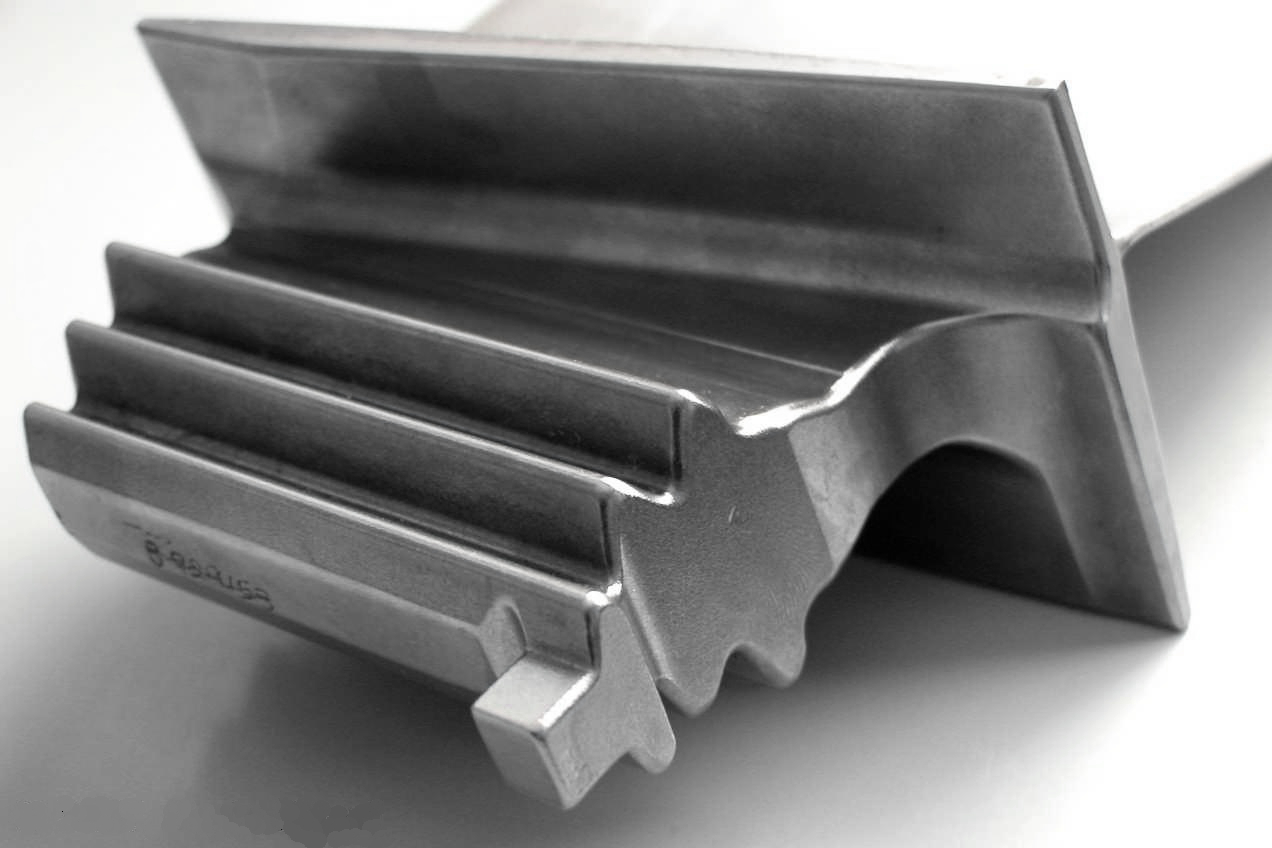
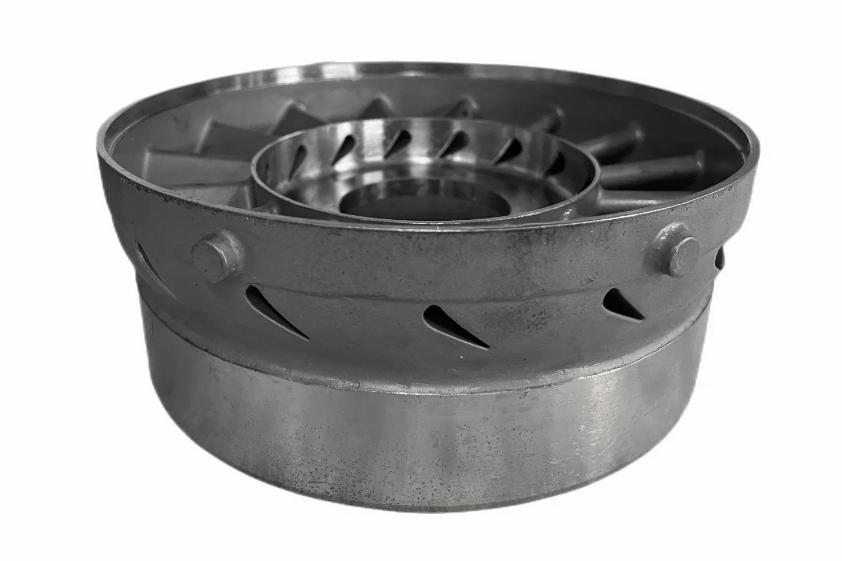
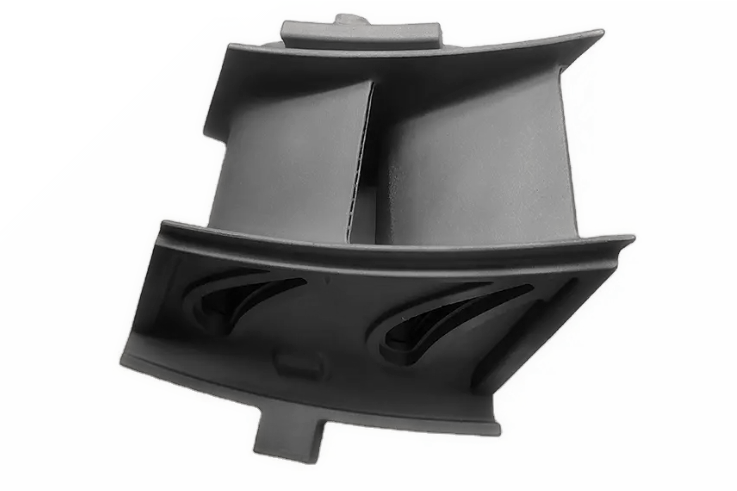
Inconel 718 combines high strength, fatigue resistance, corrosion resistance, and comparatively good fabrication and welding characteristics. It is widely considered for forged, machined, welded, and additively manufactured components used in aerospace engines, industrial gas turbines, power-generation equipment, energy systems, and other demanding assemblies.
The alloy is commonly selected for applications below approximately 650°C where strength, fatigue performance, dimensional stability, and manufacturability must be balanced. Typical component discussions include turbine discs, shafts, rings, casings, fasteners, structural engine parts, exhaust hardware, and precision interfaces. Final suitability depends on product form, heat-treatment condition, load case, environment, and acceptance standard.
Alternative Superalloys of Inconel 718
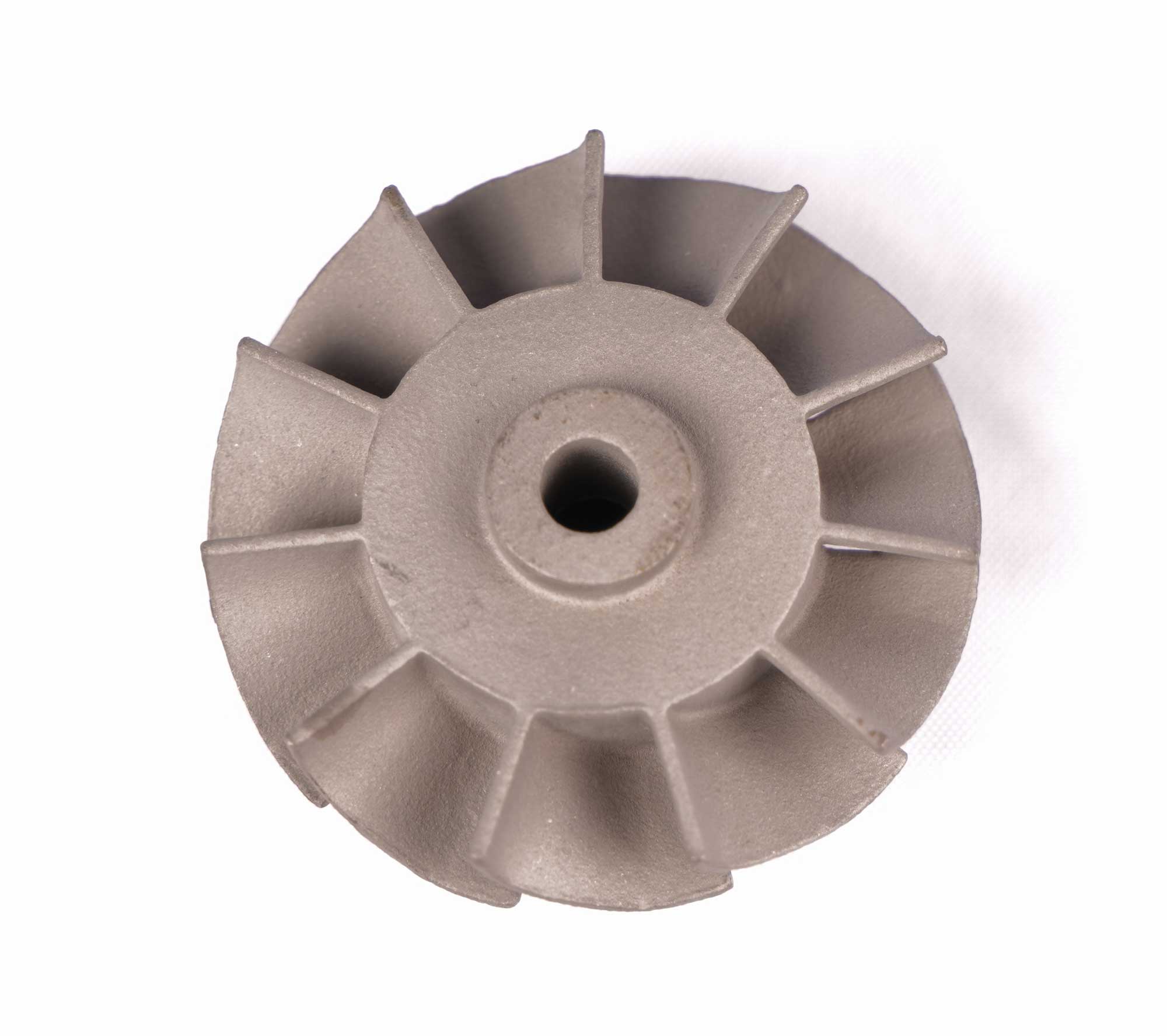
Potential alternatives include Waspaloy, Rene 41, Haynes 282, Inconel 625, and Hastelloy X, but these materials are not direct substitutes. Waspaloy, Rene 41, or Haynes 282 may be reviewed when higher-temperature strength is more important. Inconel 625 or Hastelloy X may be considered when corrosion resistance, oxidation resistance, weldability, or sheet-fabrication requirements control the project.
The correct comparison should use the same geometry, product form, heat treatment, quantity, inspection scope, and delivery condition. NewayAeroTech reviews material selection from the customer drawing and service requirements rather than assuming that one nickel alloy can replace another without engineering approval.
Inconel 718 Design Intention
Inconel 718 was developed to combine precipitation-hardened strength with practical forming and welding characteristics. Nickel and chromium support corrosion and oxidation resistance, while niobium, molybdenum, titanium, and aluminum contribute to the alloy's strengthening response after controlled thermal processing.
For manufacturing projects, the important question is not only whether Alloy 718 has sufficient nominal strength. Buyers should also define the product form, heat-treatment condition, critical dimensions, surface requirements, fatigue relevance, corrosion environment, and required inspection evidence. These inputs determine whether forging, CNC machining, additive manufacturing, casting, welding, HIP, or a combined route is appropriate.
Inconel 718 Chemical Composition
The following ranges are typical limiting values for Alloy 718. The purchase specification, product form, and customer-controlled material standard remain the acceptance basis.
Element | Typical Composition (%) |
|---|---|
Nickel + Cobalt (Ni + Co) | 50.0 – 55.0 |
Chromium (Cr) | 17.0 – 21.0 |
Iron (Fe) | Balance |
Niobium + Tantalum (Nb + Ta) | 4.75 – 5.50 |
Molybdenum (Mo) | 2.80 – 3.30 |
Titanium (Ti) | 0.65 – 1.15 |
Aluminum (Al) | 0.20 – 0.80 |
Carbon (C) | 0.08 max. |
Inconel 718 Physical Properties
Physical-property values vary slightly with composition, product form, temperature, and material condition. The values below are typical reference data and should not replace the project specification.
Property | Typical Value |
|---|---|
Density at room temperature (g/cm³) | Approximately 8.19 – 8.23 |
Melting range (°C) | Approximately 1260 – 1335 |
Thermal conductivity at room temperature (W/(m·K)) | Approximately 11.4 |
Modulus of elasticity at room temperature (GPa) | Approximately 200 – 205 |
Metallographic Structure of Inconel 718 Superalloy
Inconel 718 has a face-centered cubic gamma matrix. Its age-hardening response is associated mainly with gamma-double-prime precipitation, together with gamma-prime and other phases whose distribution depends on chemistry, thermal history, deformation, and cooling rate.
For a custom component, microstructure cannot be judged from the alloy name alone. Forging reduction, additive build history, casting condition, solution treatment, aging, welding, HIP, and subsequent machining can all affect the inspection route. Metallography, hardness testing, mechanical testing, or customer-specific evidence should be defined when they are part of acceptance.
Inconel 718 Mechanical Properties
Mechanical properties depend strongly on product form, section size, heat-treatment condition, test temperature, and governing specification. The following values illustrate typical room-temperature behavior of aged wrought Alloy 718 and must not be used as guaranteed design values.
Property | Typical Reference Value |
|---|---|
Ultimate tensile strength (MPa) | Approximately 1380 – 1400 for typical aged plate or sheet |
0.2% yield strength (MPa) | Approximately 1150 – 1210 for typical aged plate or sheet |
Elongation (%) | Approximately 18 – 21 for typical aged plate or sheet |
Elastic modulus (GPa) | Approximately 200 – 205 at room temperature |
Hardness | Heat-treatment- and product-form-dependent |
Fatigue, creep, and rupture performance | Temperature-, stress-, condition-, geometry-, and test-dependent; verify against the applicable specification |
Key Features of Inconel 718 Superalloy
1. High Strength in Its Intended Temperature Range: Alloy 718 is commonly selected where high tensile and yield strength must be maintained at room and elevated temperatures, generally within an application range below approximately 650°C.
2. Fatigue and Cyclic-Load Capability: When the product form, heat treatment, surface condition, and inspection route are properly controlled, Inconel 718 can support rotating and structural parts exposed to repeated mechanical or thermal loading.
3. Corrosion and Oxidation Resistance: Its nickel-chromium chemistry gives useful resistance in many industrial environments. The actual corrosion medium, temperature, pressure, and exposure duration should still be provided for material review.
4. Fabrication and Welding Flexibility: Compared with several higher-temperature gamma-prime-strengthened alloys, Alloy 718 offers practical forming and welding characteristics. Qualified welding procedures and post-weld thermal requirements may still be necessary.
5. Multiple Manufacturing Routes: Inconel 718 can be considered for forging, CNC machining, additive manufacturing, welding, HIP, and selected casting routes. The route should be chosen from the required component geometry, product form, material condition, quantity, inspection scope, and delivery state.
Inconel 718 Manufacturing Compatibility and Machinability
Inconel 718 may be reviewed for Inconel 718 vacuum investment casting when the drawing, casting product form, geometry, heat treatment, and acceptance standard support that route. Casting should not be assumed to deliver the same condition or properties as wrought or forged material.
Inconel 718 is not a typical choice for Single Crystal Casting. Projects requiring grain-boundary-free turbine blade structures normally use alloys specifically designed for single-crystal processing. The material and route must follow the customer drawing and specification.
Inconel 718 equiaxed casting can be evaluated for suitable cast geometries, but it should not be presented as the default route for highly loaded turbine discs or other critical rotating components. Product-form requirements and acceptance evidence must be defined before quotation.
Directional casting of Inconel 718 is not a standard selection for most Alloy 718 projects. It should only be discussed when the customer specification explicitly requires a directionally controlled cast route and the feasibility has been reviewed.
Powder metallurgy routes for Inconel 718 turbine-disc components may be considered when the drawing, billet route, consolidation method, heat treatment, and inspection standard are defined. Forged Alloy 718 is also common for rotating and structural components, so the buyer should identify the required product form rather than request only the alloy name.
Inconel 718 precision forging is a strong fit for discs, shafts, rings, fasteners, and structural parts where controlled grain flow, mechanical performance, machining stock, and repeatable inspection are important.
Inconel 718 is widely used in Inconel 718 superalloy 3D printing for complex or low-volume components. Additive projects normally require review of build orientation, support removal, heat treatment, optional HIP, machining allowance, internal-feature inspection, surface condition, and final documentation.
Inconel 718 CNC machining is practical but demanding. High strength, work hardening, heat generation, and tool wear require stable setups, appropriate tooling and coolant strategy, controlled machining stock, and inspection aligned with the final heat-treated condition.
Inconel 718 welding is feasible with a qualified procedure, clean joint preparation, compatible filler selection, and suitable post-weld heat treatment when required by the specification.
Hot Isostatic Pressing (HIP) for Inconel 718 may be included when internal porosity, fatigue sensitivity, additive-manufacturing quality, casting density, or customer requirements justify it. HIP does not correct wrong chemistry, open surface cracks, dimensional errors, or an unsuitable manufacturing route.
Inconel 718 Superalloy Applications
In Aerospace and Aviation, Alloy 718 is commonly considered for discs, shafts, rings, casings, fasteners, structural engine hardware, exhaust components, brackets, and machined interfaces. It should not be described as a universal material for the hottest single-crystal turbine blades.
In Power Generation, Inconel 718 can be reviewed for gas-turbine discs, shafts, bolting, casings, spacers, seals, and other high-strength components where temperature, fatigue, oxidation, and dimensional stability must be balanced.
In Oil and Gas, the alloy may be used for downhole tools, fasteners, pressure-containing hardware, shafts, and flow-control components when the applicable material condition and corrosion requirements are specified.
In Energy applications, Alloy 718 may support rotating hardware, high-strength structural parts, fasteners, instrumentation components, test hardware, and assemblies requiring a combination of mechanical strength and corrosion resistance.
In Chemical Processing and selected marine environments, Inconel 718 can be considered where strength and corrosion resistance are both important. Inconel 625, Hastelloy grades, or other corrosion-focused alloys may be more suitable when aqueous corrosion rather than strength controls the design.
For prototype and low-volume programs, Inconel 718 can also be used for additively manufactured housings, ducts, brackets, manifolds, test fixtures, turbocharger hardware, and complex parts that later receive heat treatment, HIP, CNC machining, EDM, surface finishing, and dimensional inspection.
Inspection and Quality Requirements for Inconel 718 Parts
The inspection plan should follow the manufacturing route and final supply condition. A forged blank, printed near-net shape, cast component, welded assembly, machined part, and fully documented production lot do not require the same evidence.
Inspection or Record | Purpose | When to Define It |
|---|---|---|
Material certificate and chemical verification | Confirms grade, heat or lot identity, and specified chemistry. | Before supplier comparison when traceability is required. |
Metallography | Reviews microstructure, grain condition, phases, or thermal-processing evidence. | When required by the drawing, qualification plan, or customer standard. |
Hardness and mechanical testing | Supports heat-treatment and mechanical-condition verification. | When specific test coupons, sampling, or certificates are mandatory. |
FPI / DPI | Detects relevant surface-breaking indications. | After the manufacturing stage specified by the acceptance route. |
X-ray or CT | Reviews internal features or internal indications in cast or additively manufactured parts. | When geometry, risk, or customer requirements justify internal inspection. |
CMM and dimensional inspection | Confirms datums, bores, interfaces, sealing faces, threads, and other critical dimensions. | After the final process that can change the measured feature. |
Heat-treatment, HIP, welding, or process records | Documents the agreed manufacturing route and lot history. | Before quotation when the records must ship with the parts. |
When to Choose Inconel 718 Superalloy
Inconel 718 is a practical choice when the component needs high strength, fatigue resistance, useful corrosion resistance, and a manufacturing route that may include forging, CNC machining, welding, additive manufacturing, heat treatment, or HIP. It is especially relevant for discs, shafts, rings, casings, fasteners, structural engine parts, pressure hardware, and precision components working within an appropriate temperature and environmental range.
The best selection decision compares the finished component, not only the raw material price. Buyers should define whether they need a blank, heat-treated blank, machined part, welded assembly, additively manufactured part, HIP-treated part, or fully inspected production component.
When Inconel 718 May Not Be Suitable
Alloy 718 may not be the preferred choice for the hottest single-crystal turbine blade applications, for service temperatures where a higher-temperature nickel superalloy is required, or for environments where corrosion resistance is more important than precipitation-hardened strength. It may also be a poor commercial choice for low-cost general metal parts that do not require its material performance or documentation.
Material substitution should remain subject to engineering review. Inconel 718, Inconel 625, Waspaloy, Rene 41, Haynes 282, Hastelloy X, and dedicated casting alloys differ in product forms, heat treatments, fabrication behavior, corrosion response, high-temperature strength, and inspection requirements.
Supplier Fit for NewayAeroTech
Project Requirement | NewayAeroTech Fit |
|---|---|
Drawing-based custom Inconel 718 components | Suitable when drawings, models, material condition, quantity, and inspection requirements are available for review. |
Forging plus CNC machining | Suitable for discs, shafts, rings, fasteners, and structural components subject to geometry and specification review. |
Additive manufacturing plus HIP and CNC | Suitable for complex or low-volume parts when build, post-processing, finishing, and inspection are quoted as one route. |
Selected casting, welding, or repair-related routes | Subject to product form, customer standard, geometry, heat treatment, and acceptance requirements. |
Material and dimensional documentation | Suitable when certificates, process records, NDT, metallography, mechanical testing, or CMM reports are defined before quotation. |
Original OEM inventory or guaranteed interchangeability without controlled data | Not the intended scope. NewayAeroTech supports custom manufacturing from customer-controlled drawings, samples, specifications, and engineering requirements. |
RFQ Checklist for Custom Inconel 718 Parts
RFQ Information | Why It Matters |
|---|---|
2D drawing and 3D model | Defines geometry, revision, datums, tolerances, interfaces, and machining allowance. |
Material designation and governing specification | Confirms Alloy 718 product form, chemistry, heat treatment, and certificate expectations. |
Required manufacturing route | Clarifies forging, casting, additive manufacturing, CNC, welding, HIP, or combined-route responsibility. |
Quantity and project stage | Separates prototype, pilot lot, replacement review, and repeat-production requirements. |
Heat-treatment and delivery condition | Defines whether the quote is for raw material, a blank, a treated blank, a machined component, or a finished inspected part. |
Critical dimensions and surface requirements | Controls machining stock, tooling, datum strategy, surface finishing, and CMM scope. |
Inspection and documentation requirements | Defines certificates, FPI, X-ray or CT, metallography, hardness, mechanical tests, process records, and report format. |
Application environment | Provides temperature, load, fatigue, corrosion, pressure, wear, and assembly context for engineering review. |
Sample part or existing inspection data, if available | Supports replacement-manufacturing discussion without implying unsupported OEM interchangeability. |
Send NewayAeroTech the drawing package, material specification, quantity, target supply condition, critical features, inspection requirements, and application background. The engineering review can then identify the most appropriate Inconel 718 manufacturing route, open questions, exclusions, and documentation scope before quotation.
Related FAQs
Explore Related Blogs