
Superalloy Deep Hole Drilling for High-Performance Aerospace and Power Generation Parts
High-Aspect-Ratio Machining for Thermal and Pressure-Critical Components
In aerospace and power generation applications, components such as turbine blades, nozzles, heat exchanger tubes, and fuel delivery systems often require internal bores exceeding 20×D in depth. These bores must maintain tight dimensional tolerances, surface integrity, and alignment under extreme thermal and mechanical loads. Precision deep hole drilling in superalloys is essential to ensure durability, thermal performance, and fatigue resistance in these high-stress environments.
Neway AeroTech specializes in deep hole CNC machining and superalloy component manufacturing using materials such as Inconel 718, Rene 88, CMSX-4, and Hastelloy X. Our deep drilling services support mission-critical components across turbine engines, fuel manifolds, and high-temperature pressure systems.
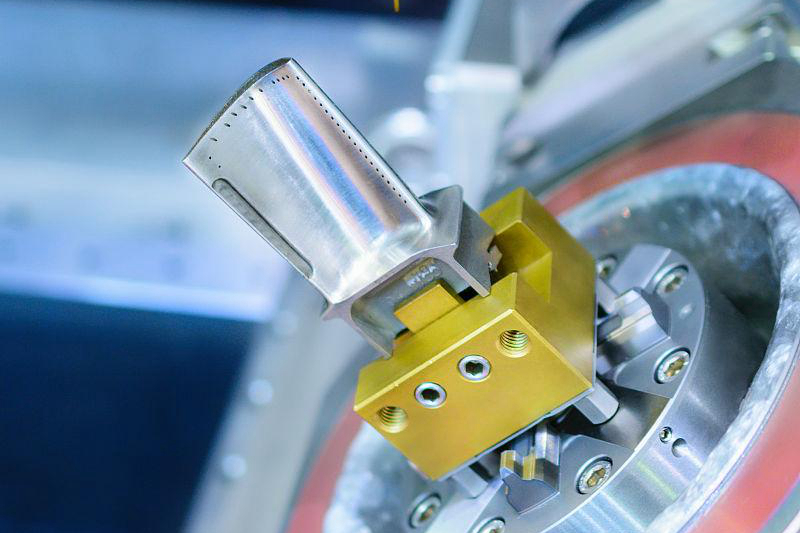
Core Technologies for Deep Hole Drilling in Superalloy Components
High-performance deep drilling requires a combination of rigid fixturing, advanced tooling, and coolant systems to ensure bore straightness and thermal stability.
Gun drilling and BTA systems with concentricity ≤0.01 mm for bores over 20×D
High-pressure coolant (up to 100 bar) for chip evacuation and thermal control
Carbide and CBN tools optimized for low-conductivity, high-strength superalloys
Real-time feed, torque, and deflection monitoring to detect tool loading and prevent bore deviation
Our process achieves Ra ≤ 0.6 μm finish and bore alignment within ±0.01 mm over 300+ mm depth.
Superalloy Materials Commonly Deep Drilled
Alloy | Max Temp (°C) | Applications | Drilling Focus |
|---|---|---|---|
704 | Nozzle rings, stator supports | Straight bores, sealing surfaces | |
980 | Rotor blades, cooling sleeves | Converging bores, internal holes | |
1140 | Airfoils, turbine vanes | Film cooling channels | |
1175 | Combustor tubes, housings | Deep passage drilling |
Superalloys offer excellent creep and oxidation resistance but require highly specialized machining to control hardness and work-hardening effects.
Case Study: Deep Hole Machining of CMSX-4 Turbine Airfoil
Project Background
A turbine manufacturer required deep bore cooling channels in CMSX-4 airfoils, with hole depth ≥150 mm and entry angles of 30–45°. Bore tolerance was ±0.01 mm, and surface finish needed to be Ra ≤ 0.5 μm. Using 5-axis gun drilling and in-process probing, Neway AeroTech achieved full specification compliance.
Typical Deep Drilled Components and Applications
Component | Alloy | Hole Depth | Industry |
|---|---|---|---|
Blade Cooling Channel | CMSX-4 | 25×D | |
Fuel Delivery Tube | Inconel 718 | 30×D | |
Nozzle Sleeve | Rene 88 | 22×D | |
Exhaust Manifold Bushing | Hastelloy X | 18×D |
Components are validated through X-ray, SEM, and post-machining CMM inspection to confirm flow path integrity.
Technical Challenges in Superalloy Deep Hole Machining
Thermal softening at >600°C in Inconel and Rene alloys reduces tool life in long-cycle drilling
Tool deflection >0.02 mm over 25×D depths requires multi-pass correction and probe feedback
Ra ≤ 0.5 μm finish is needed for coolant flow and sealing interfaces in turbine blades
Internal burr control is critical for flow efficiency in converging or intersecting bores
Entry angle errors >1° lead to bore exit deviation, especially in single crystal and thin-walled parts
Solutions for Aerospace and Energy Deep Drilling
Barrel and peck cycle strategies maintain dimensional control in bores up to 400 mm deep
Multi-angle 5-axis alignment enables drilling through complex geometries with angular tolerance ≤0.5°
Ultrasonic deburring ensures flow passage smoothness at bore junctions
Pre- and post-heat treatment stabilizes grain boundaries and prevents warping
Post-process CMM and X-ray inspection validate bore quality
Results and Verification
Manufacturing Methods
Parts were forged or investment cast, then drilled using BTA and gun drilling machines. Coolant-fed carbide drills maintained straightness ≤0.01 mm over 300 mm depth.
Precision Finishing
Honing and light reaming achieved Ra 0.4–0.6 μm. Hole exit deburred using ultrasonic or mechanical polishing tools. Entry and exit concentricity confirmed.
Post-Processing
Parts received stress-relief heat treatment and HIP where applicable. Final surfaces were prepared for coating or assembly.
Inspection
CMM verified bore axis alignment and profile. X-ray inspection confirmed through-hole continuity. SEM checked surface integrity and grain structure near bore wall.
FAQs
What is the maximum achievable bore depth for superalloy components?
How is bore straightness maintained in long and angled holes?
What post-drilling finishing processes are used for turbine cooling passages?
Can you deep drill single crystal CMSX parts without microcracking?
How are deep holes verified for dimensional and surface accuracy?
