中文

Inconel Alloy 3D Printed Thermal Barriers for Extreme Temperature Protection

目录
Introduction
Core Manufacturing Challenges for Inconel Thermal Barriers
Inconel Alloy 3D Printing Process for Thermal Barriers
Comparison of Manufacturing Methods for Inconel Thermal Barriers
Manufacturing Method Selection Strategy
Inconel Alloy Performance Matrix
Alloy Selection Strategy for Thermal Barriers
Key Post-processing Techniques
Testing Methods and Quality Assurance
Case Study: 3D Printed Inconel 718 Aerospace Thermal Shields
FAQs

Introduction

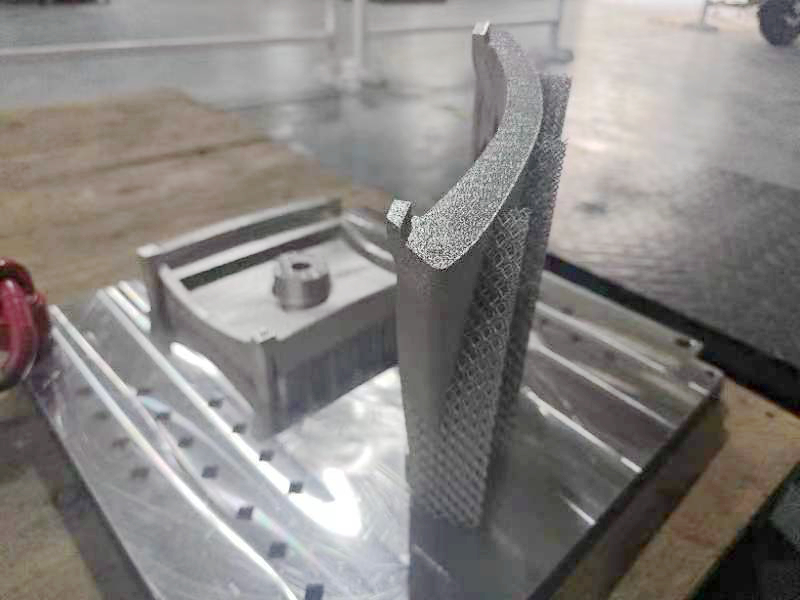
Inconel alloys are engineered for exceptional strength, oxidation resistance, and thermal stability at elevated temperatures, making them ideal materials for high-performance thermal barrier applications. At Neway AeroTech, we specialize in 3D printing services for Inconel alloys, producing thermal barrier components with complex geometries, superior mechanical integrity, and outstanding resistance to extreme thermal environments.

By leveraging advanced powder bed fusion technologies like Selective Laser Melting (SLM), we manufacture lightweight, high-performance Inconel thermal shields for aerospace, power generation, and automotive industries.

Core Manufacturing Challenges for Inconel Thermal Barriers

Producing 3D printed thermal barriers from Inconel 718 and Inconel 625 presents unique challenges:

  • Controlling residual stress and warping due to high thermal gradients during 3D printing.

  • Achieving high-density builds (typically >99.5%) to ensure mechanical strength and oxidation resistance.

  • Maintaining dimensional tolerances (±0.05 mm) on complex freeform surfaces.

  • Achieving fine surface finishes (Ra ≤5 µm) for improved thermal protection and fatigue performance.

Inconel Alloy 3D Printing Process for Thermal Barriers

The additive manufacturing process for Inconel thermal barriers includes:

  1. Powder Preparation: High-purity Inconel powders with optimized particle size distribution for consistent layer deposition.

  2. Selective Laser Melting (SLM): Layer-by-layer melting of Inconel powders in an inert atmosphere to prevent oxidation.

  3. Process Parameter Optimization: Fine control of laser power, scan speed, hatch spacing, and layer thickness (typically 30–50 µm) to achieve dense, defect-free structures.

  4. Support Removal and Post-Processing: Removal of build supports followed by HIP (Hot Isostatic Pressing) to eliminate any residual porosity.

  5. Precision CNC Machining: Final dimensional tuning to achieve tight tolerances (±0.01 mm) and smooth surface finishes.

  6. Heat Treatment: Solution treatment and aging to optimize mechanical and thermal fatigue properties.

Comparison of Manufacturing Methods for Inconel Thermal Barriers

Manufacturing Method

Dimensional Accuracy

Surface Finish (Ra)

Mechanical Properties

Design Flexibility

Cost Efficiency

3D Printing (SLM)

±0.05 mm

≤5 µm

Superior

Excellent

Medium

Vacuum Investment Casting

±0.1 mm

≤3.2 µm

Good

Moderate

Medium

CNC Machining (from Solid)

±0.01 mm

≤0.8 µm

Excellent

Limited

High

Manufacturing Method Selection Strategy

Choosing the optimal production method for Inconel thermal barriers depends on complexity, performance, and cost:

  • 3D Printing (SLM): Best suited for lightweight thermal shields with complex cooling channels, lattice structures, or non-linear surfaces. It offers superior design freedom and reliable mechanical strength.

  • Vacuum Investment Casting: Suitable for moderately complex geometries where extreme design freedom is unnecessary.

  • CNC Machining: Best for high-volume, simpler-shaped shields requiring ultra-fine tolerances and surface finishes, although design flexibility is limited.

Inconel Alloy Performance Matrix

Alloy Material

Max Service Temp (°C)

Tensile Strength (MPa)

Thermal Fatigue Resistance

Oxidation Resistance

Typical Applications

Inconel 718

700

1375

Excellent

Superior

Aerospace thermal shields, exhaust panels

Inconel 625

815

965

Good

Superior

Turbo heat shields, turbine housings

Inconel 713C

950

1200

Excellent

Excellent

High-temperature thermal barriers

Inconel 939

900

1150

Superior

Excellent

Hot-section shields, aerospace components

Alloy Selection Strategy for Thermal Barriers

Selecting the correct Inconel alloy ensures maximum protection and lifespan:

  • Inconel 718: Preferred for aerospace heat shields and exhaust panels requiring high fatigue strength and stability up to 700°C.

  • Inconel 625: Ideal for turbocharger and industrial heat shields exposed to corrosive gases and high temperatures (up to 815°C).

  • Inconel 713C: Selected for components requiring superior tensile strength (1200 MPa) and thermal fatigue resistance in extreme environments (~950°C).

  • Inconel 939: Best for hot-section turbine shields operating at continuous temperatures around 900°C requiring excellent creep and oxidation resistance.

Key Post-processing Techniques

Post-processing is critical to optimize 3D printed Inconel parts:

Testing Methods and Quality Assurance

All Inconel thermal barriers undergo strict aerospace-grade validation:

Our production and inspection processes are fully compliant with AS9100 aerospace quality standards.

Case Study: 3D Printed Inconel 718 Aerospace Thermal Shields

Neway AeroTech successfully manufactured Inconel 718 3D printed thermal shields for aerospace engine applications:

  • Service Temperature: Continuous operation at 700°C

  • Dimensional Precision: ±0.05 mm achieved across complex geometries

  • Surface Finish: Ra ≤4.5 µm post-processing

  • Certification: Fully compliant with AS9100 aerospace manufacturing standards

FAQs

  1. What are the advantages of using Inconel 3D printing for thermal barriers?

  2. Which Inconel alloys are best suited for extreme temperature protection applications?

  3. How precise are the dimensions achieved with Inconel 3D printing?

  4. What post-processing methods improve the performance of 3D printed Inconel parts?

  5. What quality certifications ensure the reliability of Neway AeroTech's Inconel thermal barriers?