
Custom Power Generation Turbine Repair Parts Manufacturer for Power Plant Maintenance
NewayAeroTech manufactures custom power generation gas turbine repair and replacement parts for turbine maintenance, overhaul, spare parts replacement, and reverse engineering projects. Our manufacturing support covers hot gas path parts, combustion section parts, rotating parts, sealing and wear parts, and custom repair components made from drawings, old samples, 3D scan data, or CMM measurement data.
For power plant maintenance teams, turbine repair companies, and gas turbine spare parts buyers, replacement parts are not only spare components. They must fit existing turbine hardware, withstand high-temperature service, meet inspection requirements, and support predictable outage schedules. NewayAeroTech focuses on delivering finished turbine replacement parts rather than only cast blanks or rough-machined parts.
Our process capabilities include superalloy casting, precision forging, powder metallurgy route review, CNC machining, EDM, deep hole drilling, heat treatment, HIP review, coating preparation, post-processing, dimensional inspection, material verification, and NDT documentation.
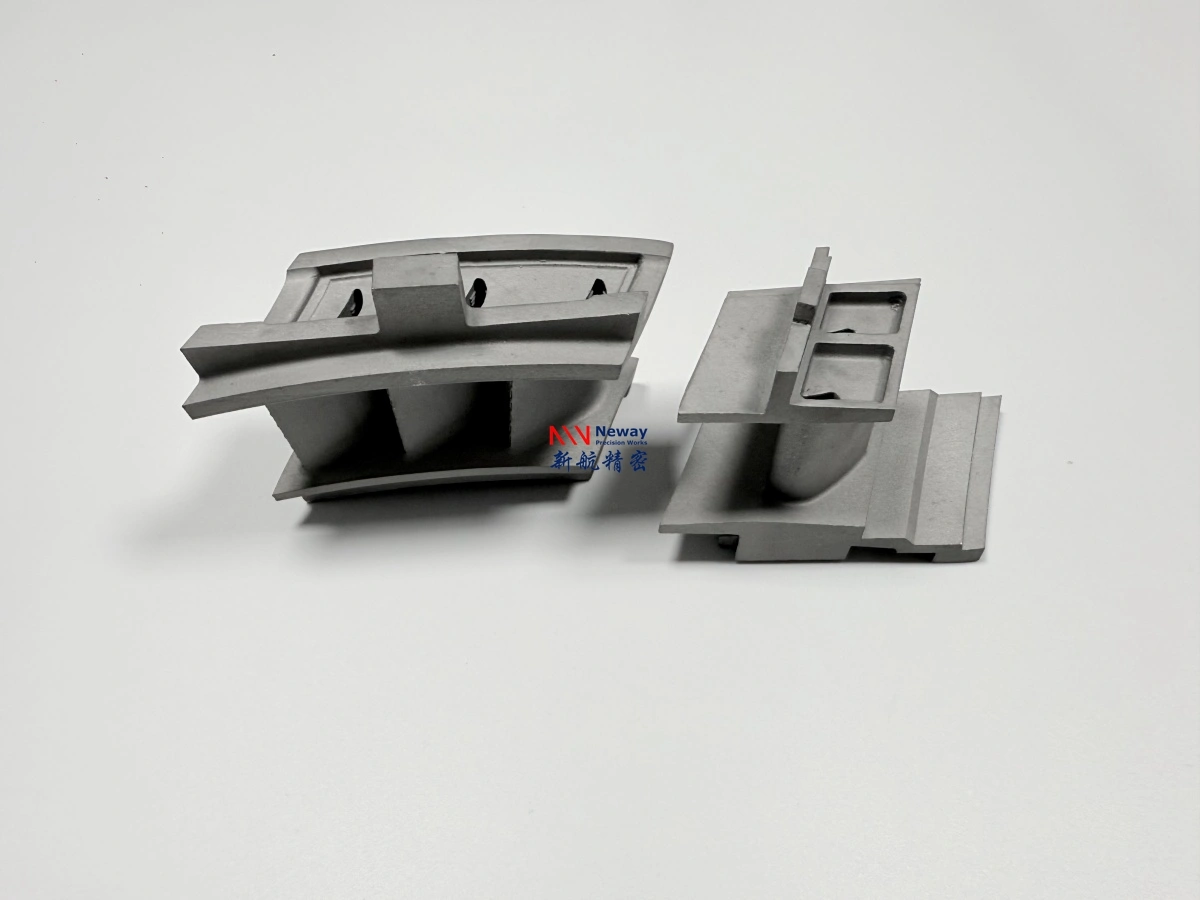
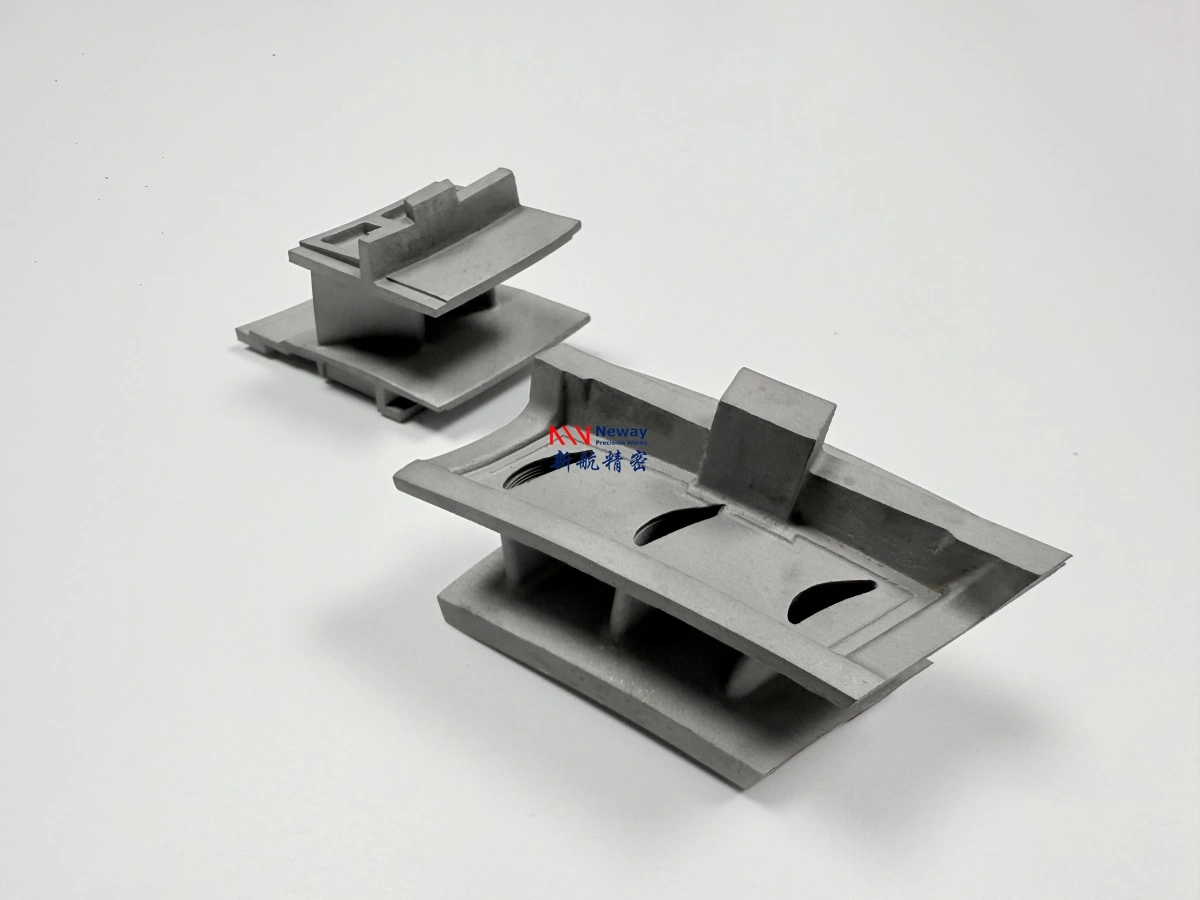
What Power Generation Turbine Repair Parts Does NewayAeroTech Manufacture?
NewayAeroTech manufactures custom power generation turbine repair parts for gas turbine maintenance and replacement programs. These parts can be produced according to 2D drawings, 3D CAD models, old parts, worn samples, scan data, CMM reports, material analysis, or turbine model information.
We support power generation turbine parts manufacturing for customers who need finished replacement components, not only raw castings. Depending on the part type, our route may include superalloy CNC machining, vacuum investment casting, EDM, deep hole drilling, post-processing, and inspection.
Typical turbine repair parts we manufacture include:
Hot gas path parts, including blades, vanes, nozzles, shrouds, and seal segments
Combustion section parts, including liners, transition pieces, fuel nozzles, flow sleeves, and caps
Rotating parts, including turbine discs, impellers, compressor components, and shaft-related parts
Sealing and wear parts, including shroud blocks, seal rings, wear-resistant segments, and blade ring segments
Reverse-engineered custom repair parts made from samples, drawings, and 3D scan data
For obsolete or difficult-to-source parts, NewayAeroTech can also support custom gas turbine repair parts manufacturing through sample review, material verification, CAD reconstruction, prototype validation, and batch repair part production.
Hot Gas Path Parts for Gas Turbine Repair
Hot gas path parts are the core high-temperature components in power generation gas turbines. These parts work directly in the turbine gas path and must resist oxidation, thermal fatigue, creep, coating degradation, gas erosion, and dimensional change during long service intervals.
NewayAeroTech supports hot gas path parts manufacturing as a system-level repair package rather than treating each part as an isolated component. Typical parts include turbine blades, turbine vanes, nozzle guide vanes, gas turbine nozzles, shrouds, seal segments, and hot section replacement components.
Hot gas path parts usually require high-temperature alloy casting and precision finishing. For advanced blade applications, single crystal casting may be required. For selected blades or vanes, directional casting may be reviewed. For nickel-based turbine components, Inconel alloy vacuum investment casting can support material and process development.
Common hot gas path replacement parts include:
Shrouds, seal segments, blade ring segments, and hot gas path blocks
Key manufacturing controls include airfoil profile, throat area, cooling holes, platform dimensions, sealing faces, internal casting soundness, surface cracks, coating allowance, and pre-coating surface preparation.
Combustion Section Repair Parts for Power Plant Turbine Overhaul
Combustion section repair parts are exposed to high-temperature flame, thermal cycling, oxidation, combustion gas erosion, cooling airflow, vibration, and acoustic loading. Unlike general hot gas path parts, many combustion components are thin-wall structures with dense cooling hole patterns, formed or welded areas, and coating-controlled surfaces.
NewayAeroTech supports combustion section repair parts manufacturing for gas turbine overhaul projects. Typical components include combustion liners, gas turbine transition pieces, transition ducts, fuel nozzles, flow sleeves, caps, and combustion chamber repair parts.
The major manufacturing challenges include thin-wall distortion, cooling hole consistency, coating preparation, weld quality, oxidation resistance, and assembly fit. For cooling and airflow features, superalloy deep hole drilling can support selected hole structures. For heat treatment, cleaning, coating preparation, and final finishing, superalloy post process connects the combustion part route from manufacturing to delivery.
Common material options include Hastelloy X, Haynes 188, Inconel 625, Inconel 718, and Nimonic alloys. NewayAeroTech supports Hastelloy alloy vacuum investment casting and Nimonic alloy vacuum investment casting for selected high-temperature combustion and turbine components.
Inspection for combustion parts usually focuses on cooling hole position, wall thickness, roundness, weld quality, FPI, CMM, material reports, coating preparation surfaces, and final assembly interfaces.
Rotating Turbine Parts for Power Generation Gas Turbine Maintenance
Rotating turbine parts are safety-critical components. Their main manufacturing concerns are different from static hot section components. Instead of focusing only on gas erosion or coating degradation, rotating parts require strict control of material strength, fatigue life, concentricity, runout, dynamic balance, surface finish, and precision assembly features.
NewayAeroTech supports rotating turbine parts manufacturing for turbine discs, impellers, compressor components, rotating rings, shaft-related components, and high-temperature rotating assemblies.
For turbine disc projects, powder metallurgy turbine disc routes may be reviewed when high material consistency and fatigue performance are required. For high-strength rotating blanks, superalloy precision forging can support disc, ring, shaft, and impeller component preparation before precision finishing.
Key manufacturing requirements include:
High-strength material structure and heat treatment stability
Accurate central bores, shaft interfaces, and mating faces
Controlled concentricity, circular runout, and perpendicularity
Precision hole systems, keyways, grooves, slots, and coupling features
Surface roughness control in fatigue-sensitive areas
Dynamic balancing when required by operating speed and customer specification
For selected lightweight or high-strength rotating programs, titanium alloy vacuum investment casting may also be reviewed when titanium is suitable for the application. For nickel-based rotating and high-temperature components, material selection should follow drawings, sample analysis, and operating speed requirements.
Sealing and Wear Parts for Hot Section Efficiency Recovery
Sealing and wear parts are important for gas turbine hot section efficiency recovery. Their purpose is not only to replace damaged components, but also to reduce leakage, restore blade tip clearance, improve sealing efficiency, and extend hot section service life.
NewayAeroTech manufactures sealing and wear parts, including shroud blocks, seal rings, wear-resistant segments, blade ring segments, sealing faces, and cobalt-based wear-resistant turbine components. For related hot section components, NewayAeroTech also supports turbine shrouds and seal segments.
This category focuses on efficiency recovery and leakage control. Worn seal faces, enlarged gaps, distorted shroud blocks, damaged coating, or oxidized sealing surfaces can increase gas leakage and reduce turbine output. Replacement parts must therefore control arc profile, segment fit, sealing face dimensions, surface roughness, coating allowance, and wear-resistant material condition.
For wear-resistant turbine components, special alloy casting can support complex high-temperature and wear-resistant parts. Stellite alloy vacuum investment casting is suitable for cobalt-based wear-resistant components, while Rene Alloys vacuum investment casting may be reviewed for advanced hot-section applications.
Critical inspection points include arc geometry, segment-to-segment fit, sealing face flatness, surface roughness, FPI, X-ray, CMM, material verification, and pre-coating surface inspection.
Custom Turbine Repair Parts from Drawings, Samples, and 3D Scan Data
Many power generation turbine repair projects begin without complete original drawings. Customers may only have worn samples, damaged components, photos, 3D scan data, or incomplete CMM reports. In these cases, NewayAeroTech can support reverse-engineered replacement parts and obsolete turbine spare parts manufacturing.
The key is not simply copying a used part. A worn turbine component may have cracked areas, coating loss, deformed surfaces, repaired zones, blocked holes, enlarged clearances, or distorted assembly interfaces. These service-damaged features must be separated from the original design geometry before manufacturing a new replacement part.
A practical reverse engineering workflow includes:
Review old sample, photos, drawings, scan data, and turbine model information
Identify worn areas, functional surfaces, assembly datums, and critical features
Use 3D scanning or CMM measurement to capture geometry
Verify material grade by chemical analysis when the original material is unknown
Reconstruct CAD geometry and separate damage from original design intent
Review DFM and select casting, machining, EDM, drilling, forming, or post-process route
Manufacture prototype or first article for inspection and customer review
Move into small-batch or batch repair parts manufacturing after approval
This approach is useful for turbine blades, vanes, nozzles, combustion liners, transition pieces, shrouds, seal rings, impellers, compressor components, brackets, sleeves, and other custom power generation turbine repair parts.
From Superalloy Casting to Finished Turbine Repair Parts
NewayAeroTech’s value is to provide finished turbine repair parts, not only one isolated process. A typical turbine repair parts project may require material evaluation, blank manufacturing, heat treatment, machining, hole processing, coating preparation, inspection, and delivery documentation.
A complete manufacturing route may include:
Drawing, sample, 3D scan, or CMM data review
Material and process evaluation
Superalloy casting, precision forging, or powder metallurgy route selection
Heat treatment, stress relief, or HIP review when required
CNC machining, EDM, deep hole drilling, and local feature processing
Surface finishing, cleaning, and coating preparation
CMM, FPI, X-ray, material verification, and final inspection
Finished part delivery with reports and documentation
This integrated route reduces communication gaps between casting suppliers, machining suppliers, coating suppliers, and inspection teams. It is especially valuable when customers face urgent outage schedules, low-volume repair demand, obsolete spare parts, or supplier qualification requirements.
Inspection and Documentation for Gas Turbine Repair Parts
Gas turbine repair parts are not ordinary mechanical components. Customers often need traceable inspection records to support incoming inspection, supplier qualification, overhaul acceptance, and long-term maintenance documentation.
Inspection and documentation may include:
Material verification and chemical composition report
CMM dimensional inspection report
FPI for surface cracks and open defects
X-ray or CT inspection for internal casting defects when required
Surface roughness and pre-coating surface condition checks
Cooling hole, throat area, airfoil profile, or arc geometry reports when applicable
Heat treatment records, hardness report, or process traceability documents
NDT report, dimensional report, material report, COC, or customer-specific documentation
Quality control should be planned before production begins. Inspection requirements affect manufacturing route, fixture design, machining datum, surface preparation, lead time, and cost. For turbine repair parts, reliable documentation is often as important as the physical part itself.
RFQ Checklist for Power Generation Turbine Repair Parts
To quote turbine repair and replacement parts accurately, NewayAeroTech recommends that customers provide as much technical and maintenance information as possible.
A complete RFQ should include:
Turbine model, component name, stage number, part number, and revision level
2D drawings and 3D CAD models if available
Old samples, worn parts, photos, 3D scan data, or CMM reports if reverse engineering is required
Material grade, material standard, material certificate, or sample material analysis
Casting, forging, powder metallurgy, machining, EDM, drilling, or forming requirements
Heat treatment, HIP, coating, surface finish, or post-processing requirements
Critical features such as airfoil profile, throat area, cooling holes, sealing faces, arc profile, runout, or balance requirements
Inspection requirements such as CMM, FPI, X-ray, CT, material report, heat treatment record, NDT report, or COC
Quantity for prototype, first article, repair batch, annual maintenance, or long-term spare parts program
Delivery schedule, outage timing, packaging, and documentation requirements
If the project is based on a worn sample, customers should identify cracked areas, burned zones, worn sealing surfaces, coating loss, blocked holes, repaired zones, balance marks, and functional assembly features. This helps prevent reverse engineering errors and improves manufacturing reliability.
FAQ
What Power Generation Turbine Repair Parts Can NewayAeroTech Manufacture?
Can Gas Turbine Repair Parts Be Manufactured from Worn Samples or 3D Scan Data?
What Manufacturing Processes Are Used for Turbine Repair Parts?
Which Materials Are Used for Power Generation Turbine Repair Parts?
What Information Is Needed to Quote Custom Turbine Repair Parts?
