
Rotating Turbine Parts Manufacturing for Power Generation Gas Turbine Maintenance
NewayAeroTech supports custom rotating turbine parts manufacturing for power generation gas turbine maintenance and replacement projects. These components include turbine discs, impellers, compressor components, rotating rings, shaft-related parts, and high-strength rotating assemblies used in turbine and compressor systems.
Unlike static hot gas path parts, rotating turbine components are safety-critical parts where material strength, fatigue performance, concentricity, runout, dynamic balance, hole pattern accuracy, and precision assembly interfaces must be controlled carefully. A rotating component is not only judged by shape; it must maintain stable performance under speed, load, vibration, and thermal conditions.
NewayAeroTech supports power generation turbine parts manufacturing through material route review, powder metallurgy, precision forging, CNC machining, heat treatment, surface finishing, inspection, and dynamic balancing support when required.
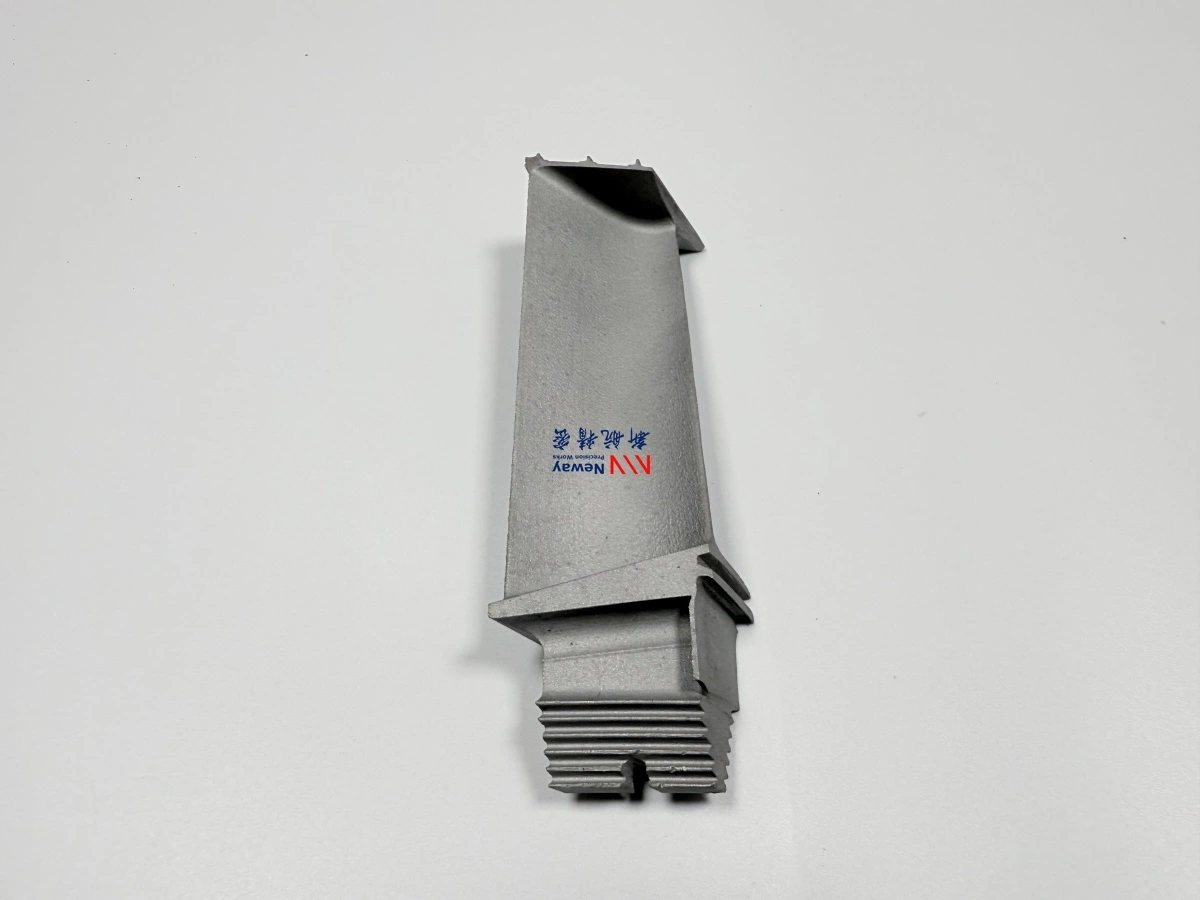
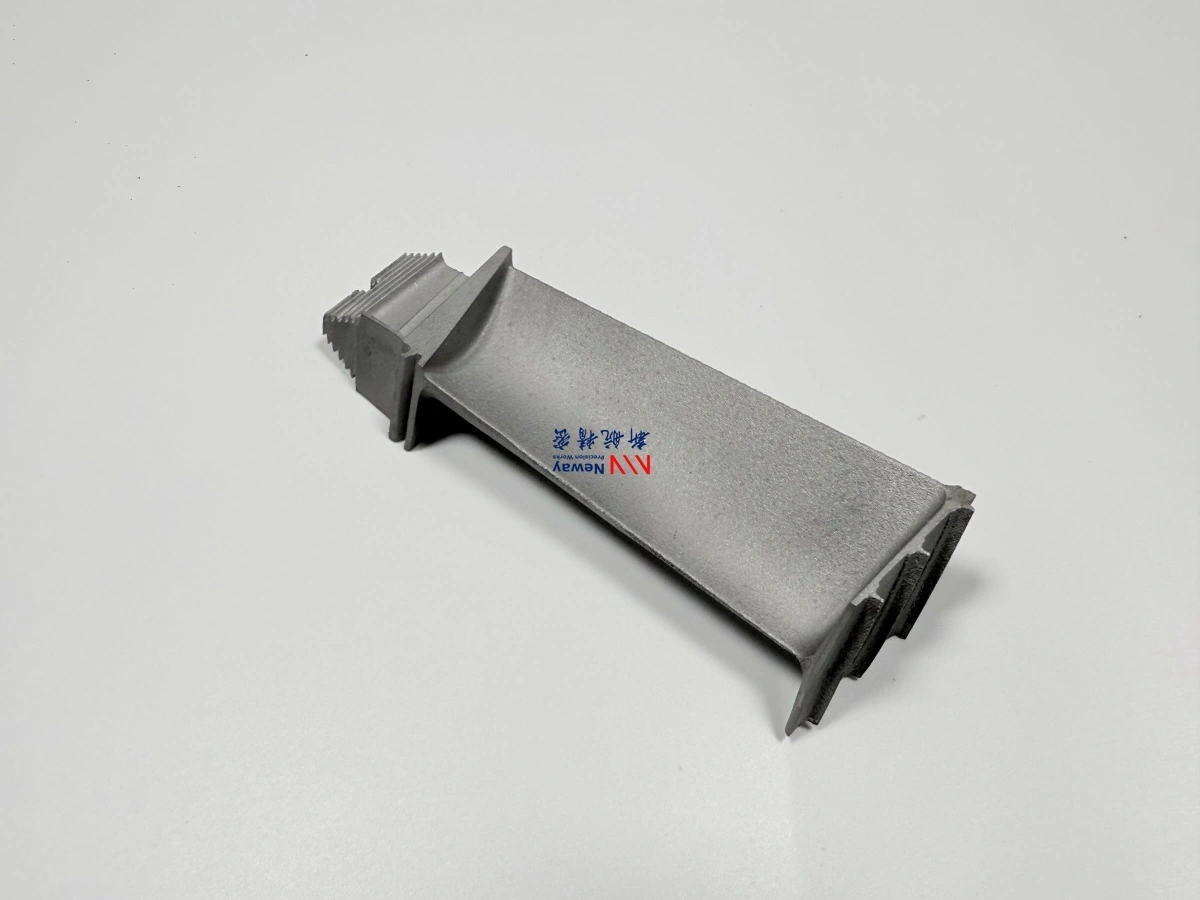
Direct Answer: Custom Rotating Turbine Parts for Maintenance
NewayAeroTech can manufacture custom rotating turbine parts for power generation gas turbine maintenance, repair, and replacement projects. Depending on the component type, material standard, operating speed, load condition, and inspection requirements, the manufacturing route may include powder metallurgy, precision forging, CNC machining, heat treatment, surface finishing, dimensional inspection, and dynamic balancing.
Our rotating component manufacturing support can cover:
Turbine discs and turbine wheels
Gas turbine impellers and compressor impellers
Compressor components and rotating rings
Shaft-related components and precision rotating interfaces
High-strength heat-resistant rotating assemblies
Prototype, small-batch, and repair spare parts manufacturing
The goal is to deliver rotating turbine parts with controlled material strength, precision datum alignment, accurate hole systems, stable concentricity, qualified runout, suitable surface finish, and inspection documentation.
Typical Rotating Components in Power Generation Gas Turbines
Rotating turbine parts work under centrifugal load, torque, vibration, thermal exposure, and repeated operating cycles. Their geometry and material condition directly influence turbine safety, efficiency, and maintenance reliability.
Typical rotating components include:
Turbine discs that carry blades and transfer rotational load
Impellers used in turbine, compressor, or auxiliary rotating systems
Compressor components that control air compression and flow stability
Rotating rings, spacers, sleeves, and retaining parts
Shaft-related components with precision bores, keyways, splines, or coupling interfaces
High-temperature rotating assemblies requiring strict balance and fit-up control
These parts are commonly manufactured from nickel-based superalloys, titanium alloys, high-strength steels, or other heat-resistant materials depending on operating speed, temperature, and load requirement.
Key Engineering Requirements for Rotating Turbine Parts
Rotating parts have different engineering priorities from static hot section components. For static parts, gas-path geometry, coating, and thermal protection are often the main focus. For rotating parts, the most important concerns are strength, fatigue life, dimensional stability, concentricity, runout, and balance.
Key engineering requirements include:
High material strength under centrifugal and mechanical load
Fatigue resistance during repeated operating cycles
Stable microstructure after heat treatment
Controlled concentricity between bores, faces, and rotating datums
Low runout for stable rotation and assembly accuracy
Dynamic balance when required by speed and application
Reliable surface finish in stress-sensitive areas
Accurate hole systems, keyways, slots, and mating interfaces
Because these parts rotate at high speed, small deviations can create vibration, uneven stress, premature fatigue, or assembly failure. Manufacturing planning must therefore start with functional datum strategy and inspection requirements.
Manufacturing Route for Rotating Turbine Components
Rotating turbine components are usually produced through controlled blank manufacturing followed by precision CNC machining and validation. Depending on the design, the blank may come from powder metallurgy, precision forging, casting, bar stock, or customer-specified material routes.
A typical route may include:
Review 2D drawing, 3D model, operating speed, load condition, and balance requirement
Confirm material grade, blank route, heat treatment condition, and inspection standard
Produce or source the blank by powder metallurgy, precision forging, casting, or bar machining route
Apply heat treatment or stress relief according to material requirements
Machine bores, end faces, mating surfaces, keyways, slots, hole patterns, and precision datums
Control runout, concentricity, parallelism, and surface roughness during finishing
Perform dimensional inspection, material verification, and balance check when required
Prepare final quality documents for customer review and delivery
For turbine disc applications, powder metallurgy turbine disc manufacturing may be reviewed when the component requires high material consistency and advanced performance. For forged rotating parts, superalloy precision forging can support high-strength blank preparation before CNC finishing.
Powder Metallurgy and Precision Forging for Rotating Parts
Rotating safety-critical components often require stronger material consistency than ordinary cast parts. Powder metallurgy and precision forging are commonly reviewed when the part must achieve high strength, controlled grain structure, fatigue resistance, and reliable performance under rotational load.
Powder metallurgy can support uniform material structure and controlled alloy distribution for selected turbine disc applications. Precision forging can improve material flow, strength, and reliability for high-load rotating components. The correct route depends on drawing requirements, material standard, operating temperature, rotational speed, and customer qualification needs.
Blank Route | Typical Use | Main Value for Rotating Parts |
|---|---|---|
Powder metallurgy | Turbine discs and high-performance rotating components | Supports material uniformity and high-performance alloy control |
Precision forging | Discs, rings, shafts, and high-strength rotating blanks | Improves strength, grain flow, and fatigue-related performance |
CNC machining from qualified stock | Prototypes, small batches, impellers, rings, and shaft-related parts | Provides flexibility when geometry and quantity are suitable |
Casting route | Selected impellers, wheels, and complex geometry parts | Useful when near-net-shape geometry reduces machining waste |
For rotating components, the blank route should not be selected only by price. Material quality, fatigue performance, inspection requirements, and operating speed must be reviewed together.
CNC Machining Focus for Rotating Turbine Parts
Precision CNC machining is one of the most important stages for rotating turbine parts. Even when the blank is produced correctly, final performance depends on how accurately the bores, faces, slots, holes, and datum features are finished.
NewayAeroTech provides superalloy CNC machining for high-strength and heat-resistant alloy components, including nickel-based superalloys, titanium alloys, and other difficult-to-machine materials.
Machining focus areas include:
Central bores and shaft interfaces
End faces and precision reference planes
Mounting holes, bolt holes, and hole-circle accuracy
Keyways, splines, slots, grooves, and coupling features
Impeller profiles and compressor flow surfaces
Mating surfaces for rings, spacers, or adjacent rotating parts
Precision datums used for inspection and balancing
Machining strategy should be planned around datum control. For rotating parts, the relationship between the bore, end faces, outer profile, and hole system is often more important than a single isolated dimension.
Material Selection for Rotating Turbine Parts
Material selection for rotating turbine parts depends on speed, temperature, stress level, fatigue requirement, corrosion environment, weight target, and original turbine specification. The selected material must provide strength and stability under repeated rotational loading.
Common material options include nickel-based superalloys, titanium alloys, high-strength heat-resistant alloys, and customer-specified turbine materials. NewayAeroTech supports Inconel alloy vacuum investment casting for nickel-based high-temperature components, Nimonic alloy vacuum investment casting for selected nickel-based high-temperature applications, and Titanium alloy vacuum investment casting for lightweight and high-strength component programs where titanium is suitable.
Material selection should consider:
Operating temperature and thermal exposure
Rotational speed and centrifugal stress
Fatigue life and duty cycle
Heat treatment response and microstructure stability
Machinability and surface finish requirements
Weight sensitivity and assembly requirement
Customer material standard and certification requirement
For repair or replacement parts, the material should follow the original drawing or verified sample analysis whenever possible. Equivalent material selection should be reviewed carefully because rotating components are safety-critical.
Heat Treatment and Post-Process for Rotating Components
Heat treatment affects strength, hardness, residual stress, microstructure, and dimensional stability. For rotating turbine parts, the heat treatment route must be aligned with material grade, blank process, machining sequence, and final inspection requirement.
NewayAeroTech supports superalloy post process for high-strength rotating parts that require heat treatment, stress relief, surface finishing, cleaning, and inspection before delivery.
Post-processing may include:
Solution treatment, aging, or stress relief according to alloy requirements
Surface finishing for stress-sensitive machined areas
Deburring of holes, slots, keyways, and edges
Cleaning before inspection or assembly
Shot peening, polishing, or customer-specified finishing if required
Preparation for balancing or final assembly review
Post-process planning should avoid creating surface defects or residual stress concentrations in critical rotating zones. Edges, grooves, bores, and hole transitions should be finished carefully because these areas may influence fatigue performance.
Dynamic Balance, Concentricity, and Runout Control
Dynamic balance, concentricity, and runout are key quality concerns for rotating turbine parts. If these features are not controlled, the component may create vibration, bearing load, noise, fatigue risk, or assembly instability during operation.
Important control points include:
Concentricity between central bore and outer rotating profile
Runout of end faces, shoulders, and mating surfaces
Hole-circle position relative to the rotating datum
Impeller or disc symmetry after machining
Surface roughness in contact and stress-sensitive areas
Static or dynamic balance according to drawing or operating speed
For high-speed components, balance requirements should be provided at the RFQ stage. The supplier needs to know whether the customer requires balance grade, test speed, correction method, balance report, or assembly-level balancing.
Inspection and Validation for Rotating Turbine Components
Inspection for rotating turbine components must verify both dimensional accuracy and functional rotating quality. The inspection plan should be defined before manufacturing begins because balancing, runout checks, and material testing can affect process sequence and cost.
Inspection Item | What to Check | Why It Matters |
|---|---|---|
CMM inspection | Bores, faces, hole patterns, profiles, slots, datum features | Confirms precision machining and assembly fit |
Runout inspection | End faces, shoulders, outer diameter, rotating interfaces | Reduces vibration and assembly instability risk |
Concentricity check | Bore-to-OD, bore-to-profile, bore-to-hole-circle relationships | Ensures the component rotates around the correct datum |
Surface roughness | Bores, faces, grooves, shafts, impeller profiles, stress-sensitive areas | Supports fatigue resistance, fit-up, and reliable assembly |
Material report | Alloy grade, chemical composition, material certificate | Confirms material traceability and strength basis |
Heat treatment record | Thermal process, hardness, microstructure if required | Supports strength, fatigue performance, and dimensional stability |
Dynamic balancing | Balance grade, correction result, residual imbalance | Improves safe and stable operation at speed |
Depending on the part criticality, additional validation may include ultrasonic inspection, FPI, magnetic particle inspection for suitable materials, X-ray or CT for selected cast parts, hardness testing, tensile testing, or metallographic review.
Reverse Engineering and Maintenance Spare Parts Support
Many power generation gas turbine maintenance projects require rotating parts made from old samples, incomplete drawings, or 3D scan data. For rotating components, reverse engineering must be especially careful because worn geometry or distorted surfaces should not be copied into the replacement part.
NewayAeroTech can support projects based on:
Original drawings and 3D CAD models
Used turbine discs, impellers, rings, or compressor components
3D scan data and reconstructed models
CMM reports and measured datum relationships
Material analysis from old parts
Operating speed, load, temperature, and assembly requirements
For reverse-engineered rotating parts, bore datum, runout control, hole pattern relationship, balance correction, and material condition should be reviewed carefully. A visually similar part may not be safe if the functional rotating datums are not controlled.
Supplier Value for Rotating Turbine Parts Projects
A qualified rotating turbine parts supplier should understand safety-critical manufacturing requirements, not only machining shape. The supplier should be able to review material route, blank process, heat treatment, datum structure, machining sequence, inspection plan, and balancing requirement together.
NewayAeroTech supports rotating turbine parts projects by providing:
Material and blank process route review
Powder metallurgy, precision forging, casting, or machining route evaluation
CNC machining for discs, impellers, rings, shafts, and compressor components
Heat treatment, stress relief, surface finishing, and post-processing support
CMM, runout, concentricity, surface roughness, and material inspection planning
Dynamic balancing support when required by drawing or operating speed
Prototype, small-batch, and maintenance spare parts manufacturing
This integrated approach helps reduce risk for power generation maintenance projects where rotating part reliability, delivery timing, and inspection documentation are critical.
RFQ Checklist for Rotating Turbine Parts
To quote rotating turbine parts accurately, customers should provide detailed information about geometry, material, speed, balance, tolerance, inspection, and service conditions. This helps the supplier evaluate manufacturing route, machining sequence, inspection cost, and delivery risk.
A complete RFQ should include:
Component name, turbine model, part number, and revision level
2D drawing with GD&T, tolerances, datums, runout, and concentricity requirements
3D CAD model if available
Required material grade, material standard, and acceptable alternatives
Blank process requirement, such as powder metallurgy, forging, casting, or machined stock
Operating speed, load, temperature, and duty cycle information
Balance requirement, balance grade, test speed, and report requirement if applicable
Heat treatment, surface finish, coating, or post-processing requirements
Inspection requirements such as CMM, runout, concentricity, material report, heat treatment report, roughness report, or dynamic balancing report
Quantity for prototype, maintenance batch, or long-term spare parts program
Delivery schedule, packaging, and documentation requirements
If the project is based on an old part, customers should provide photos, 3D scan data, CMM reports, wear condition, balance marks, failure history, and functional assembly notes. This helps prevent reverse engineering errors and supports safer rotating component manufacturing.
FAQ
What Power Generation Turbine Repair Parts Can NewayAeroTech Manufacture?
Can Gas Turbine Repair Parts Be Manufactured from Worn Samples or 3D Scan Data?
What Manufacturing Processes Are Used for Turbine Repair Parts?
Which Materials Are Used for Power Generation Turbine Repair Parts?
What Information Is Needed to Quote Custom Turbine Repair Parts?
