
What Manufacturing Processes Are Used for Turbine Repair Parts?
What Manufacturing Processes Are Used for Turbine Repair Parts?
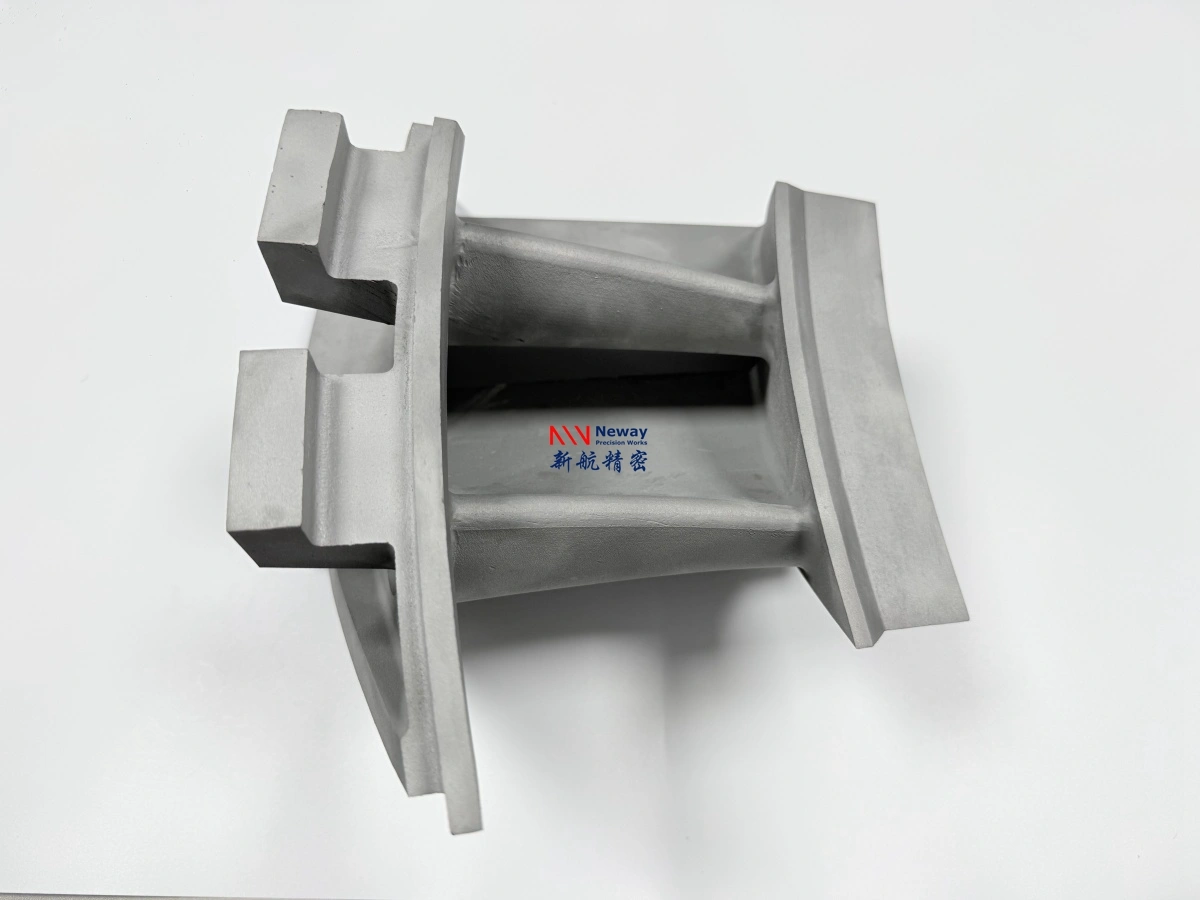
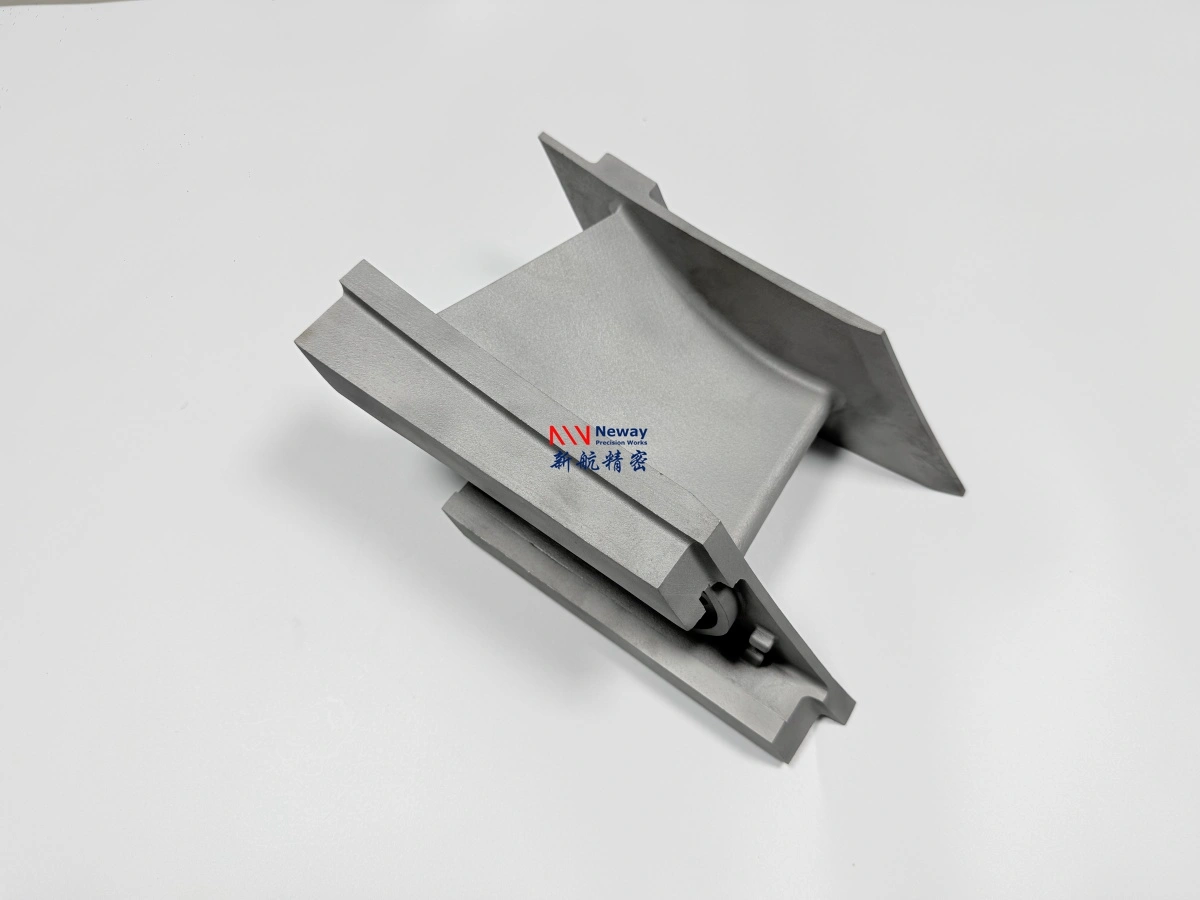
Turbine repair parts are manufactured using a combination of superalloy casting, forging, powder metallurgy, CNC machining, EDM, deep hole drilling, heat treatment, HIP, surface preparation, inspection, and documentation. The exact process route depends on the turbine part type, alloy grade, operating temperature, geometry, tolerance, coating requirement, and whether the component is a hot gas path part, combustion part, rotating part, sealing part, or reverse-engineered repair part.
NewayAeroTech supports power generation turbine parts manufacturing as an integrated process from high-temperature alloy blank production to precision finishing, inspection, and finished-part delivery. Instead of only supplying rough castings or machining blanks, NewayAeroTech can help customers develop finished gas turbine replacement parts ready for assembly review, maintenance approval, or further customer-side validation.
1. Direct Answer: What Processes Are Used for Turbine Repair Parts?
Common turbine repair parts manufacturing processes include vacuum investment casting, single crystal casting, directional casting, equiaxed casting, powder metallurgy, superalloy precision forging, CNC machining, EDM, deep hole drilling, heat treatment, HIP, coating preparation, dimensional inspection, NDT, material verification, and delivery documentation.
Process Category | Typical Processes | Typical Turbine Repair Part Applications |
|---|---|---|
Casting processes | Vacuum investment casting, single crystal casting, directional casting, and equiaxed crystal casting. | Turbine blades, vanes, nozzle guide vanes, nozzles, shrouds, heat shields, liners, and complex hot-section parts. |
Rotating part processes | Powder metallurgy turbine disc, superalloy precision forging, heat treatment, and CNC finishing. | Turbine discs, rotating rings, impellers, compressor components, and high-strength rotating hardware. |
Precision machining | CNC milling, turning, grinding, hole machining, groove machining, and datum finishing. | Roots, platforms, sealing faces, mounting surfaces, holes, grooves, flanges, and assembly interfaces. |
Special feature machining | EDM and deep hole drilling. | Cooling holes, narrow slots, complex grooves, thin-wall areas, internal passages, and hard-to-machine superalloy details. |
Post-processing | Heat treatment, HIP, coating preparation, cleaning, stress control, and surface finishing. | Hot-section parts, rotating parts, coated components, and high-reliability turbine replacement parts. |
Inspection and documentation | CMM, FPI, X-ray, CT, material verification, dimensional reports, heat treatment records, and COC. | Finished turbine repair parts requiring traceability, quality approval, and maintenance documentation. |
2. What Casting Processes Are Used for Turbine Repair Parts?
Casting is widely used for gas turbine repair parts because many hot-section components have complex airfoils, curved gas-path surfaces, thin walls, platforms, shrouds, cooling features, and near-net superalloy geometries. The casting route should be selected based on component function, operating temperature, alloy grade, grain structure requirement, and inspection standard.
vacuum investment casting is commonly used for complex superalloy turbine components because it can produce near-net shapes with controlled geometry. For high-performance turbine applications, single crystal casting, directional casting, and equiaxed crystal casting may be selected according to the design and service requirement.
Casting Process | Best-Fit Applications | Key Control Points |
|---|---|---|
Vacuum investment casting | Complex superalloy blades, vanes, nozzles, shrouds, heat shields, and combustion parts. | Wax pattern accuracy, ceramic shell quality, shrinkage, porosity, hot tears, and machining allowance. |
Single crystal casting | High-performance turbine blades and components requiring single-crystal structure. | Crystal orientation, grain defects, solidification control, and high-temperature performance. |
Directional casting | Turbine components requiring directional grain structure and improved creep performance. | Directional solidification, grain alignment, defect control, and thermal gradient management. |
Equiaxed crystal casting | Static hot-section components, nozzles, vanes, shrouds, heat shields, and repair parts. | Uniform casting quality, repeatability, dimensional stability, and cost-performance balance. |
3. What Processes Are Used for Rotating Turbine Parts?
Rotating turbine parts require additional attention because they are sensitive to material integrity, strength, concentricity, balance-related geometry, heat treatment, and fatigue resistance. Depending on the part type, NewayAeroTech can evaluate powder metallurgy, superalloy precision forging, CNC finishing, heat treatment, NDT, and dimensional inspection for rotating hardware.
powder metallurgy turbine disc manufacturing can support high-performance disc applications where material uniformity and high-temperature strength are important. superalloy precision forging can also be used for high-strength turbine parts requiring improved mechanical properties and controlled grain flow before final machining.
Rotating Part Process | Typical Components | Manufacturing Focus |
|---|---|---|
Powder metallurgy | Turbine discs and high-performance rotating components. | Material uniformity, density, heat treatment, strength, and traceability. |
Superalloy precision forging | Discs, rings, shafts, and high-strength rotating hardware. | Forging ratio, grain flow, dimensional allowance, heat treatment, and NDT. |
CNC finishing | Disc slots, ring surfaces, impeller features, compressor components, and mating faces. | Concentricity, roundness, datum control, surface finish, and tolerance accuracy. |
Inspection | Rotating parts requiring high reliability and traceability. | CMM, NDT, material reports, heat treatment records, and customer-specific documentation. |
4. How Is CNC Machining Used for Gas Turbine Repair Parts?
CNC machining is used to finish the critical functional areas of turbine repair parts after casting, forging, powder metallurgy, or rough stock preparation. It controls roots, platforms, sealing faces, mounting surfaces, holes, grooves, datums, flanges, mating faces, and final assembly interfaces.
superalloy CNC machining is especially important for nickel-based, cobalt-based, and other heat-resistant alloys because these materials are difficult to machine. Tool wear, cutting heat, burr formation, work hardening, surface integrity, and fixture stability must be controlled carefully to avoid dimensional drift or service-related defects.
CNC-Machined Feature | Typical Turbine Part | Why It Matters |
|---|---|---|
Blade roots | Turbine blades and replacement blade sets. | Controls fit, load transfer, and assembly safety. |
Platforms | Vanes, nozzle guide vanes, blades, and hot gas path parts. | Controls flow path, sealing, and adjacent part alignment. |
Sealing faces | Shrouds, seal rings, wear segments, and casing-related parts. | Reduces leakage and supports efficiency recovery. |
Mounting surfaces | Combustion parts, nozzles, heat shields, shrouds, and brackets. | Controls installation accuracy and repeatable assembly. |
Holes and grooves | Nozzles, liners, transition pieces, rings, and hot-section components. | Supports fastening, cooling, flow control, and functional interfaces. |
5. When Are EDM and Deep Hole Drilling Used?
EDM and deep hole drilling are used when turbine repair parts include narrow slots, small holes, deep passages, cooling holes, fuel passages, thin-wall regions, hard-to-reach features, or difficult-to-machine superalloy details. These processes are often used after casting or CNC machining to create special functional features.
superalloy deep hole drilling can support long holes, cooling passages, and flow-related features in high-temperature alloys. EDM is useful for complex slots, small holes, sharp internal details, and features where cutting force must be minimized. Both processes require inspection for hole position, depth, cleanliness, edge condition, and surface integrity.
Process | Typical Use | Quality Control Focus |
|---|---|---|
EDM | Narrow slots, small holes, grooves, sharp local features, and hard-to-access details. | Recast layer, microcracks, edge quality, feature accuracy, and cleaning. |
Deep hole drilling | Cooling holes, fuel passages, long internal holes, and flow paths. | Straightness, diameter, position, depth, breakthrough quality, and blockage inspection. |
Combined CNC + EDM | Cast vanes, nozzles, shrouds, heat shields, and combustion hardware. | Datum consistency between CNC-machined surfaces and EDM features. |
Combined CNC + deep hole drilling | Rings, fuel nozzles, combustion parts, and cooling-related components. | Hole path accuracy, surface finish, and final cleaning. |
6. What Post-Processing Is Used for Turbine Repair Parts?
Post-processing for turbine repair parts may include heat treatment, HIP, stress relief, coating preparation, surface cleaning, polishing, blasting, passivation where applicable, and final surface condition control. These steps help improve material stability, internal integrity, thermal performance, coating readiness, and service reliability.
superalloy post process planning is important because gas turbine components are often exposed to high temperature, oxidation, vibration, wear, and thermal cycling. Post-processing should be matched to the alloy, part function, coating system, inspection level, and customer acceptance criteria.
Post-Processing Step | Main Purpose | Typical Application |
|---|---|---|
Heat treatment | Stabilizes material structure, relieves stress, and supports high-temperature performance. | Superalloy castings, forged parts, turbine discs, vanes, nozzles, and hot gas path parts. |
HIP | Improves internal density and reduces some casting porosity risks. | Critical superalloy castings and high-reliability turbine components. |
Coating preparation | Prepares the surface for TBC, oxidation-resistant coating, or wear coating. | Heat shields, shrouds, nozzles, liners, vanes, and hot gas path parts. |
Surface cleaning | Removes machining residue, EDM debris, abrasive media, oil, and contamination. | Finished turbine repair parts before inspection, coating, or delivery. |
Stress control | Reduces distortion or cracking risk after casting, welding, machining, or EDM. | Thin-wall components, large castings, complex superalloy parts, and high-temperature assemblies. |
7. What Inspection Processes Are Used Before Delivery?
Inspection is used to confirm that finished turbine repair parts meet material, dimensional, defect, surface, and documentation requirements before delivery. Depending on the part and customer specification, inspection may include CMM, 3D scanning, FPI, X-ray, CT, material verification, hardness testing, heat treatment record review, dimensional reports, and COC.
Inspection Process | What It Checks | Typical Use |
|---|---|---|
CMM inspection | Datums, hole positions, mounting surfaces, sealing faces, platforms, and critical dimensions. | Drawing-controlled turbine repair parts and machined interfaces. |
3D scanning | Freeform surfaces, airfoil profile, CAD deviation, and reverse-engineered geometry. | Blades, vanes, nozzles, shrouds, liners, and complex repair parts. |
FPI | Surface-breaking cracks and surface discontinuities. | Superalloy castings, machined hot-section parts, and crack-sensitive features. |
X-ray / CT | Internal porosity, shrinkage, cracks, inclusions, and hidden defects. | High-reliability cast turbine components and critical repair parts. |
Material verification | Alloy chemistry, material traceability, microstructure, and heat treatment condition. | Superalloy and high-temperature alloy turbine parts. |
Documentation review | Heat treatment records, inspection reports, material reports, coating records, and COC. | Finished parts requiring traceability and customer quality approval. |
8. What Does Finished Delivery Mean for Turbine Repair Parts?
Finished delivery means that the turbine repair part is supplied as a completed, inspected, and traceable component instead of only a rough casting, forging blank, or semi-finished machined part. For power plant maintenance and overhaul projects, finished delivery can reduce customer-side processing time and help accelerate repair schedules.
A finished turbine repair part may include final machining, special feature machining, heat treatment, surface cleaning, coating preparation, dimensional inspection, material verification, NDT, and documentation. The final scope should be agreed during RFQ review so that both the supplier and customer understand whether the shipment is a rough blank, semi-finished part, or finished gas turbine replacement part.
Delivery Level | What Is Included | Best Use Case |
|---|---|---|
Rough blank | Casting, forging, or rough material form only. | Customers with their own machining and inspection capability. |
Semi-finished part | Blank plus partial machining or selected post-processing. | Projects requiring customer-side final machining or fitting. |
Finished turbine repair part | Complete casting or forming, machining, special processes, inspection, and documentation. | Power plant repair, overhaul, replacement, and urgent maintenance projects. |
9. What Should Buyers Provide for a Process Route Review?
For a turbine repair parts manufacturing process review, buyers should provide the turbine model, part name, part number, drawings, 3D files, material standard, coating requirement, quantity, tolerance requirements, service condition, inspection standard, and required delivery level. If the part is reverse engineered, old samples, 3D scan data, CMM data, and photos should also be provided.
Buyer Input | Recommended Details | Why It Matters |
|---|---|---|
Part type | Blade, vane, nozzle, liner, transition piece, shroud, seal, disc, ring, or custom repair part. | Determines whether casting, forging, powder metallurgy, CNC, EDM, or deep hole drilling is required. |
Material standard | Inconel, Rene, CMSX, Hastelloy, Stellite, Nimonic, titanium alloy, or customer specification. | Defines process route, heat treatment, machining difficulty, and inspection needs. |
Geometry data | 2D drawing, STEP, X_T, 3D scan, CMM report, or old sample. | Supports manufacturability review, tooling design, machining planning, and inspection strategy. |
Post-processing requirement | Heat treatment, HIP, coating preparation, surface cleaning, or special finishing. | Defines the full manufacturing chain from blank to finished part. |
Inspection and documents | CMM, 3D scanning, FPI, X-ray, CT, material report, heat treatment record, coating record, FAI, or COC. | Controls acceptance criteria, lead time, cost, and traceability. |
Delivery requirement | Rough casting, semi-finished component, or finished turbine replacement part. | Prevents misunderstanding about the final scope of supply. |
10. Summary
Turbine repair parts are manufactured using different process routes depending on part function, material, geometry, and service conditions. Common processes include vacuum investment casting, single crystal casting, directional casting, equiaxed casting, powder metallurgy, superalloy precision forging, CNC machining, EDM, deep hole drilling, heat treatment, HIP, coating preparation, inspection, and documentation.
NewayAeroTech supports finished gas turbine parts supply by integrating superalloy blank manufacturing, precision machining, special feature processing, post-processing, quality inspection, and traceable delivery. Buyers should provide drawings, CAD files, material standards, turbine model information, post-processing requirements, inspection requirements, quantity, and required delivery level so the correct turbine repair parts manufacturing process can be defined.
