
Can Gas Turbine Repair Parts Be Manufactured from Worn Samples or 3D Scan Data?
Can Gas Turbine Repair Parts Be Manufactured from Worn Samples or 3D Scan Data?
Yes. Gas turbine repair parts can be manufactured from worn samples, old components, 3D scan data, CMM reports, photos, material requirements, and turbine model information. NewayAeroTech can support reverse engineering, material verification, CAD reconstruction, prototype manufacturing, first article inspection, and batch production for custom gas turbine repair parts when complete OEM drawings are not available.
This workflow is useful for obsolete gas turbine spare parts, urgent power plant overhaul projects, discontinued turbine models, damaged components, and replacement parts with incomplete documentation. For custom gas turbine repair parts from samples, the key challenge is not only copying the worn part, but also identifying the original design intent, functional surfaces, material grade, and acceptable manufacturing route.
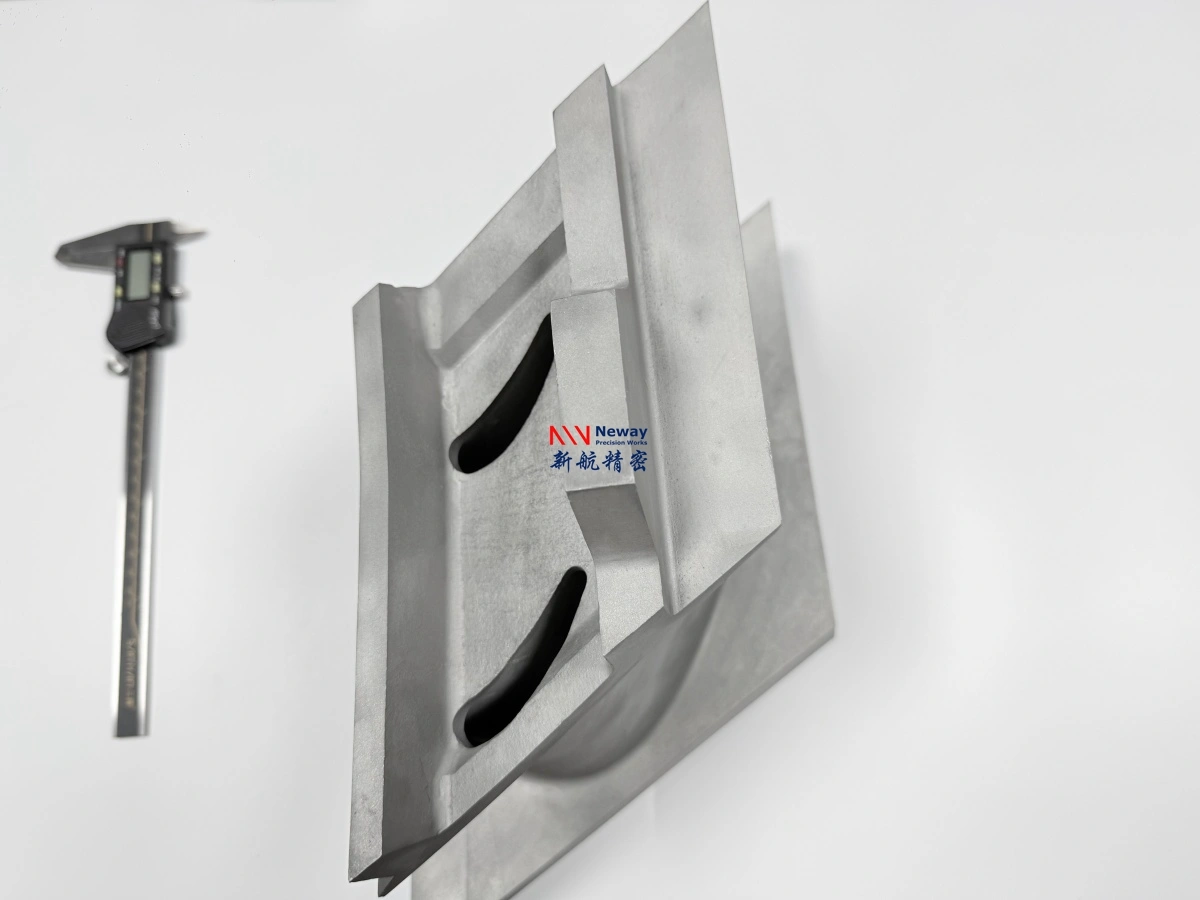
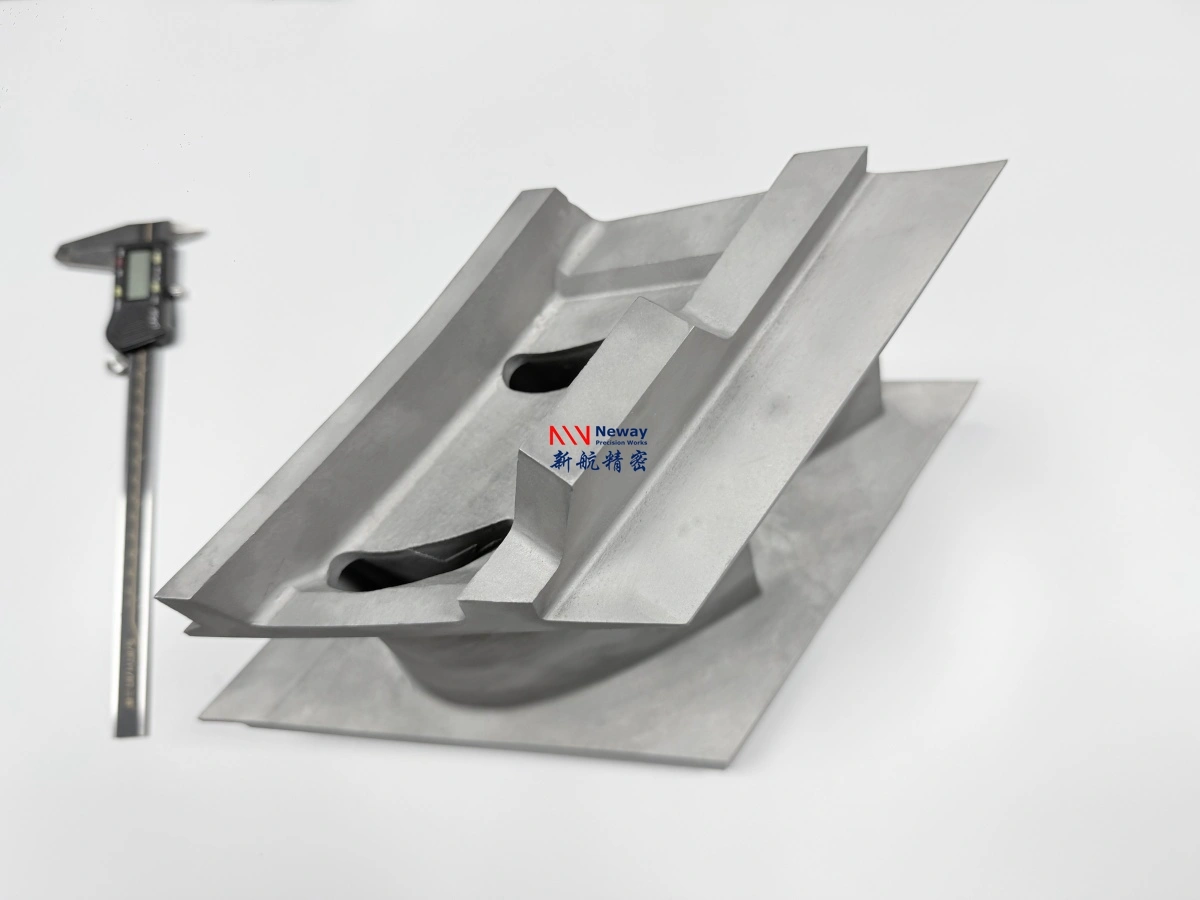
1. Direct Answer: Can Repair Parts Be Made from Worn Samples or 3D Scan Data?
Yes. NewayAeroTech can develop gas turbine replacement parts from worn samples, damaged parts, 3D scan data, CMM measurement data, old drawings, photos, and material specifications. The process usually includes sample review, scanning or CMM measurement, material verification, CAD reconstruction, manufacturability review, prototype production, inspection, customer approval, and batch manufacturing.
Input Source | How It Supports Reverse Engineering | Key Engineering Concern |
|---|---|---|
Old sample | Provides real geometry, assembly surfaces, wear pattern, coating condition, and functional interfaces. | Must separate original design geometry from wear, cracks, oxidation, and deformation. |
Worn sample | Helps identify replacement demand and failure condition. | Worn areas cannot be copied directly without engineering compensation. |
3D scan data | Captures complex freeform surfaces, airfoils, shrouds, liners, ducts, and curved profiles. | Scan data must be cleaned and rebuilt into manufacturable CAD geometry. |
CMM report | Provides accurate reference dimensions, datums, holes, sealing faces, and critical features. | Measurement datums should match assembly and inspection requirements. |
Material grade | Defines alloy selection, heat treatment, coating, and testing requirements. | Material substitution requires application review and customer approval. |
Turbine model and part location | Clarifies operating temperature, function, load, and service environment. | Manufacturing route should match part function, not only part shape. |
2. What Input Data Is Needed for Reverse Engineered Turbine Parts?
For reverse engineered turbine parts, buyers should provide the old sample, worn sample, photos, turbine model, part number if available, installation location, 3D scan data, CMM report, material grade, coating requirement, quantity, and inspection requirement. If the original drawing is missing, a combination of sample measurement and functional review can help rebuild the replacement part design.
For power generation turbine replacement parts, additional information such as outage schedule, service temperature, failure mode, target life, and required documentation can help define whether the part should be produced by casting, CNC machining, EDM, deep hole drilling, heat treatment, coating preparation, or a hybrid route.
Buyer Input | Recommended Details | Why It Matters |
|---|---|---|
Sample condition | New old stock, used part, worn part, cracked part, oxidized part, or coated part. | Helps evaluate whether geometry can be copied directly or needs correction. |
Photos | Front, back, side, damaged zones, mounting areas, coating, holes, and sealing faces. | Supports fast feasibility review before physical sample shipment. |
3D scan | STL, point cloud, or scan report from blue-light or laser scanning. | Captures freeform surfaces and worn geometry for CAD reconstruction. |
CMM data | Critical dimensions, datums, hole positions, sealing faces, and platform features. | Supports accurate manufacturing and inspection baseline. |
Material requirement | Original alloy, equivalent alloy, heat treatment condition, coating, or customer standard. | Defines process route, cost, testing, and documentation needs. |
Quantity and schedule | Prototype, first article, overhaul batch, urgent outage, or repeat demand. | Affects tooling strategy, lead time, unit cost, and validation depth. |
3. What Is the Reverse Engineering Workflow?
The reverse engineering workflow usually starts with sample review and technical clarification, followed by 3D scanning, CMM measurement, material verification, CAD reconstruction, DFM review, prototype manufacturing, first article inspection, customer confirmation, and batch production. Each step helps reduce the risk of manufacturing a part that matches the worn sample but not the original functional design.
Workflow Step | Main Purpose | Key Output |
|---|---|---|
Sample review | Evaluate wear, cracks, deformation, coating loss, and functional areas. | Initial feasibility and measurement plan. |
3D scan / CMM measurement | Capture freeform geometry and critical dimensions. | Scan model, CMM data, and datum references. |
Material verification | Identify alloy grade, heat treatment condition, coating, and service degradation. | Material analysis report or material recommendation. |
CAD reconstruction | Rebuild manufacturable geometry from sample and measurement data. | STEP or X_T CAD model for review and manufacturing. |
DFM review | Define casting, CNC, EDM, deep hole drilling, heat treatment, and inspection route. | Manufacturing plan and quotation basis. |
Prototype / first article | Validate geometry, fit, and process feasibility before batch production. | FAI report, dimensional report, and customer approval sample. |
Batch manufacturing | Produce approved replacement parts with controlled process repeatability. | Finished parts, inspection reports, and delivery documentation. |
4. How Is Wear Compensation Handled?
Wear compensation is one of the most important steps when manufacturing gas turbine repair parts from worn samples. A used turbine part may have oxidation, erosion, coating loss, rubbing marks, crack damage, thermal distortion, missing edges, or enlarged sealing gaps. These damaged areas should not be copied blindly.
Instead, the engineering team should identify original design surfaces, assembly datums, sealing faces, mounting features, airfoil or flow-path profiles, and functional clearances. The replacement part should be reconstructed to match the intended function, not simply the damaged condition of the old sample.
Worn Area | Risk If Copied Directly | Recommended Compensation Method |
|---|---|---|
Sealing face | May reproduce excessive leakage gap or damaged contact area. | Rebuild based on mating part, CMM data, drawing notes, or functional fit requirement. |
Airfoil surface | May copy erosion, oxidation, or distorted gas-path geometry. | Use scan comparison, symmetry, remaining reference surfaces, and aerodynamic review. |
Mounting hole | May reproduce enlarged, oval, cracked, or worn hole geometry. | Confirm original hole size and position from CMM, mating hardware, or customer data. |
Edge profile | May copy chipped, missing, or overheated edges. | Reconstruct edge geometry from unworn sections, paired parts, or design logic. |
Coated surface | May confuse coating thickness loss with base metal geometry. | Separate coating layer, substrate geometry, and final coated dimension requirement. |
5. Can 3D Scan Data Be Used for Quotation and Manufacturing?
Yes. 3D scan data can be used for preliminary quotation, reverse engineering, CAD reconstruction, comparison, and manufacturing planning. However, scan data alone is usually not enough for final production unless it is supported by material information, functional dimensions, tolerance requirements, and inspection criteria.
For turbine parts with complex curved surfaces, such as blades, vanes, nozzles, shrouds, liners, and transition ducts, 3D scanning is useful for capturing shape. For precision features such as holes, sealing faces, datums, and assembly surfaces, CMM data or drawing-based inspection is often needed to define final manufacturing tolerances.
Use of 3D Scan Data | Useful For | Limitation |
|---|---|---|
Preliminary quotation | Understanding size, complexity, surface shape, and process route. | May not define tolerances, material, coating, or critical features. |
CAD reconstruction | Rebuilding complex surfaces and reverse-engineered part geometry. | Requires engineering interpretation of wear and deformation. |
Surface comparison | Comparing old sample, reconstructed CAD, and manufactured part. | Acceptance criteria must be agreed before production. |
Inspection support | Checking freeform surfaces, profile deviation, and geometry consistency. | May need CMM for datum-based precision dimensions. |
6. What Manufacturing Routes Can Be Used for Reverse Engineered Turbine Parts?
The manufacturing route depends on part type, material, geometry, service temperature, tolerance, coating, and quantity. NewayAeroTech can evaluate vacuum investment casting, CNC machining, EDM, deep hole drilling, heat treatment, coating preparation, and inspection for different gas turbine repair parts.
For complex superalloy cast parts, vacuum investment casting may be used to form near-net geometry. For precision interfaces, sealing faces, holes, and datums, superalloy CNC machining is used to control final fit. EDM and deep hole drilling can support narrow slots, small holes, cooling passages, and difficult-to-machine superalloy features.
Manufacturing Route | Best Fit Part Types | Key Control Point |
|---|---|---|
Vacuum investment casting | Blades, vanes, nozzles, shrouds, heat shields, liners, and complex hot-section parts. | Material selection, tooling, shrinkage, casting defects, and near-net geometry. |
CNC machining | Sealing faces, mounting surfaces, holes, flanges, datums, and precision interfaces. | Tolerance, surface finish, fixture strategy, and datum control. |
EDM | Narrow slots, small holes, sharp internal features, and hard-to-access zones. | Recast layer, microcrack risk, edge quality, and feature accuracy. |
Deep hole drilling | Cooling holes, fuel passages, long internal holes, and flow features. | Straightness, diameter control, breakthrough quality, and cleanliness. |
Heat treatment | Superalloy and high-temperature alloy turbine parts. | Microstructure stability, stress relief, high-temperature performance, and records. |
Coating preparation | Hot gas path parts, combustion parts, shrouds, and wear surfaces. | Surface roughness, masking, coating allowance, and final dimensions. |
7. How Is Risk Controlled Before Batch Production?
Risk is controlled through material verification, manufacturability review, first article inspection, dimensional reporting, NDT, customer sample approval, and controlled batch manufacturing. For reverse engineered gas turbine replacement parts, first article validation is especially important because there may be no complete OEM drawing to use as the only acceptance standard.
Risk Control Step | What It Verifies | Why It Matters |
|---|---|---|
Material verification | Alloy chemistry, heat treatment condition, coating, and service degradation. | Prevents wrong material selection for hot-section turbine service. |
DFM review | Casting feasibility, machining allowance, EDM access, drilling feasibility, and inspection route. | Reduces manufacturing failure before tooling or batch production. |
Prototype production | Confirms manufacturability and geometry reconstruction. | Allows adjustment before large quantity production. |
First article inspection | Checks dimensions, material, features, and quality records against approved requirements. | Provides approval basis for batch manufacturing. |
NDT | Checks surface cracks and internal casting defects. | Important for high-temperature turbine components. |
Customer confirmation | Confirms fit, functional surfaces, and approval of reconstructed geometry. | Prevents batch production based on unapproved assumptions. |
8. Which Turbine Parts Are Best Suited for Reverse Engineered Manufacturing?
Many gas turbine repair parts can be reverse engineered if the sample condition, material information, and functional requirements are clear. Common candidates include turbine blades, turbine vanes, gas turbine nozzles, combustion liners, transition pieces, shrouds, seal rings, impellers, brackets, covers, and custom hot-section hardware.
Part Type | Why Reverse Engineering Is Useful | Related Manufacturing Focus |
|---|---|---|
Useful when original blades are obsolete, damaged, or difficult to source. | Airfoil profile, root geometry, alloy integrity, heat treatment, and inspection. | |
Useful for hot-section replacement and flow-path restoration. | Flow geometry, throat area, superalloy casting, machining, and defect inspection. | |
Vanes and nozzle guide vanes | Useful for restoring turbine stage flow direction and performance. | Vane angle, platform fit, airfoil inspection, and material validation. |
Combustion liners and transition pieces | Useful when old combustion hardware is worn, cracked, or no longer available. | Thin-wall geometry, hole patterns, thermal fatigue, coating, and fit. |
Useful for restoring sealing, clearance control, and efficiency recovery. | Sealing surface, wear resistance, coating allowance, and assembly gap control. | |
Impellers and rotating components | Useful for repair or replacement when geometry is complex and sourcing is difficult. | Material integrity, concentricity, profile control, and balance-related requirements. |
9. What Should Buyers Provide for a Sample or 3D Scan-Based RFQ?
For a gas turbine repair parts RFQ based on samples or 3D scan data, buyers should provide old part photos, sample condition, turbine model, part number if available, 3D scan files, CMM data, material requirements, coating requirements, quantity, operating conditions, inspection standards, and target delivery date.
RFQ Item | Recommended Input | Purpose |
|---|---|---|
Old sample photos | All sides, worn zones, cracks, coating, holes, sealing faces, and mounting areas. | Supports initial technical evaluation. |
Physical sample | Used or unused part if available. | Supports direct measurement, material verification, and functional review. |
3D scan data | STL, point cloud, scan report, or CAD comparison file. | Supports reverse engineering and freeform geometry reconstruction. |
CMM data | Datums, holes, sealing surfaces, reference dimensions, and critical features. | Defines precision features and inspection baseline. |
Material and coating | Original alloy, equivalent alloy, heat treatment, TBC, wear coating, or coating-free requirement. | Defines manufacturing and quality-control route. |
Quantity and schedule | Prototype, first article, maintenance batch, urgent outage, or repeat order. | Supports quotation, tooling strategy, and lead time planning. |
10. Summary
Gas turbine repair parts can be manufactured from worn samples, old components, 3D scan data, CMM reports, photos, and material requirements. NewayAeroTech can support reverse engineering, material verification, CAD reconstruction, DFM review, prototype manufacturing, inspection, and batch production for custom gas turbine replacement parts when complete OEM drawings are unavailable.
For reverse engineered turbine parts, the most important step is to distinguish wear and service damage from the original design geometry. Buyers should provide old samples, photos, 3D scans, CMM data, turbine model information, material requirements, coating requirements, inspection standards, and quantity so NewayAeroTech can define a reliable manufacturing route for obsolete gas turbine spare parts and custom turbine repair parts.
