Custom Replacement Turbine Blades for Power Generation Gas Turbine Repair Projects
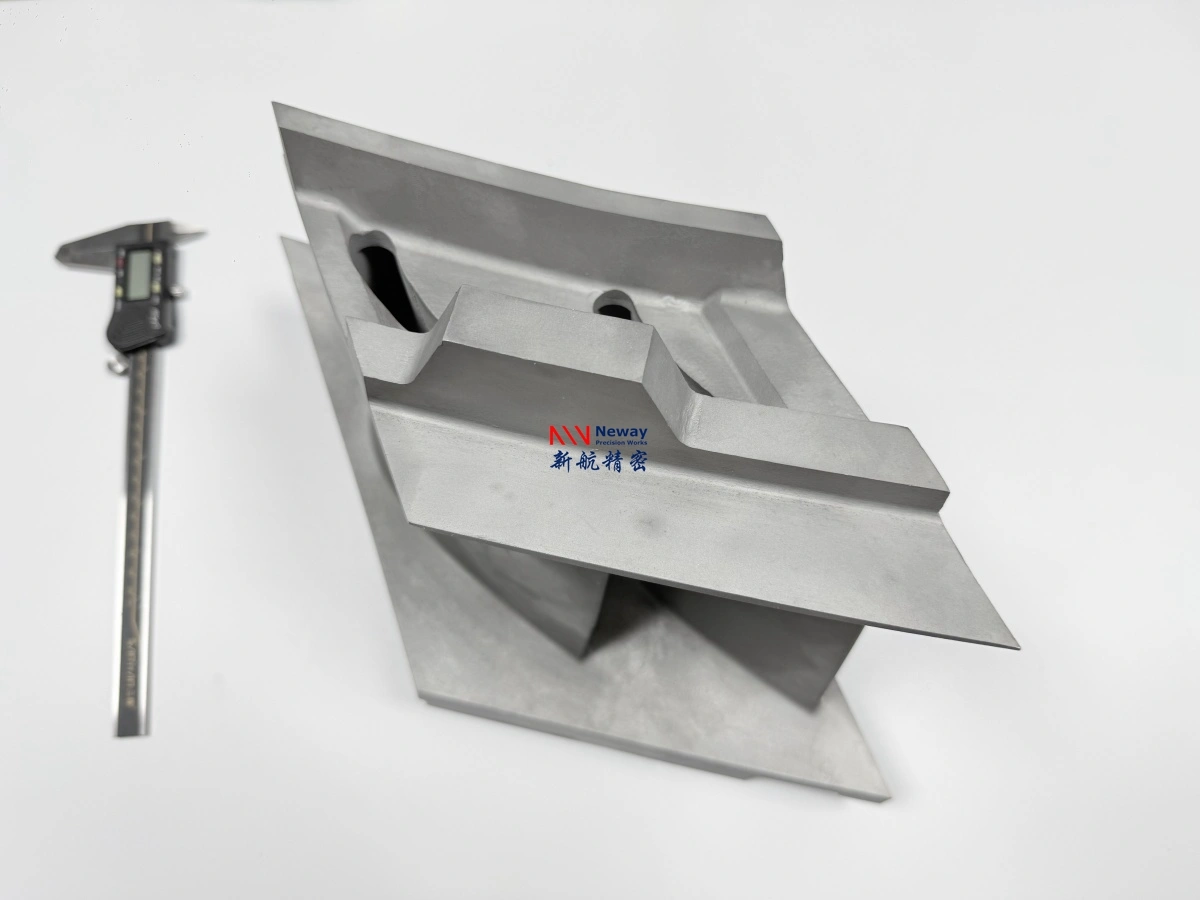
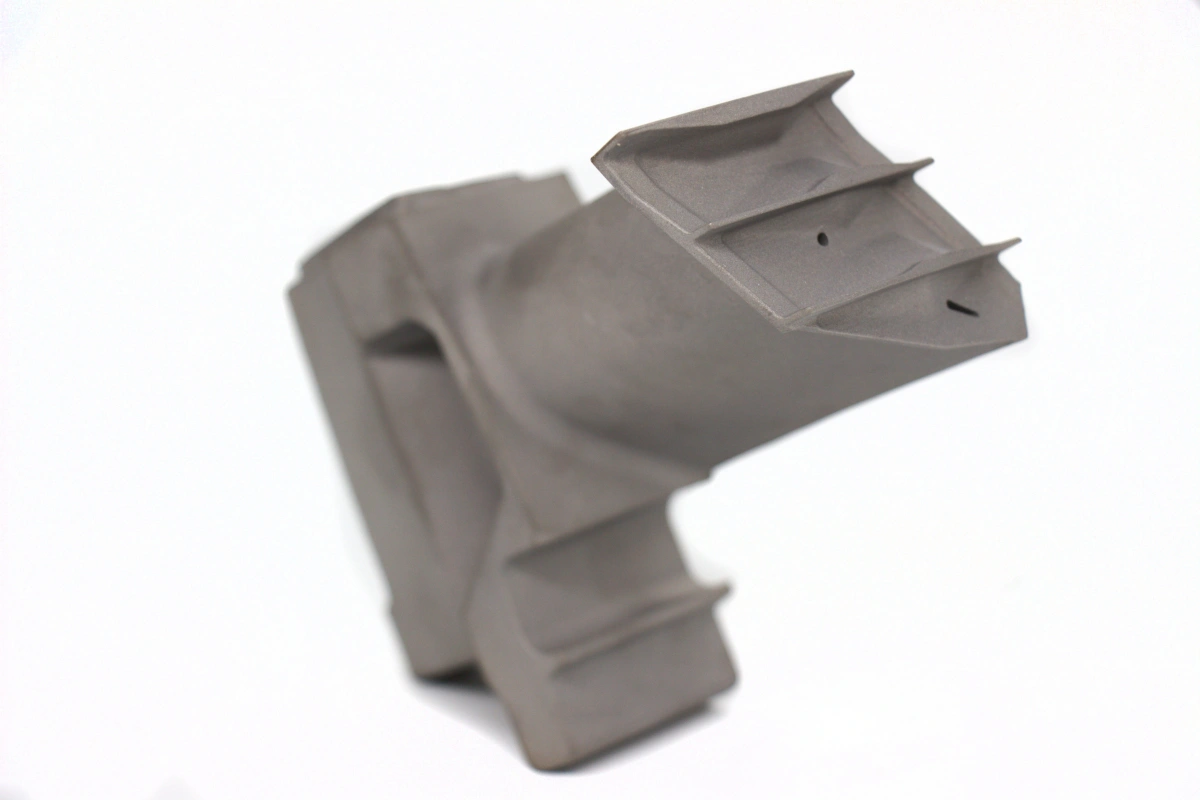
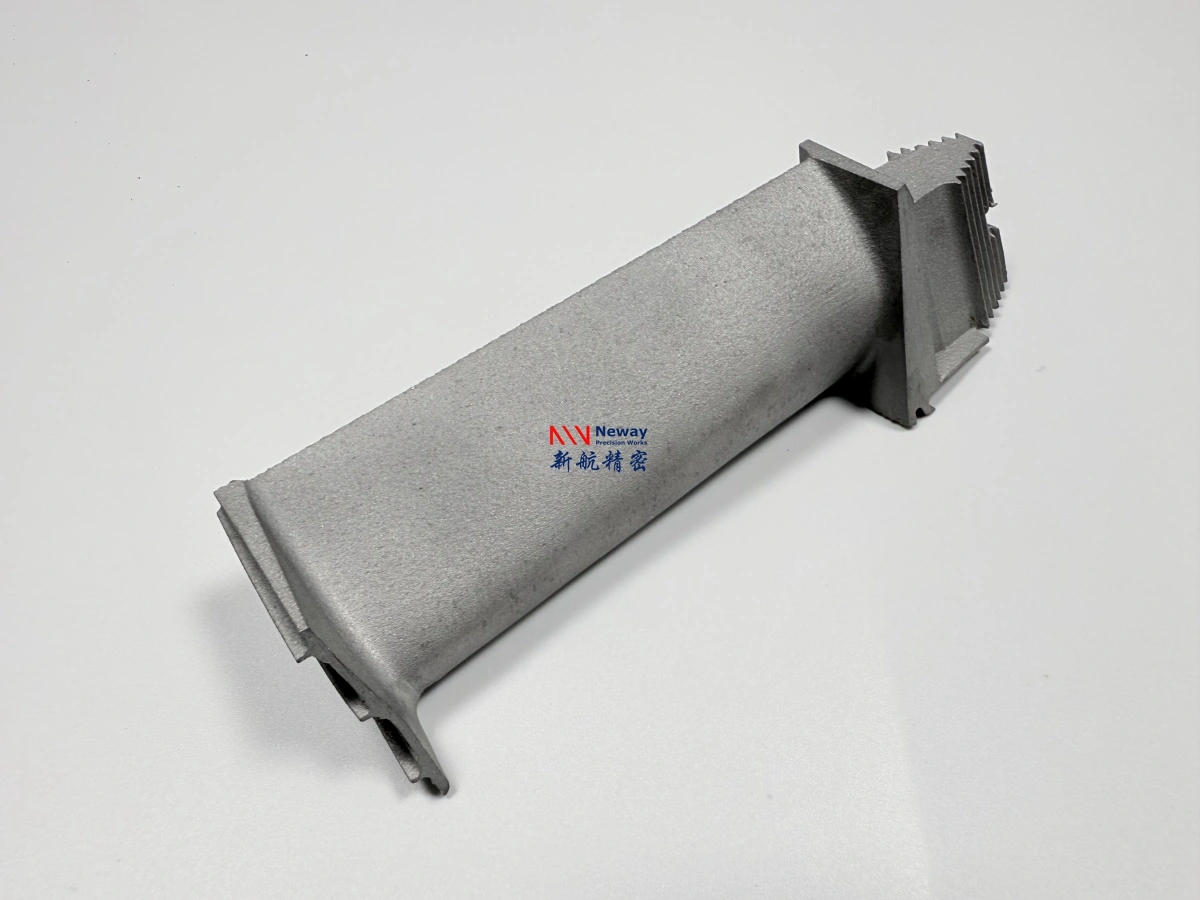
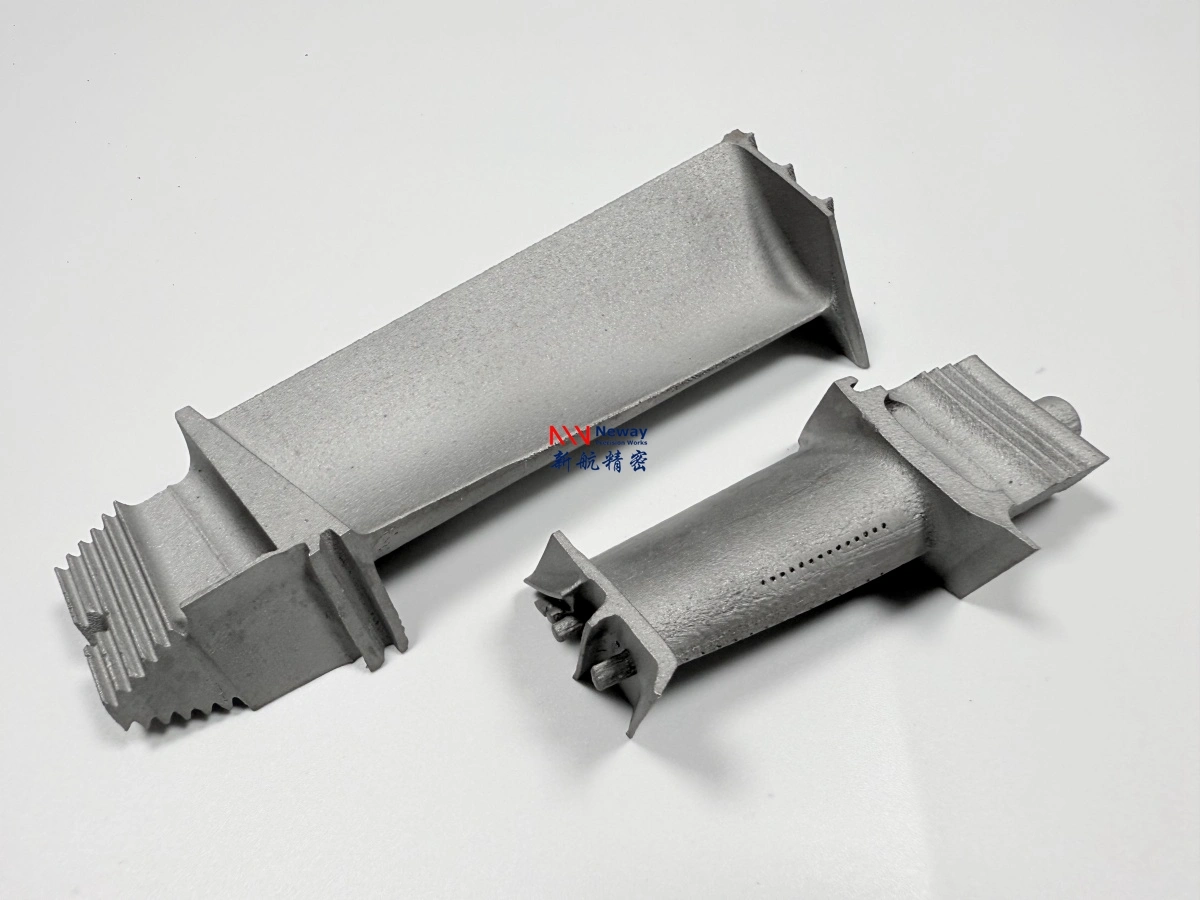
NewayAeroTech manufactures replacement turbine blades for power generation gas turbine repair projects, including cast superalloy blade blanks, CNC-finished blade roots and platforms, EDM-processed cooling features, heat treatment, coating preparation, dimensional inspection, and non-destructive testing.
For power plant maintenance teams, turbine repair companies, and spare parts procurement engineers, replacement turbine blades are not simple metal components. They are high-temperature rotating parts that must withstand hot gas exposure, centrifugal stress, thermal fatigue, oxidation, vibration, and strict assembly requirements inside the turbine section.
NewayAeroTech supports power generation turbine parts manufacturing for repair, replacement, and spare parts programs where customers need finished turbine blades made from drawings, samples, 3D scan data, or turbine model information.
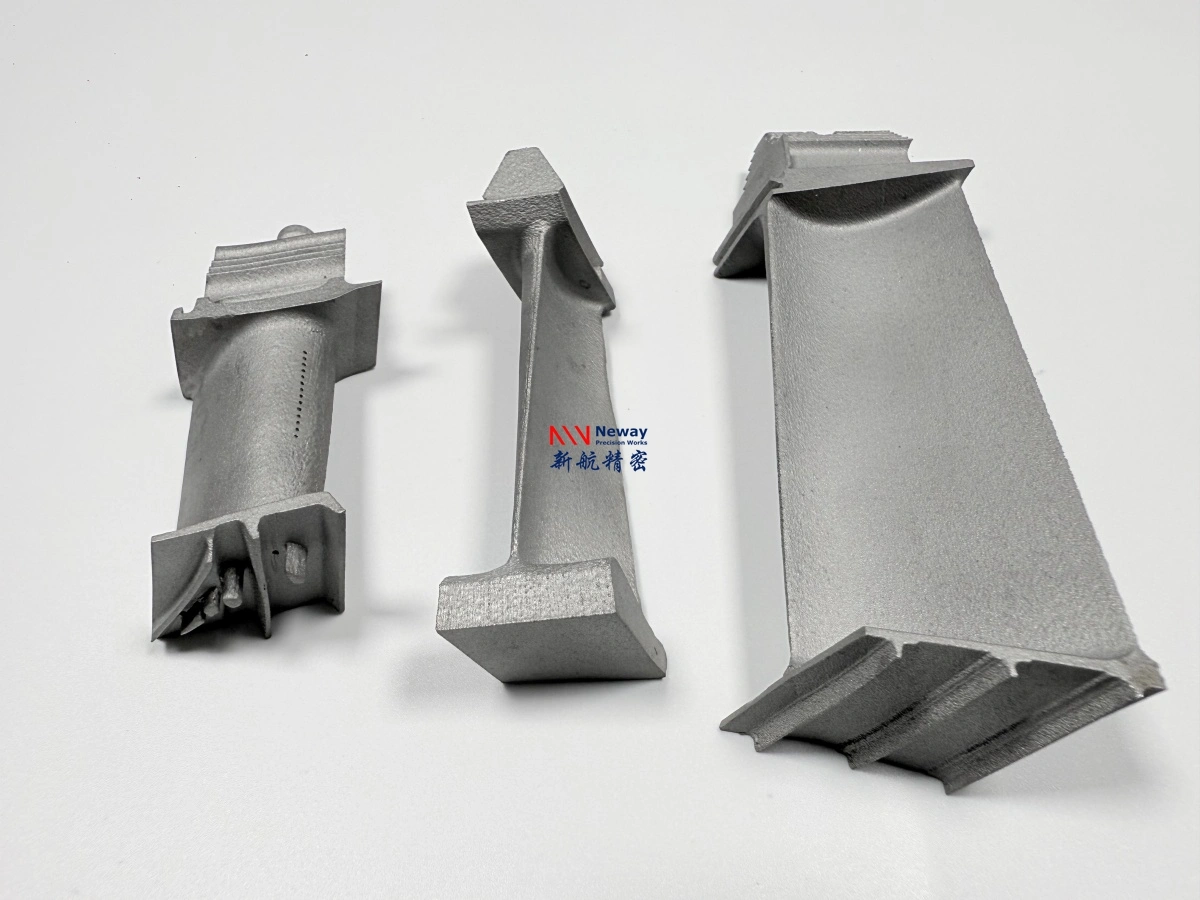
Direct Answer: Replacement Turbine Blades for Gas Turbine Repair
NewayAeroTech can manufacture replacement turbine blades for power generation gas turbine repair projects through an integrated route that includes superalloy casting, CNC machining, EDM, heat treatment, post-processing, and inspection.
Depending on the turbine model, blade stage, material requirement, and service condition, the manufacturing route may include:
Vacuum investment casting for superalloy blade blanks
Directional solidification or single crystal casting for advanced blade requirements
CNC machining of blade roots, platforms, datum faces, and assembly interfaces
EDM for cooling holes, slots, and difficult local features
Heat treatment for microstructure and performance control
Coating preparation before thermal barrier or oxidation-resistant coatings
X-ray, FPI, CMM, material verification, and final inspection reporting
The goal is to deliver finished turbine blade repair parts that are ready for customer inspection, assembly review, or further coating according to the project requirement.
Why Gas Turbine Blades Need Replacement
Gas turbine blades operate in one of the most severe zones of a power generation turbine. They are exposed to high-temperature gas flow, rotation, vibration, oxidation, thermal cycling, and mechanical stress. Over long service periods, these conditions can gradually reduce blade reliability.
Replacement turbine blades may be required because of:
Thermal fatigue cracks caused by repeated start-stop cycles
Creep deformation under high temperature and centrifugal loading
Oxidation or hot corrosion on gas-path surfaces
Coating spalling, peeling, or local coating degradation
Tip wear, rubbing damage, or clearance-related loss
Foreign object damage or erosion on leading and trailing edges
Root, platform, or cooling feature damage found during outage inspection
When turbine blades reach the repair limit or cannot be restored safely, replacement blades are needed to support turbine overhaul, maintenance planning, and long-term power plant reliability.
Manufacturing Route for Replacement Turbine Blades
Replacement turbine blade manufacturing usually requires a multi-step process. The correct route depends on the blade stage, alloy grade, crystal structure requirement, cooling design, coating requirement, and inspection standard.
A practical manufacturing route may include:
Review turbine model, blade stage, drawings, samples, or 3D scan data
Confirm alloy grade, crystal structure, heat treatment, and coating requirements
Design casting tooling, wax pattern, ceramic shell, and casting process
Produce the superalloy blade blank by vacuum casting, directional casting, or single crystal casting
Apply heat treatment according to the required material condition
Machine blade root, platform, mounting interfaces, datum surfaces, and critical dimensions
Use EDM for cooling holes, slots, and tool-access-limited features if required
Prepare surfaces for coating, polishing, or customer-specified post-processing
Inspect casting soundness, dimensions, material chemistry, surface defects, and final geometry
Prepare final reports and delivery documentation
NewayAeroTech provides vacuum investment casting for turbine blades where near-net-shape superalloy blanks are required before precision machining and inspection.
Casting Options for Power Generation Turbine Blades
Turbine blade casting is not a single process. Different blade designs may require different casting routes depending on service temperature, stress level, blade stage, and customer specification.
For some replacement blades, conventional vacuum investment casting may be suitable. For more demanding high-temperature blades, directional casting for turbine blades may be required to improve high-temperature creep resistance along the blade loading direction. For advanced hot-section blade applications, single crystal casting for turbine blades may be required when grain boundary elimination and crystal orientation control are critical.
Casting Route | Typical Use | Key Benefit |
|---|---|---|
Vacuum investment casting | Complex superalloy blade blanks and repair spare parts | Near-net-shape geometry with reduced machining waste |
Directional casting | High-temperature blades requiring improved directional creep resistance | Controlled grain growth along the main stress direction |
Single crystal casting | Advanced hot-section turbine blades | Eliminates grain boundaries and supports severe high-temperature service |
The casting route should be confirmed according to the original blade design and customer requirement. Using the wrong casting route may affect service life, dimensional stability, and repair project approval.
Material Options for Replacement Turbine Blades
Replacement turbine blades are commonly made from nickel-based superalloys or advanced single crystal materials. Material choice depends on turbine model, blade stage, operating temperature, mechanical load, coating system, and original specification.
NewayAeroTech supports several turbine blade material families, including Inconel alloy vacuum investment casting, Rene Alloys vacuum investment casting, and CMSX Series vacuum investment casting.
Typical material considerations include:
Inconel alloys for nickel-based high-temperature blade and vane applications
Rene alloys for advanced aerospace and turbine hot-section components
CMSX series alloys for single crystal turbine blade applications
Customer-specified equivalent alloys when original material data is available
Material verification by chemical composition testing and traceability records
For replacement parts, the material should not be selected only by similar appearance or approximate temperature rating. The original drawing, alloy standard, heat treatment condition, and coating system should be reviewed before production.
CNC Machining for Blade Roots, Platforms, and Interfaces
After casting, CNC machining is required to finish the functional features of the turbine blade. The cast blank provides the blade airfoil and near-net geometry, but the blade root, platform, datum faces, and assembly features require precise machining.
NewayAeroTech provides superalloy CNC machining for blade roots and platforms, including difficult-to-machine nickel-based and single crystal alloy components.
Typical CNC-machined turbine blade features include:
Fir tree roots, dovetail roots, or other root attachment features
Blade platforms and sealing contact surfaces
Datum surfaces for inspection and assembly alignment
Tip-related features and local clearance control areas
Mounting interfaces and customer-specified functional dimensions
Surfaces requiring controlled flatness, parallelism, or profile tolerance
Blade root machining is especially important because root geometry transfers centrifugal load into the turbine disk. Any dimensional deviation, surface defect, or stress concentration can affect assembly fit and service reliability.
EDM for Cooling Holes, Slots, and Difficult Features
Many power generation turbine blades include local features that are difficult to machine by conventional cutting tools. These may include cooling holes, slots, seal features, sharp local boundaries, and tool-access-limited areas near airfoil or platform geometry.
EDM is often used because superalloys are hard, heat resistant, and difficult to cut mechanically in small or complex features. EDM can process local features with reduced mechanical cutting force, which is useful for delicate blade geometry.
For replacement turbine blades, EDM control should focus on:
Cooling hole location and diameter
Slot width and boundary accuracy
Recast layer and heat-affected surface condition
Edge quality around holes, slots, and airfoil features
Post-EDM cleaning and inspection
Compatibility with coating preparation and final service requirements
EDM should be planned together with casting, machining, and coating preparation because local features may affect airflow, cooling efficiency, stress concentration, and coating behavior.
Heat Treatment and Post-Processing for Turbine Blades
Heat treatment is critical for replacement turbine blades because it controls the alloy microstructure, mechanical performance, and high-temperature stability. The heat treatment process must match the alloy grade, casting route, and customer specification.
NewayAeroTech supports superalloy post-processing for turbine blades, including heat treatment coordination, surface preparation, finishing, and inspection support according to the project requirement.
Post-processing may include:
Solution and aging heat treatment according to alloy requirements
Stress relief after machining or EDM where required
Surface preparation before coating
Deburring, polishing, or blending of selected surfaces
Cleaning of cooling holes and local features
Final dimensional and surface inspection before delivery
If the blade requires thermal barrier coating, oxidation-resistant coating, or other customer-specified coating, coating allowance and surface condition should be considered before final machining dimensions are locked.
Critical Features of Replacement Turbine Blades
Replacement turbine blades must match the functional requirements of the original turbine assembly. The most important features are not only visible blade shape, but also geometry that affects load transfer, gas flow, cooling, sealing, and tip clearance.
Critical features include:
Airfoil profile, including pressure side, suction side, leading edge, and trailing edge
Blade root geometry for disk attachment and load transfer
Platform surfaces and sealing interfaces
Cooling holes, internal cooling passages, and airflow features
Blade tip geometry and clearance-related surfaces
Datum references used for inspection and assembly
Surface condition in high-stress and high-temperature regions
For reverse-engineered blades, these features must be defined carefully from samples, scan data, service condition, and turbine assembly requirements. Copying external geometry alone is not enough for a reliable replacement blade.
Inspection Requirements for Finished Turbine Blades
Inspection is essential for finished turbine blades because they operate under high temperature, high stress, and rotational loading. A complete inspection plan should verify material, casting integrity, crystal structure, machining accuracy, surface quality, heat treatment condition, and final documentation.
Inspection Item | What to Check | Why It Matters |
|---|---|---|
Material verification | Alloy grade, chemical composition, heat number, material records | Confirms the blade uses the specified superalloy |
X-ray or CT | Internal porosity, shrinkage, inclusions, cooling feature integrity | Verifies casting soundness before acceptance |
FPI | Surface cracks and open defects | Detects surface-breaking defects that may become service cracks |
CMM inspection | Root, platform, datum surfaces, airfoil, tip, and critical dimensions | Confirms assembly fit and aerodynamic geometry |
Crystal structure review | Equiaxed, directional, or single crystal condition according to specification | Ensures the casting route matches the blade design |
Heat treatment status | Heat treatment record, hardness, microstructure if required | Supports material performance and process traceability |
Inspection requirements should be confirmed before quotation because X-ray, CT, FPI, CMM, crystal structure inspection, and material testing can significantly affect cost and lead time.
Support for Reverse Engineering and Small-Batch Repair Parts
Many gas turbine repair projects begin with old blades, worn samples, incomplete drawings, or 3D scan data. In these cases, the supplier must support both manufacturing and engineering review.
NewayAeroTech can evaluate replacement turbine blade projects based on:
Original 2D drawings and 3D CAD models
Used blade samples for reverse engineering
3D scan data and dimensional reconstruction
Material analysis from sample parts
Small-batch repair requirements for outage maintenance
Batch spare blade manufacturing for long-term inventory planning
When reverse engineering is involved, the worn areas should be separated from original functional geometry. Blade root, platform, airfoil, cooling holes, and tip clearance surfaces must be reconstructed according to function rather than copied blindly from a used part.
Supplier Value for Power Generation Turbine Repair Projects
A qualified replacement turbine blade supplier should not only deliver a casting. The supplier should understand the full manufacturing route from alloy selection to final inspection.
NewayAeroTech supports turbine repair parts manufacturers, power plant maintenance teams, and gas turbine spare blade buyers by providing:
Superalloy casting route review
Vacuum casting, directional casting, and single crystal casting options
CNC machining for blade roots, platforms, and precision interfaces
EDM for cooling holes and complex local features
Heat treatment and post-processing coordination
Material verification, X-ray, FPI, CMM, and final inspection reports
Prototype, small-batch repair parts, and batch spare blade manufacturing support
This integrated route helps reduce communication gaps between casting suppliers, machining suppliers, coating suppliers, and inspection teams. It also supports faster decision-making during repair projects with tight outage schedules.
RFQ Checklist for Replacement Turbine Blades
To quote replacement turbine blades accurately, customers should provide as much technical information as possible. Turbine blade manufacturing depends on material, crystal structure, blade geometry, cooling features, coating requirements, and inspection standards.
A complete RFQ should include:
Turbine model, blade stage, part number, and revision level
2D drawing and 3D CAD file if available
Used blade sample, photos, or 3D scan data if reverse engineering is required
Required alloy grade, such as Inconel, Rene, CMSX, or other superalloy
Casting route requirement, such as vacuum investment casting, directional casting, or single crystal casting
Heat treatment, HIP, coating, or post-processing requirements
Cooling holes, internal passages, blade root geometry, platform, and tip clearance requirements
Inspection requirements such as X-ray, CT, FPI, CMM, material testing, crystal inspection, or heat treatment report
Quantity for prototype, repair batch, or long-term spare parts program
Delivery schedule, outage timing, packaging, and documentation requirements
If the project is urgent, customers should clearly identify which requirements are fixed and which can be reviewed for manufacturing feasibility. This helps shorten engineering evaluation time and reduce quotation uncertainty.
Conclusion
Replacement turbine blades for power generation gas turbine repair projects require integrated manufacturing control. A finished replacement blade may involve vacuum investment casting, directional casting, single crystal casting, CNC machining, EDM, heat treatment, coating preparation, dimensional inspection, and non-destructive testing.
NewayAeroTech can support custom turbine blade repair parts manufacturing from drawings, samples, 3D scan data, or turbine model information. Our manufacturing route covers superalloy casting blanks, CNC-finished blade roots and platforms, EDM-processed local features, post-processing, material verification, and final inspection reporting.
For replacement turbine blade quotation, please send the turbine model, blade stage, part number, 2D drawing, 3D file, sample photos, alloy requirement, crystal structure requirement, coating requirement, inspection standard, quantity, and delivery target. Our engineering team can review the most suitable manufacturing route for your power generation gas turbine repair project.