
Custom Gas Turbine Repair Parts from Samples, Drawings, and 3D Scan Data
NewayAeroTech manufactures custom gas turbine repair parts from drawings, worn samples, 3D scan data, CMM measurement data, or turbine model information. For power generation turbine repair projects, customers do not always have complete original drawings or active OEM spare part supply. In these cases, reverse engineering and custom manufacturing can help create replacement turbine parts for maintenance, overhaul, and long-term spare parts programs.
Custom gas turbine repair parts may include blades, vanes, nozzle guide vanes, gas turbine nozzles, combustion liners, transition pieces, shrouds, seal segments, seal rings, impellers, brackets, sleeves, blocks, and other hot section or rotating components. The key challenge is not only copying the old part shape. The supplier must understand material, service wear, functional datums, heat treatment, coating, inspection, and manufacturing feasibility.
NewayAeroTech supports power generation turbine replacement parts manufacturing through sample review, 3D scanning, CMM measurement, material verification, CAD reconstruction, DFM review, prototype manufacturing, first article inspection, and batch repair parts production.
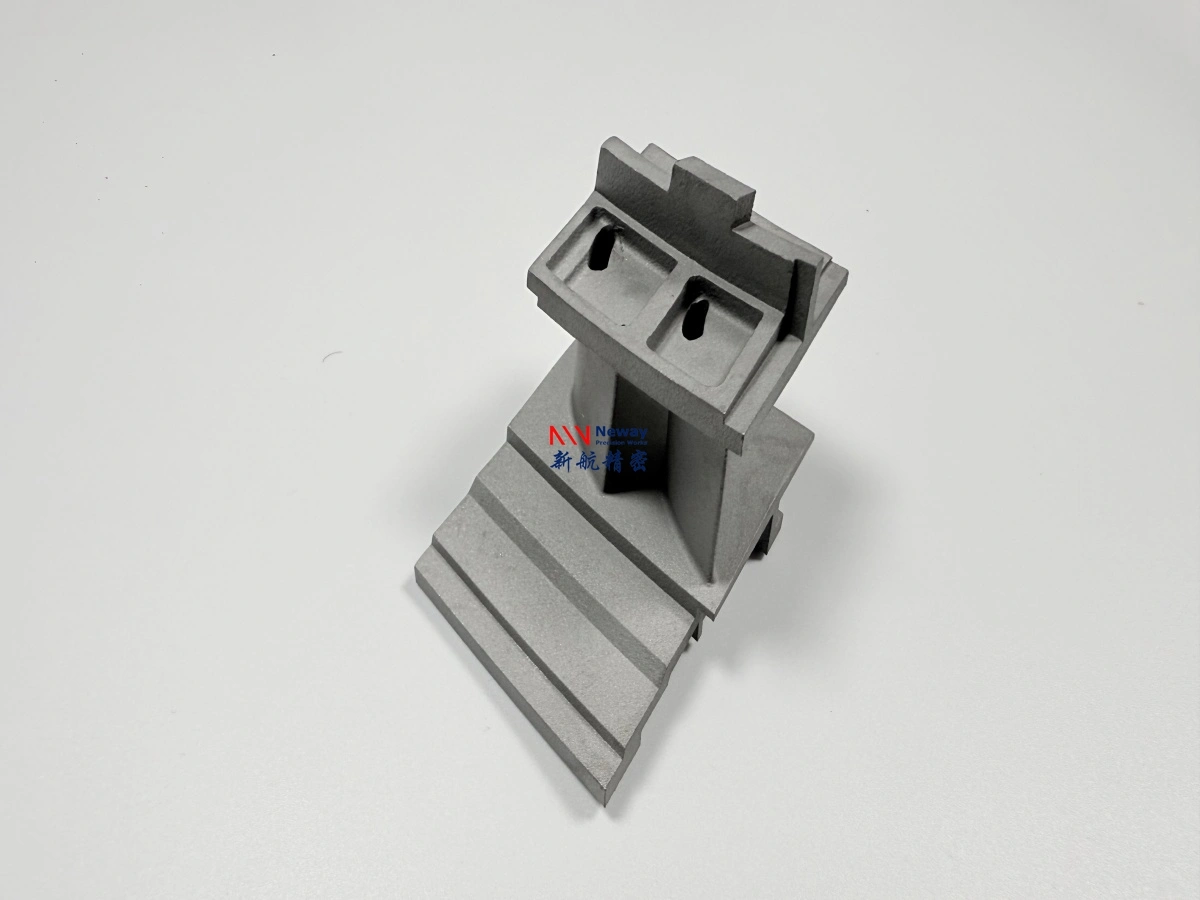
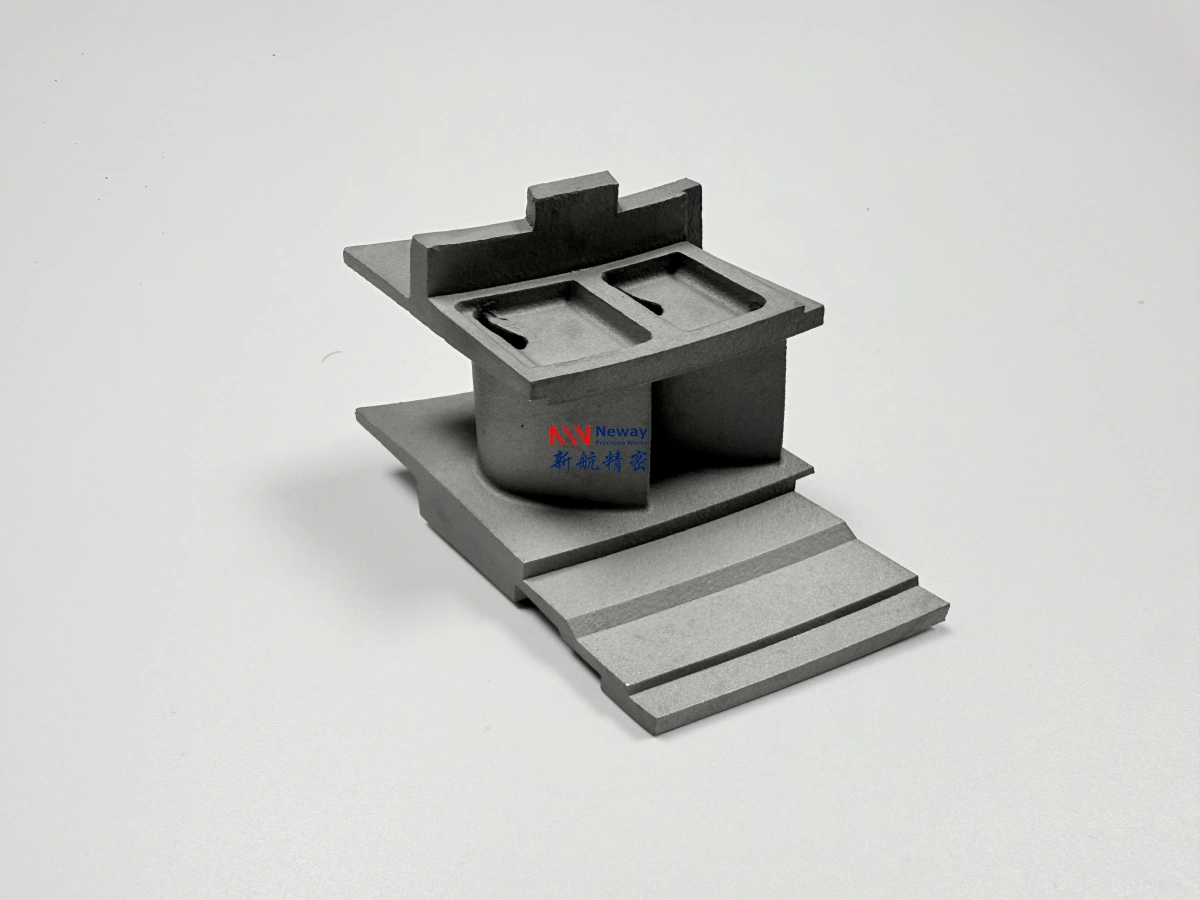
Direct Answer: Custom Gas Turbine Repair Parts from Samples and Scan Data
NewayAeroTech can manufacture custom gas turbine repair parts from 2D drawings, 3D CAD files, worn samples, 3D scan data, CMM reports, or material analysis results. This is useful for repair projects where OEM parts are obsolete, delivery time is too long, costs are high, or complete technical drawings are not available.
Our custom repair parts support can cover:
Reverse engineered turbine spare parts from used samples
Obsolete gas turbine spare parts manufacturing
Custom turbine replacement parts from 3D scan data
Prototype and first article manufacturing for repair validation
Small-batch repair parts for outage maintenance
Batch spare parts manufacturing for long-term power plant supply
The goal is to convert old parts, incomplete drawings, or scan data into manufacturable replacement components with controlled material, geometry, surface condition, inspection records, and delivery documentation.
When Custom Gas Turbine Repair Parts Are Needed
Custom gas turbine repair parts are often needed when standard spare parts are difficult to source or when the customer needs a faster, more flexible repair solution. Power plants, turbine repair companies, and maintenance teams may face urgent outage schedules where waiting for standard supply is not practical.
Common situations include:
Original spare parts are obsolete or discontinued
OEM lead time is too long for the maintenance schedule
Replacement part cost is too high for small-batch repair demand
The customer only has worn samples or damaged parts
Original drawings are incomplete or unavailable
The customer needs local equivalent parts for long-term spare inventory
Old components need engineering improvement, material review, or process optimization
In these situations, reverse engineering and custom manufacturing can provide a practical path from damaged sample to usable replacement part.
Input Data Options for Custom Repair Part Development
Customers can start a custom gas turbine repair part project with different levels of technical data. Complete drawings are helpful, but they are not always available. NewayAeroTech can evaluate projects based on several types of input data.
Input Data | How It Helps | Typical Use |
|---|---|---|
2D drawing | Provides dimensions, tolerances, datums, material, and inspection requirements | Best basis for direct quotation and production review |
3D CAD model | Provides full geometry for tooling, machining, and process planning | Useful for casting, CNC machining, EDM, and fixture design |
Old sample | Shows actual geometry, material, wear, coating, and functional features | Useful when drawings are incomplete or unavailable |
3D scan data | Captures complex surface geometry for CAD reconstruction | Useful for blades, vanes, nozzles, liners, ducts, shrouds, and worn samples |
CMM report | Defines precise datums, critical dimensions, hole locations, and fit-up features | Useful for machining and functional geometry validation |
Material analysis | Identifies alloy chemistry and supports material selection | Useful when the original material grade is unknown |
The more complete the input data, the faster the engineering review can be completed. However, even a worn sample and turbine model information can be enough to start a feasibility review.
Reverse Engineering Workflow from Old Part to New Spare Part
Reverse engineering gas turbine replacement parts should follow a controlled workflow. A used part may contain wear, deformation, cracks, coating loss, repaired areas, or thermal damage. These damaged features should not be copied directly into the new replacement part.
A practical reverse engineering workflow includes:
Sample review to identify part function, damage, wear areas, and critical features
3D scanning or CMM measurement to capture geometry and datum relationships
Material verification to identify alloy grade or acceptable alternatives
CAD reconstruction to rebuild original functional geometry
DFM review to select casting, machining, EDM, drilling, or post-process route
Prototype or first article manufacturing for fit-up and inspection validation
Dimensional inspection, material testing, and NDT according to requirements
Batch production after approval of the first article or prototype
This process helps convert worn samples into reliable new parts while reducing the risk of reproducing service damage or non-functional dimensions.
Risk Control When Copying Worn Samples
The biggest risk in reverse engineering turbine parts is confusing worn geometry with original design geometry. A used component may have changed shape during service. If the supplier copies the sample exactly, the replacement part may repeat the damage or fail to fit correctly.
Key risk control points include:
Separate worn surfaces from original functional surfaces
Identify assembly datums, sealing faces, and mounting features
Confirm airfoil, flow-path, throat area, or clearance-critical geometry where applicable
Check whether coating thickness has changed the visible part shape
Verify original material grade instead of guessing from appearance
Review heat treatment, welding, coating, and inspection requirements before production
Use prototype or first article inspection before batch manufacturing
Reverse engineering should recover the correct function, not simply duplicate a damaged part.
Manufacturing Route Selection for Custom Turbine Repair Parts
Custom turbine repair parts may require different manufacturing routes depending on component type, material, geometry, temperature exposure, and inspection requirement. Some parts are best made by casting. Others require CNC machining from qualified stock, forming, welding, EDM, deep hole drilling, or post-processing.
NewayAeroTech provides vacuum investment casting for complex superalloy parts where near-net-shape geometry is required. For precision interfaces, roots, platforms, seal faces, bores, and mounting features, superalloy CNC machining is used to control final dimensions and assembly accuracy. For heat treatment, surface preparation, cleaning, and coating-ready finishing, superalloy post process supports the final manufacturing route.
Part Type | Possible Manufacturing Route | Key Control Point |
|---|---|---|
Blades | Investment casting, directional casting, single crystal casting, CNC, EDM | Blade root, airfoil, cooling features, material and crystal structure |
Vanes / NGVs | Vacuum casting, equiaxed casting, directional casting, CNC | Airfoil profile, throat area, platforms, material consistency |
Nozzles | Special alloy casting, vacuum casting, CNC, EDM, drilling | Flow-path contour, cooling holes, sealing faces, throat area |
Combustion liners | Forming, welding, machining, hole drilling, coating preparation | Wall thickness, roundness, cooling holes, weld quality |
Transition pieces | Forming, welding, selected casting, CNC, drilling, post-process | Inlet and outlet contour, flange fit, sealing edges, cooling features |
Shrouds / seal segments | Special alloy casting, vacuum casting, CNC, EDM, coating preparation | Arc profile, segment fit, sealing surface, coating allowance |
Impellers / rotating parts | Forging, powder metallurgy, CNC machining, heat treatment, balancing | Concentricity, runout, fatigue strength, dynamic balance |
Typical Gas Turbine Repair Parts That Can Be Custom Made
Custom repair parts can cover both hot gas path components and supporting turbine repair hardware. The correct process depends on the part function and service condition.
Typical custom turbine replacement parts include:
Seal rings, shroud blocks, wear-resistant segments, sleeves, brackets, inserts, and custom hot section hardware
Turbine discs, impellers, compressor parts, rotating rings, and shaft-related components
These parts can be made from drawings, scanned samples, or reconstructed CAD models when the technical requirements are clearly defined.
Prototype and First Article Validation
For reverse engineered turbine repair parts, prototype and first article validation are important before batch manufacturing. The first article helps confirm whether the reconstructed geometry, material, manufacturing route, and inspection method meet the customer’s repair objective.
First article validation may include:
Dimensional report against drawing or reconstructed CAD model
Material report or chemical composition verification
FPI, X-ray, CT, or other NDT if required
Heat treatment record and hardness check when required
Surface finish, coating preparation, or hole inspection report
Customer fit-up review or installation feedback
Once the prototype or first article is approved, the same process route can be used for small-batch or batch repair parts production.
Documentation for Custom Repair Parts
Documentation is important because custom gas turbine repair parts often need to pass incoming inspection, maintenance review, or supplier qualification. The documentation package should match the customer’s project requirement and component criticality.
Common documentation may include:
Dimensional inspection report
CMM report for critical dimensions and datums
Material certificate or chemical composition report
NDT report such as FPI, X-ray, CT, or ultrasonic inspection when required
Heat treatment record or hardness report
Surface finish, coating preparation, or hole inspection report
First article inspection report
Certificate of conformity
Documentation requirements should be confirmed before quotation because testing scope and reporting format can affect cost and lead time.
Supplier Value for Reverse Engineered Turbine Parts
A qualified reverse engineered turbine spare parts supplier should understand both the engineering workflow and the manufacturing route. The supplier must be able to identify what should be measured, what should be reconstructed, and what should be verified before production.
NewayAeroTech supports custom turbine repair parts projects by providing:
Sample review and reverse engineering support
3D scan and CMM data interpretation
Material verification and equivalent alloy review
CAD reconstruction and DFM review
Casting, CNC machining, EDM, drilling, forming, or post-process route selection
Prototype and first article manufacturing
Inspection planning and documentation support
Small-batch and batch spare parts manufacturing
This integrated approach helps customers reduce supplier coordination risk and move from old sample to usable repair part more efficiently.
RFQ Checklist for Custom Gas Turbine Repair Parts
To quote custom gas turbine repair parts accurately, customers should provide as much technical and service information as possible. This helps the supplier evaluate reverse engineering scope, material requirement, manufacturing process, inspection plan, and delivery schedule.
A complete RFQ should include:
Turbine model, component name, part number, stage number, and revision level if available
2D drawing and 3D CAD model if available
Used sample, worn sample, photos, 3D scan data, or CMM report
Material grade, material certificate, or sample material analysis if available
Functional surfaces, assembly datums, sealing faces, cooling holes, and critical dimensions
Heat treatment, coating, welding, or post-processing requirements
Inspection requirements such as CMM, FPI, X-ray, CT, material report, or COC
Quantity for prototype, first article, repair batch, or long-term spare parts program
Delivery schedule, outage timing, packaging, and documentation requirements
If the project is based on a worn sample, customers should mark cracks, worn regions, coating loss, repaired zones, distorted areas, and functional surfaces. This helps the engineering team avoid copying service damage into the replacement part.
FAQ
What Power Generation Turbine Repair Parts Can NewayAeroTech Manufacture?
Can Gas Turbine Repair Parts Be Manufactured from Worn Samples or 3D Scan Data?
What Manufacturing Processes Are Used for Turbine Repair Parts?
Which Materials Are Used for Power Generation Turbine Repair Parts?
What Information Is Needed to Quote Custom Turbine Repair Parts?
