
Fundição de Precisão a Vácuo para Turboalimentadores de Titânio
Introdução
Ligas de titânio como Ti-6Al-4V (TC4) oferecem uma combinação excepcional de baixa densidade (4,43 g/cm³), alta resistência à tração (~900 MPa), superior resistência à corrosão e excelente resistência à fadiga. Essas propriedades tornam as ligas de titânio ideais para a fabricação de componentes de turboalimentadores, garantindo leveza, desempenho em alta velocidade e excelente durabilidade.
Na Neway AeroTech, somos especializados em fundição de precisão a vácuo de componentes de turboalimentadores de titânio, produzindo peças complexas e de alta precisão com defeitos mínimos, acabamentos superficiais finos e desempenho mecânico ideal para aplicações automotivas, aeroespaciais e industriais.
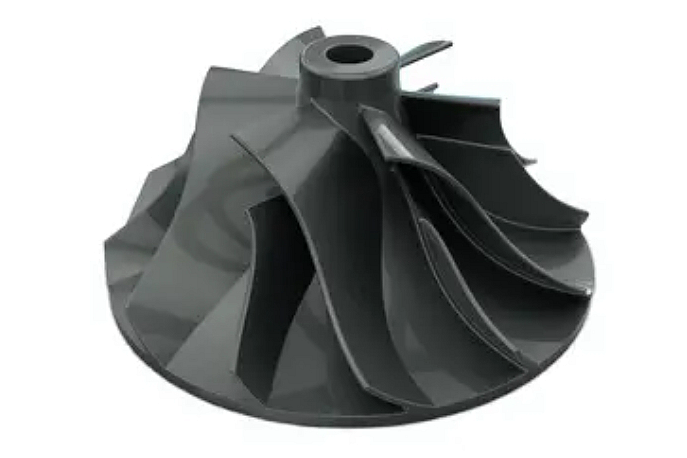
Principais Desafios de Fabricação para Componentes de Turboalimentadores de Titânio
Controle rigoroso da composição química para manter a resistência e a resistência à corrosão.
Prevenir a oxidação durante a fusão e fundição usando ambientes de vácuo total (<10⁻³ Pa).
Alcançar tolerâncias dimensionais apertadas (±0,05 mm) para equilíbrio em alta velocidade e eficiência aerodinâmica.
Garantir acabamentos superficiais finos (Ra ≤1,6 µm) reduz perdas de fluxo e melhora a resposta da turbina.
Processo de Fundição de Precisão a Vácuo para Componentes de Turboalimentadores de Titânio
O processo de produção inclui:
Fabricação do Modelo de Cera: Moldagem por injeção de modelos de cera de precisão com controle dimensional de ±0,1%.
Construção da Casca Cerâmica: Casca cerâmica construída usando uma suspensão de zircônia estabilizada com ítria para suportar altas temperaturas de fundição.
Remoção da Cera: Autoclavagem a vapor a ~150°C para remover a cera sem rachar a casca de forma limpa.
Fusão e Vazamento a Vácuo: Liga de titânio fundida em um cadinho de cobre resfriado a água e vazada sob alto vácuo para evitar contaminação por oxigênio.
Solidificação Controlada: Resfriamento uniforme para minimizar tensões internas e promover microestruturas finas.
Remoção da Casca e Acabamento: Remoção da casca, usinagem CNC de precisão e tratamentos superficiais finais para atingir perfis aerodinâmicos exigentes.
Análise Comparativa de Métodos de Fabricação para Componentes de Turboalimentadores
Processo | Acabamento Superficial | Precisão Dimensional | Propriedades Mecânicas | Controle de Oxidação | Nível de Custo |
|---|---|---|---|---|---|
Fundição de Precisão a Vácuo | Excelente (Ra ≤1,6 µm) | Alta (±0,05 mm) | Superior (~900 MPa) | Excelente | Moderado |
Fundição de Precisão Convencional | Bom (Ra ~3 µm) | Moderada (±0,2 mm) | Bom (~850 MPa) | Moderado | Baixo |
Usinagem CNC a partir de Tarugo | Excelente (Ra ≤0,8 µm) | Muito Alta (±0,01 mm) | Excelente (~900 MPa) | Bom | Alto |
Estratégia de Fabricação Ideal para Componentes de Turboalimentadores de Titânio
Fundição de precisão a vácuo: Mais adequada para componentes de turboalimentadores leves e complexos que exigem alto desempenho mecânico e superfícies livres de oxidação.
Usinagem CNC a partir de tarugo: Usada para peças de pequeno volume e altamente personalizadas onde é necessário controle dimensional extremo (±0,01 mm).
Visão Geral do Desempenho da Liga de Titânio
Propriedade | Valor | Relevância para Aplicação |
|---|---|---|
Resistência à Tração | ~900 MPa | Suporta altas tensões centrífugas na operação do turbo |
Limite de Escoamento | ~830 MPa | Previne deformação permanente sob carga de pico |
Densidade | 4,43 g/cm³ | Leveza para aceleração mais rápida do turboalimentador |
Resistência à Fadiga | ~510 MPa | Crítico para durabilidade sob carregamento cíclico de alta velocidade |
Temperatura Máxima de Operação | ~400°C | Desempenho confiável sob temperaturas elevadas dos gases de escape |
Vantagens do Uso de Titânio para Componentes de Turboalimentadores
Relação resistência-peso superior reduz a inércia rotacional, melhorando a resposta do turboalimentador.
Alta resistência à fadiga estende a vida útil em ambientes cíclicos exigentes.
Excelente resistência à corrosão protege contra oxidação e ataque por gases em alta temperatura.
Flexibilidade de projeto excepcional permite formas aerodinâmicas complexas com espessura de parede mínima.
Técnicas de Pós-processamento para Componentes de Turboalimentadores de Titânio
Prensagem Isostática a Quente (HIP): Elimina porosidade interna, aumentando a resistência à fadiga e ao fluência.
Tratamento Térmico (Recozimento): Otimiza a estrutura de fase α+β para melhorar as propriedades mecânicas.
Usinagem CNC de Precisão: Finaliza superfícies críticas com tolerância de ±0,01 mm e acabamentos superficiais de Ra ≤0,8 µm.
Acabamento Superficial (Polimento/Granalhamento): Melhora a dureza superficial, resistência à fadiga e desempenho aerodinâmico.
Inspeção e Garantia de Qualidade para Componentes de Turboalimentadores
Máquina de Medição por Coordenadas (CMM): Garante tolerâncias dimensionais apertadas (±0,05 mm) para perfis aerodinâmicos críticos.
Teste Ultrassônico (UT): Detecta vazios ou defeitos internos sem danificar as peças.
Teste por Líquidos Penetrantes (PT): Revela descontinuidades superficiais finas críticas para peças propensas à fadiga.
Análise Metalográfica: Confirma a integridade da microestrutura e conformidade com padrões de materiais aeroespaciais.
Aplicações da Indústria e Estudo de Caso
Componentes de turboalimentadores de titânio fabricados pela Neway AeroTech são amplamente utilizados em turbos automotivos de alto desempenho, APUs aeroespaciais e turbomáquinas industriais de alta eficiência. Em uma aplicação recente no automobilismo, rodas de turboalimentadores de titânio melhoraram os tempos de aceleração em 22% e aumentaram a vida útil à fadiga em 30% em comparação com alternativas tradicionais de liga de alumínio, impulsionando o desempenho e a durabilidade do motor.
Perguntas Frequentes
Quais tolerâncias dimensionais a Neway AeroTech pode alcançar para componentes de turboalimentadores de titânio?
Por que a fundição de precisão a vácuo é crítica para a produção de peças de turbo de titânio?
Como o titânio se compara às ligas de alumínio para aplicações de turboalimentadores?
Quais etapas de pós-processamento são essenciais para componentes de turboalimentadores de titânio?
Como a Neway AeroTech garante a qualidade superficial e a resistência à fadiga em peças de turbo de titânio?
