
Service d'usinage par électro-érosion (EDM) pour pièces de récipients sous pression en superalliage
Introduction à l'EDM pour les pièces de récipients sous pression
L'usinage par électro-érosion (EDM) offre une solution axée sur la précision pour la fabrication de composants de récipients sous pression en superalliage aux géométries complexes et aux tolérances extrêmes. Ce procédé sans contact garantit une contrainte mécanique minimale et maintient l'intégrité structurelle dans des conditions de haute pression et de haute température.
Chez Neway Aerotech, nous sommes spécialisés dans l'usinage EDM pour pièces en superalliage, offrant l'EDM à fil, l'EDM à enfonçage et l'EDM de perçage de trous pour des applications critiques dans les secteurs de l'énergie nucléaire, de la propulsion aérospatiale et des systèmes de traitement chimique.
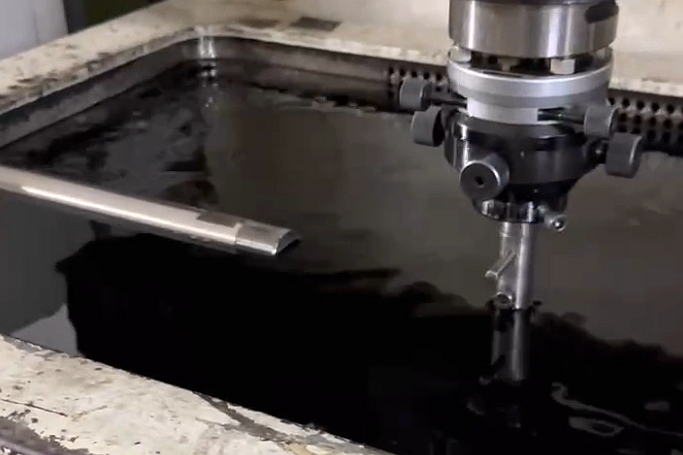
Aperçu de la technologie d'usinage EDM
Classification de l'usinage EDM
Le tableau suivant compare les caractéristiques typiques des méthodes EDM courantes utilisées pour les composants en superalliage hautes performances :
Procédé EDM | Rugosité de surface (Ra, μm) | Tolérance dimensionnelle (mm) | Rapport d'aspect | Zone affectée par la chaleur (ZAC, μm) | Taille minimale de l'élément (mm) |
|---|---|---|---|---|---|
EDM à fil | 0,3–1,2 | ±0,002–±0,01 | Jusqu'à 20:1 | 2–5 μm | ~0,1 |
EDM à enfonçage | 0,4–2,5 | ±0,005–±0,02 | Jusqu'à 10:1 | 5–10 μm | ~0,2 |
EDM de perçage de trous | 0,5–3,0 | ±0,02–±0,05 | Jusqu'à 30:1 | 10–15 μm | ~0,1 |
Micro-EDM | 0,1–0,4 | ±0,001–±0,005 | Jusqu'à 15:1 | <2 μm | <0,05 |
Note : Les valeurs de ZAC varient selon l'énergie de décharge, le matériau de l'électrode et l'efficacité du rinçage diélectrique.
Stratégie de sélection de l'usinage EDM
EDM à fil : Idéal pour les profils complexes et les découpes traversantes avec une précision exceptionnelle et une distorsion thermique minimale.
EDM à enfonçage : Parfait pour les cavités, les éléments aveugles et les formes 3D utilisant des électrodes profilées en graphite ou en cuivre.
EDM de perçage de trous : Adapté aux canaux de refroidissement de petit diamètre ou aux trous pilotes dans des matériaux difficiles à usiner.
Micro-EDM : Conçu pour des éléments ultra-fins dans des composants miniatures nécessitant une haute précision et une excellente répétabilité.
Considérations sur les matériaux
Matériaux typiques pour les pièces de récipients sous pression
Matériau | Résistance à haute température (MPa @ 650°C) | Résistance au fluage (1000h @ 650°C) | Résistance à la fatigue thermique | Stabilité chimique | Principaux scénarios d'application |
|---|---|---|---|---|---|
~980 | Excellente (<0,1 % de déformation) | Exceptionnelle à 10⁶ cycles | Résistant à l'oxydation/corrosion | Réacteurs nucléaires, structures de moteurs aérospatiaux | |
~790 | Bonne (<0,3 % de déformation) | Modérée | Résistant aux acides et aux chlorures | Réacteurs chimiques, composants pour eau de mer | |
~1230 | Excellente (<0,05 % de déformation) | Durée de vie élevée en cycles au-dessus de 900°C | Stable dans des conditions oxydantes | Chambres de combustion aérospatiales, carters de turbine | |
~940 | Modérée | Excellente (résistant aux chocs) | Supérieur à la plupart des alliages de cobalt | Sièges de soupapes, revêtements d'usure dans des systèmes corrosifs | |
~960 | Très bonne (<0,1 % de déformation) | Fiable jusqu'à 950°C | Stable dans l'oxydation thermique | Disques de turbine, internes de récipients à haute contrainte | |
~870 | Moyenne à température élevée | Limitée à >500°C | Bonne dans les atmosphères neutres/pures | Ensembles de récipients sous pression aérospatiaux légers |
Stratégie de sélection des matériaux
Inconel 718 : Sélectionné pour sa haute résistance à la fatigue, sa résistance à la traction >980 MPa, sa résistance à l'oxydation et son comportement de fluage cohérent sous charge à 704°C.
Hastelloy C-276 : Idéal pour les environnements résistants aux acides ; maintient sa résistance à la corrosion et sa résistance mécanique dans des milieux contenant des chlorures ou du soufre jusqu'à 1040°C.
Rene 41 : Utilisé lorsque la résistance à la rupture par fluage >1000 MPa à 980°C est requise dans des conditions de fonctionnement continu à haute température.
Stellite 6B : Préféré dans les assemblages critiques à l'usure et corrosifs ; maintient l'intégrité de surface et une dureté >35 HRC à 800°C.
Nimonic 90 : Choisi pour les internes de turbines nécessitant une résistance au fluage à faible déformation à 950°C avec de longs cycles de durée de vie.
Ti-6Al-4V : Appliqué lorsque le rapport poids/résistance est important ; résistance à la traction ~900 MPa avec une excellente usinabilité et une bonne résistance à la fatigue.
Étude de cas : Usinage EDM de pièces de récipients sous pression en superalliage
Contexte du projet
Un client du secteur de l'énergie nucléaire avait besoin de composants de précision pour un système de réacteur à eau pressurisée (REP). Le composant, une bague de déflecteur interne et une bride de support, nécessitait une tolérance dimensionnelle de ±0,005 mm et des canaux internes complexes.
Flux de travail de fabrication
Préparation des matériaux : Billet Inconel 718, Ø180 mm × 60 mm, forgé et vieilli à 720°C pendant 8 heures.
Pré-usinage : Ébauche CNC à 0,8 mm de profondeur par passe avec une précision de positionnement de 20 μm pour l'établissement des références.
EDM à fil : Découpe des contours externes avec une tolérance de ±0,005 mm en utilisant un fil de molybdène de Ø0,25 mm.
EDM à enfonçage : Usinage de cavité 3D avec des électrodes en cuivre ; profondeur 28 mm, entrefer d'étincelle 0,1 mm.
EDM de perçage de trous : EDM de trous profonds appliqué pour produire des micro-trous radiaux de 0,8 mm avec un rapport d'aspect de 30:1 et une tolérance de ±0,02 mm.
Post-traitement
Traitement thermique de relaxation des contraintes à 980°C pendant 4 heures
Compactage isostatique à chaud (HIP) pour éliminer les micro-vides (100 MPa @ 1200°C)
Grenaillage pour améliorer la résistance à la fatigue de >25 %
Finition de surface
Ra ≤ 0,8 μm obtenu par polissage fin
Passivation pour améliorer la résistance à la corrosion
Revêtement TBC en option pour les sections exposées aux chocs thermiques
Inspection
Vérification dimensionnelle par MMT avec un écart <2 μm
Inspection par rayons X pour la détection des vides
MEB + EDX pour l'intégrité de surface et l'analyse élémentaire
Essais ultrasonores par immersion pour la validation des défauts internes
Résultats et vérification
Les composants finaux ont atteint des tolérances dimensionnelles cohérentes de ±0,003 mm sur tous les profils, y compris les surfaces d'étanchéité et d'accouplement critiques.
La densification post-traitement utilisant le HIP a entraîné une fermeture complète des pores, vérifiée par une indication de porosité nulle selon les critères d'inspection radiographique aux rayons X à 10x.
Les opérations de finition de surface ont permis d'obtenir uniformément un Ra ≤ 0,8 μm, sans microfissures ni concentrateurs de contraintes observés au MEB à un grossissement de 500x.
Toutes les caractéristiques internes ont passé les tests ultrasonores par immersion, répondant au niveau d'acceptation ASTM E2375 Niveau 1 pour la sensibilité et la couverture de détection des défauts.
L'inspection par MMT a confirmé la conformité géométrique avec un écart total de 2 μm par rapport au modèle CAO sur 25 points d'inspection clés mesurés.
FAQ
Quelle est l'épaisseur maximale de superalliage pouvant être traitée par EDM ?
Comment l'EDM affecte-t-il la microstructure des alliages à haute température ?
Quelle est la meilleure façon de garantir la précision dimensionnelle des éléments internes ?
Les pièces de récipients sous pression peuvent-elles être usinées par EDM après l'application de revêtements ?
Quelles sont les inspections post-traitement recommandées après l'usinage EDM ?
