
Atelier de Composants d'Anneau de Turbine de Moteur à Réaction en Fonte de Précision Rene N5
Introduction
Le Rene N5 est un superalliage à base de nickel monocristallin conçu pour être utilisé dans les sections les plus chaudes des moteurs à réaction, offrant une résistance supérieure au fluage, une stabilité à la fatigue thermique et une résistance à l'oxydation à des températures dépassant 1150°C. En tant qu'atelier de fonte de précision spécialisé, nous fabriquons des composants d'anneau de turbine en Rene N5 en utilisant des techniques de coulée équiaxe et directionnelle, atteignant une précision dimensionnelle de ±0,05 mm et une intégrité microstructurale adaptée aux assemblages de sections chaudes de moteurs à réaction.
Nos anneaux de turbine en Rene N5 soutiennent les moteurs de turbine de nouvelle génération avec une durabilité à long terme et une résistance aux cycles dans des conditions extrêmes de température et de pression.
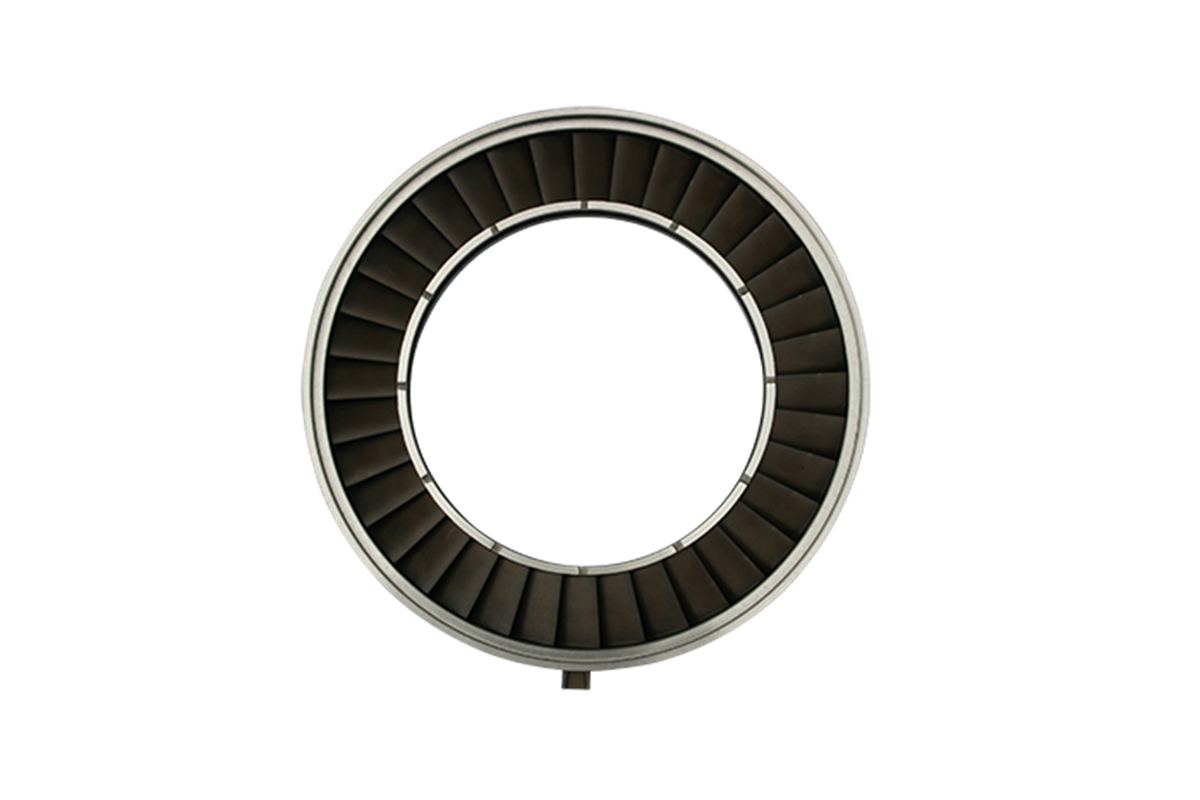
Technologie de base : Fonte de Précision du Rene N5
Nous utilisons des procédés avancés de fonte à la cire perdue sous vide et de solidification directionnelle pour le Rene N5 afin d'atteindre une stabilité de phase et une résistance au fluage supérieures. L'alliage est fondu sous vide et coulé à ~1450°C dans des moules en céramique (8–10 couches) préchauffés à ~1100°C. Pour les composants directionnels, les vitesses de retrait du moule sont contrôlées (1–5 mm/min) pour former des grains colonnaires ou des structures monocristallines. Des options équiaxes sont également disponibles pour les segments non rotatifs. Toutes les pièces respectent des tolérances dimensionnelles de ±0,05 mm et une porosité inférieure à 1%.
Caractéristiques du Matériau de l'Alliage Rene N5
Le Rene N5 est un superalliage à base de nickel de deuxième génération spécifiquement développé pour les composants de turbine monocristallins. Il maintient une excellente résistance mécanique et une stabilité microstructurale sous les températures de fonctionnement les plus élevées dans les environnements de moteurs à réaction. Les propriétés clés incluent :
Propriété | Valeur |
|---|---|
Densité | 8,6 g/cm³ |
Résistance à la traction (à 980°C) | ≥1100 MPa |
Résistance à la rupture par fluage (1000h @ 1093°C) | ≥180 MPa |
Limite de température de fonctionnement | Jusqu'à 1150°C |
Résistance à l'oxydation | Excellente |
Stabilité de phase | Supérieure à haute température |
La stabilité du Rene N5 à haute température le rend idéal pour les composants d'anneau de turbine à l'interface chambre de combustion-turbine, où le contrôle du flux et l'exposition à la chaleur sont extrêmes.
Étude de Cas : Projet d'Anneau de Turbine de Moteur à Réaction
Contexte du Projet
Un important constructeur de moteurs aérospatiaux avait besoin de segments d'anneau de turbine pour la turbine haute pression d'une plateforme de moteur pour avions gros-porteurs. Les composants devaient supporter une exposition continue à des températures de gaz d'échappement >1100°C avec un alignement aérodynamique précis. Nous avons fourni des pièces coulées en Rene N5 en utilisant la solidification directionnelle et l'usinage CNC pour répondre aux exigences AMS 5400 et aux normes de qualité NADCAP.
Applications Typiques des Anneaux de Turbine de Moteur à Réaction
Segments d'Anneau de Turbine HPT (ex. GE90, PW4000) : Les segments en Rene N5 offrent une résistance à l'oxydation et au fluage dans les zones d'entrée de turbine exposées à des gaz de combustion à 1100–1150°C.
Aubes Directrices d'Entrée de Turbine : Aubes statiques directionnelles qui guident le flux d'air vers le premier étage de turbine, nécessitant une stabilité de phase et une résistance à la fatigue à faible nombre de cycles.
Enceintes Intérieures Monocristallines : Pièces coulées monocristallines utilisées dans des environnements d'interface rotative pour éliminer le fluage et la distorsion aux joints de grains.
Buses de Transition de Cadre : Segments fixes supportant la transition structurelle du flux entre la chambre de combustion et le cœur de la turbine.
Ces composants sont essentiels pour maintenir l'alignement du flux, l'intégrité structurelle et l'efficacité des plateformes de moteurs à réaction modernes.
Solutions de Fabrication pour les Composants d'Anneau de Turbine en Rene N5
Procédé de Coulée Des modèles en cire de haute précision sont investis dans des coquilles en céramique. La fusion sous vide à ~1450°C est suivie d'une solidification directionnelle utilisant un retrait contrôlé dans un four Bridgman pour l'orientation des grains colonnaires ou monocristallins. La coulée équiaxe est utilisée là où elle est autorisée. Le refroidissement contrôlé prévient la microfissuration et assure l'uniformité de phase.
Post-traitement Le Compactage Isostatique à Chaud (HIP) à ~1190°C et 100 MPa réduit la porosité résiduelle. Un traitement thermique est appliqué pour améliorer la distribution de la phase γ′ et les performances à long terme au fluage.
Usinage Final L'usinage CNC finalise les faces d'étanchéité, les pattes d'alignement et les caractéristiques de montage. L'EDM est appliqué pour une géométrie de bord précise, et le perçage profond est utilisé pour le placement des trous de refroidissement par film.
Traitement de Surface Des revêtements barrière thermique (TBC) utilisant APS ou EB-PVD sont appliqués pour réduire la charge thermique. Des revêtements d'aluminure sont disponibles pour la protection contre l'oxydation dans les zones non refroidies.
Tests et Inspection Les pièces sont inspectées en utilisant la radiographie industrielle (NDT), la validation dimensionnelle par MMT, les essais de traction à haute température et l'analyse métallographique pour l'évaluation de la structure des grains et de la phase γ′.
Principaux Défis de Fabrication
Atteindre une orientation des grains directionnelle ou monocristalline dans des segments d'anneau de turbine à paroi mince.
Contrôler la géométrie et la position des trous de refroidissement sans fissuration thermique.
Maintenir la stabilité de phase et la résistance à l'oxydation pendant plus de 1000 cycles de fonctionnement à plus de 1100°C.
Résultats et Vérification
Tolérances dimensionnelles dans les ±0,05 mm vérifiées par balayage MMT 3D.
Porosité <1% confirmée par inspection radiographique post-HIP.
Résistance à la rupture par fluage ≥180 MPa à 1093°C validée par un test de 1000 heures.
Cohérence de la phase γ′ et résistance à l'oxydation confirmées après 1000 cycles thermiques à 1150°C.
FAQ
Pourquoi le Rene N5 est-il le matériau optimal pour les composants d'anneau de turbine dans les moteurs à réaction ?
Quelles sont les différences entre les fontes équiaxes, directionnelles et monocristallines pour le Rene N5 ?
Comment assurez-vous la précision des trous de refroidissement dans les géométries complexes d'anneaux de turbine ?
Les anneaux de turbine en Rene N5 peuvent-ils être personnalisés pour différents modèles de moteurs à réaction ?
Quelles normes d'inspection et certifications votre atelier suit-il pour les pièces aérospatiales en Rene N5 ?
