
Usine de traitement HIP pour roues de turbine en alliage haute température
Densification et amélioration de l'intégrité des pièces moulées de roues de turbine
Les roues de turbine dans les turbines à gaz haute température fonctionnent sous des charges centrifuges sévères, des gradients thermiques et une fatigue cyclique. Les défauts internes de moulage tels que la porosité de retrait, les microcavités et la ségrégation peuvent réduire considérablement leur durabilité et leur fiabilité. Le pressage isostatique à chaud (HIP) est une solution éprouvée pour éliminer les défauts internes et restaurer la continuité structurelle des roues de turbine fabriquées à partir de superalliages hautes performances.
Neway AeroTech est une usine HIP dédiée pour les roues de turbine en superalliage haute température fabriquées par moulage à la cire perdue sous vide. Nous proposons des services HIP jusqu'à 1300°C et 200 MPa, entièrement qualifiés pour traiter les roues fabriquées en Inconel, alliages Rene et Hastelloy.
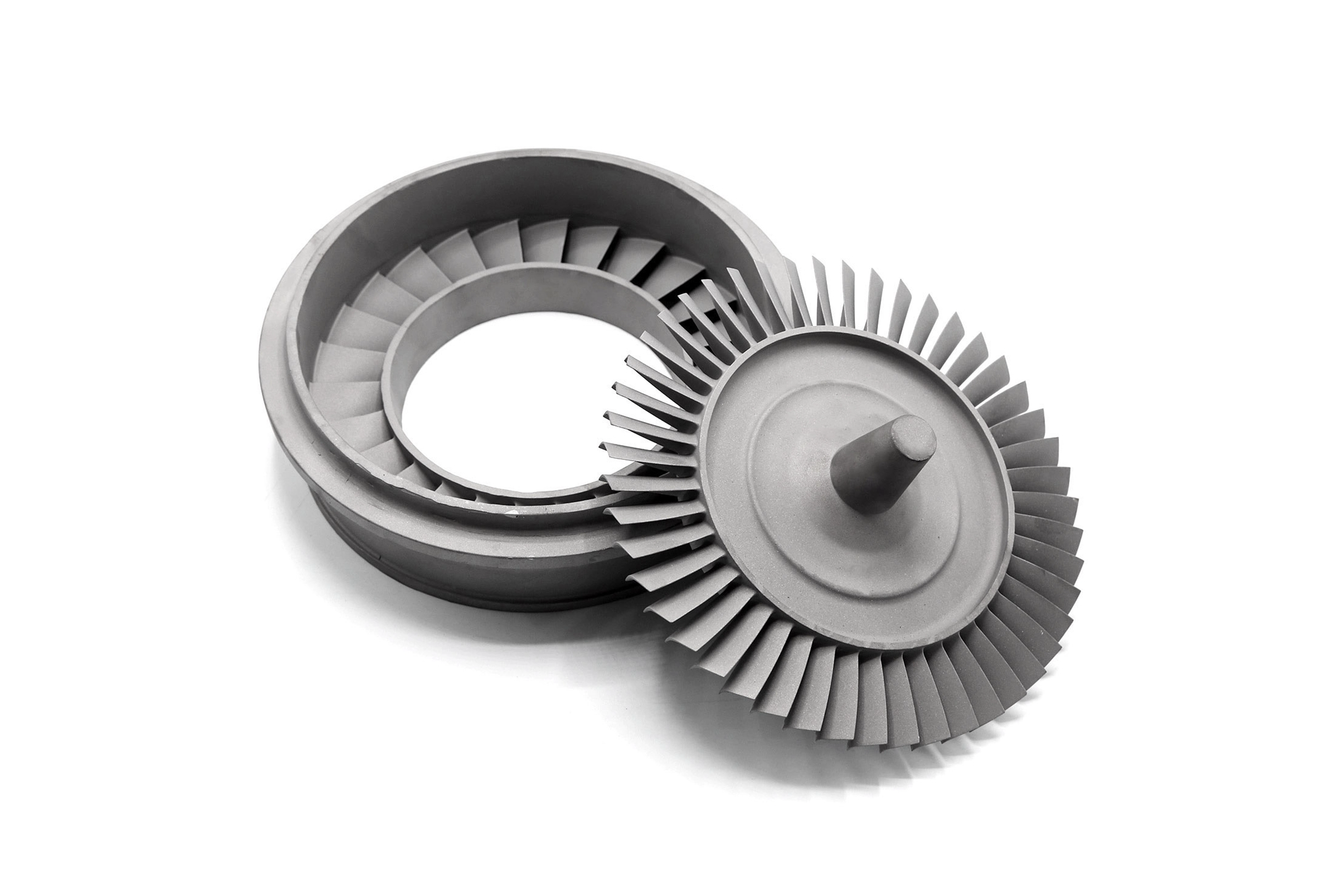
Pourquoi le HIP est essentiel pour les performances des roues de turbine
Les roues de turbine doivent résister aux contraintes de rotation et aux chocs thermiques tout en maintenant la précision dimensionnelle et la résistance à la rupture. Le traitement HIP :
Élimine la porosité de retrait et les microfissures dues à la solidification
Augmente la durée de vie en fatigue à faible et haut nombre de cycles
Améliore la cohérence microstructurale pour un usinage CNC fiable après HIP
Prépare les roues pour une intégration précise des aubes par soudage TIG
Le HIP est essentiel pour atteindre la navigabilité et la conformité aux spécifications des constructeurs de turbines.
Alliages compatibles HIP pour les pièces moulées de roues de turbine
Alliage | Température max (°C) | Température HIP (°C) | Applications |
|---|---|---|---|
950 | 1210 | Roues de turbine industrielles et aéronautiques | |
1040 | 1230 | Disques et roues de turbine | |
1175 | 1170 | Roues de turbine à gaz haute température |
Tous les alliages sont traités par HIP selon AMS 2774 ou les exigences spécifiques du client pour les composants de turbine.
Étude de cas : HIP d'une roue de turbine en Inconel 713C équiaxe
Contexte du projet
Un client du secteur de l'énergie a soumis 96 roues de turbine équiaxes en Inconel 713C (Ø280 mm × 60 mm d'épaisseur) pour un traitement HIP. La porosité interne dépassait 1,2 %. Après HIP à 1210°C, 100 MPa pendant 4 heures, la porosité a été réduite à <0,05 % et la durée de vie en fatigue a été multipliée par 2,7.
Modèles de roues de turbine et secteurs industriels
Modèle de roue | Description | Alliage | Secteur |
|---|---|---|---|
TW-280 | Roue de turbine équiaxe avec passages d'écoulement radiaux | Inconel 713C | |
RWD-450 | Disque de roue de rotor avec moyeu et alésage | Rene 77 | |
HTW-310 | Roue en Hastelloy avec bossage d'arbre intégré | Hastelloy X |
Tous les modèles ont été traités par HIP, traités thermiquement et vérifiés par MMT avant l'installation finale des aubes.
Avantages du procédé HIP pour les roues de turbine
Élimine >99 % de la porosité, garantissant la solidité structurelle sous des vitesses de rotation de 15 000 à 30 000 tr/min
Réduit la microségrégation, permettant une meilleure tolérance dimensionnelle lors de l'usinage post-HIP
Prolonge la durée de vie en fatigue de 2 à 3 fois, en particulier dans les zones de contact aube-roue chargées en bordure
Stabilise l'intégrité du cœur, évitant l'amorçage de fissures sous les cycles de pression et de température
Permet une meilleure soudabilité pour l'assemblage aube-moyeu après consolidation par HIP
Paramètres de contrôle du procédé HIP
Plage de température : 1170–1300°C, ajustée selon l'alliage et l'épaisseur de la pièce moulée
Pression : 100–200 MPa, environnement d'argon ou de gaz inerte selon AMS 2774
Temps de maintien : 3–6 heures, selon la taille de la pièce et la sévérité de la porosité
Vitesse de refroidissement : ≤10°C/min, pour éviter le sur-vieillissement ou les contraintes résiduelles
Résultats et vérification
Exécution du HIP
Les roues de turbine ont été traitées par HIP à 1210°C, 100 MPa pendant 4 heures. Le refroidissement final a été contrôlé pour éviter un déséquilibre de phase et la fissuration.
Traitement post-HIP
Les pièces ont subi un traitement thermique à 980–1050°C puis ont été usinées CNC au profil final. Un revêtement TBC optionnel a été appliqué pour la durabilité de la section chaude.
Inspection
Les essais aux rayons X ont confirmé la densification interne. La MMT a vérifié les dimensions de l'alésage et de la bride. L'analyse MEB a montré la continuité de la structure granulaire et la fermeture des pores.
FAQ
Quels alliages de roues de turbine sont adaptés au traitement HIP ?
Comment le HIP améliore-t-il les performances des roues de turbine dans les applications à haute vitesse ?
Le HIP peut-il être appliqué après soudage ou usinage ?
Quelles normes régissent le traitement HIP des composants de turbine ?
Comment les roues de turbine traitées par HIP sont-elles inspectées avant livraison ?
