
Alliages à Haute Température Nimonic 81 Aubes Directrices Société de Moulage à la Cire Perdue
Introduction
Le Nimonic 81 est un alliage nickel-chrome amélioré au molybdène et au titane, conçu pour une résistance mécanique, une résistance au fluage et une résistance à l'oxydation supérieures à des températures allant jusqu'à 870°C. Avec une résistance à la traction d'environ 960 MPa et une excellente résistance à la fatigue, il est largement utilisé pour les aubes directrices fonctionnant dans les sections à haute température des turbines à gaz.
Chez Neway AeroTech, nous sommes spécialisés dans la fabrication d'aubes directrices en Nimonic 81 par moulage de précision à la cire perdue (moulage à modèle perdu sous vide), garantissant une haute précision dimensionnelle, une excellente qualité de surface et une cohérence métallurgique optimale pour les applications aérospatiales et de turbines industrielles.
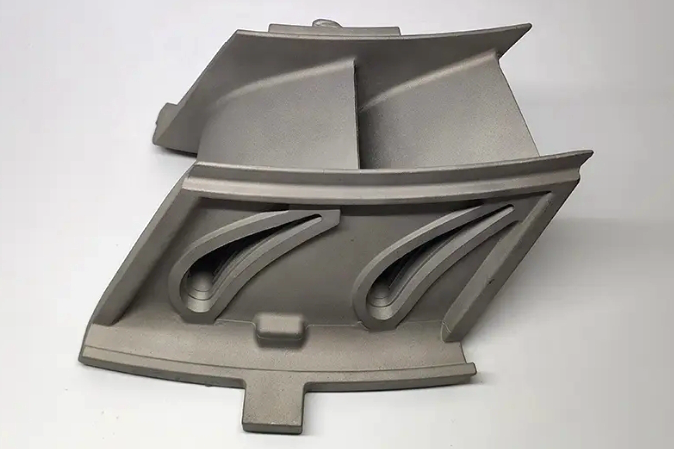
Principaux Défis de Fabrication pour les Aubes Directrices en Nimonic 81
Contrôle précis de la composition chimique (Ni ≥60%, Cr ~25%, Mo ~6%, Ti ~2,5%) pour la stabilité thermique et mécanique.
Gestion des vitesses de refroidissement contrôlées (~5–8°C/min) pour former des grains équiaxes fins.
Atteinte de tolérances dimensionnelles serrées (±0,05 mm) cruciales pour l'efficacité aérodynamique.
Production de finitions de surface supérieures (Ra ≤1,6 µm) pour minimiser la traînée aérodynamique.
Processus de Moulage à la Cire Perdue (Modèle Perdu sous Vide) pour les Aubes Directrices en Nimonic 81
Le processus de production comprend :
Fabrication du Modèle en Cire : Modèles en cire de précision assurant une répétabilité dimensionnelle de ±0,1%.
Construction de la Coquille : Application de multiples couches de barbotine céramique et de sable de zirconium pour une haute résistance du moule.
Décire : Autoclavage à la vapeur à ~150°C pour éliminer proprement la cire sans compromettre la qualité du moule.
Fusion sous Vide et Coulée : L'alliage Nimonic 81 fondu à ~1400°C et coulé sous vide (<10⁻³ Pa) pour éviter l'oxydation.
Solidification Contrôlée : Refroidissement lent favorisant des structures de grains fins et uniformes pour des propriétés mécaniques améliorées.
Enlèvement de la Coquille et Finition : Enlèvement de la céramique, usinage CNC et traitement de surface final pour répondre aux profils aérodynamiques précis.
Analyse Comparative des Méthodes de Moulage pour les Aubes Directrices
Procédé | Qualité de Finition de Surface | Précision Dimensionnelle | Résistance Mécanique | Résistance au Fluage | Niveau de Coût |
|---|---|---|---|---|---|
Moulage à Modèle Perdu sous Vide | Excellente (Ra ≤1,6 µm) | Très Haute (±0,05 mm) | Excellente (~960 MPa) | Haute | Modéré |
Moulage à Cristaux Équiaxes | Bonne (Ra ~3 µm) | Haute (±0,05 mm) | Très Bonne (~940 MPa) | Haute | Modéré |
Moulage en Sable | Modérée (Ra ~12 µm) | Modérée (±0,5 mm) | Bonne (~850 MPa) | Modérée | Faible |
Usinage CNC à partir d'une Bille | Excellente (Ra ≤0,8 µm) | Très Haute (±0,01 mm) | Excellente (~960 MPa) | Haute | Élevé |
Stratégie de Fabrication Optimale pour les Aubes Directrices en Nimonic 81
Moulage à modèle perdu sous vide : Préféré pour les aubes directrices en Nimonic 81 nécessitant Ra ≤1,6 µm, des tolérances de ±0,05 mm et des performances mécaniques optimales à haute température.
Moulage à cristaux équiaxes : Adapté pour les étages de turbine moins critiques, maintenant une bonne résistance au fluage et à l'oxydation à un coût réduit.
Moulage en sable : Limité aux composants non aérodynamiques et à faible charge où la finition de surface et la résistance au fluage ne sont pas critiques.
Usinage CNC à partir d'une bille : Utilisé pour les opérations secondaires nécessitant une ultra-haute précision (±0,01 mm) et une finition Ra ≤0,8 µm pour les surfaces d'étanchéité ou aérodynamiques.
Aperçu des Performances de l'Alliage Nimonic 81
Propriété | Valeur | Pertinence pour l'Application |
|---|---|---|
Résistance à la Traction | ~960 MPa | Haute résistance pour la stabilité structurelle des aubes de turbine |
Température de Fonctionnement Maximale | ~870°C | Résistance soutenue à l'oxydation et au fluage |
Résistance à la Fatigue | Excellente | Maintient l'intégrité structurelle sous charges cycliques |
Résistance à l'Oxydation | Exceptionnelle | Résiste aux environnements d'échappement agressifs |
Coefficient de Dilatation Thermique | ~13,4 µm/m·°C | Assure la stabilité dimensionnelle sous cyclage thermique |
Avantages de l'Utilisation du Nimonic 81 pour les Aubes Directrices
Résistance à haute température soutient la stabilité des aubes pendant le fonctionnement continu de la turbine.
Résistance supérieure à l'oxydation prolonge la durée de vie des composants à 870°C.
Excellente résistance à la fatigue prévient la rupture sous les contraintes de cyclage thermique.
Bonne coulabilité permet des conceptions aérodynamiques complexes sans sacrifier les propriétés mécaniques.
Techniques de Post-Traitement pour les Aubes en Nimonic 81
Pressage Isostatique à Chaud (HIP) : Densifie la pièce coulée en éliminant la micro-porosité, améliorant la durée de vie en fatigue et la résistance au fluage de 15 à 20%.
Revêtement de Barrière Thermique (TBC) : Applique un revêtement céramique d'environ 250 µm, réduisant la température de surface jusqu'à 150°C et prolongeant la durée de vie.
Usinage CNC de Précision : Atteint des finitions de surface Ra ≤0,8 µm et des tolérances de ±0,01 mm pour l'optimisation aérodynamique.
Contrôles Non Destructifs (CND) : Contrôles par ultrasons, par ressuage et métallographiques assurent l'intégrité interne et la conformité aux normes aérospatiales.
Inspection et Assurance Qualité pour les Aubes Directrices
Machine à Mesurer Tridimensionnelle (MMT) : Mesure les dimensions aérodynamiques clés dans une tolérance de ±0,05 mm.
Contrôle par Ultrasons (UT) : Détecte les défauts internes et la porosité.
Contrôle par Ressuage (PT) : Met en évidence les microfissures ou défauts de coulée en surface.
Analyse Métallographique : Assure que la structure des grains répond aux normes aérospatiales ASTM.
Applications Industrielles et Étude de Cas
Les aubes directrices en Nimonic 81 produites par Neway AeroTech sont largement déployées dans les turbines aérospatiales, les turbines de production d'énergie et les turbines à gaz industrielles hautes performances. Dans un projet majeur de mise à niveau de moteur aérospatial, les aubes directrices de tuyère en Nimonic 81 ont fonctionné parfaitement pendant plus de 8 000 heures de service continu à ~850°C, atteignant une augmentation de 25% des intervalles de maintenance par rapport aux conceptions d'alliages précédentes.
FAQ
Quelles tolérances dimensionnelles Neway AeroTech peut-elle atteindre pour les aubes directrices en Nimonic 81 ?
Pourquoi le moulage à la cire perdue est-il préféré pour la production d'aubes directrices en Nimonic 81 ?
Comment le Nimonic 81 se comporte-t-il par rapport aux autres alliages Nimonic ?
Quelles industries utilisent couramment les aubes directrices en Nimonic 81 ?
Comment Neway AeroTech assure-t-elle la qualité et la durabilité des pièces coulées en Nimonic 81 ?
